
Top 3 things about Roof Direction and Shade
Understanding roof direction and shade is crucial for maximising solar panel efficiency and energy production. Here are the key considerations.
Ideal Roof Orientation
South-facing roofs receive the most sunlight in the UK, making them the best orientation for solar panel installation to maximise energy generation.
Impact of Roof Pitch
A roof pitch of 30 to 40 degrees is optimal for solar panels, as it enhances sunlight exposure and improves energy capture throughout the year.
Effects of Shade on Performance
Shading from trees, buildings, or other obstructions can significantly reduce solar panel efficiency, so it's essential to assess potential shade during installation planning.
Getting Started with Roof Direction and Shade Analysis
Understanding the optimal roof direction and shade levels is crucial for maximizing the efficiency of solar panels. Begin by assessing your roof’s orientation; ideally, a south-facing roof will capture the most sunlight throughout the day. Utilize tools such as a compass or smartphone app to determine the precise direction of your roof and identify any potential obstructions, like trees or nearby buildings, that may cast shade during peak sunlight hours.
Next, consider conducting a shading analysis to evaluate how shadows might impact solar panel performance. This can be done through observational methods or using software tools designed for solar assessments. If you find that your roof experiences significant shading, it may be worth exploring options such as trimming trees or selecting solar panel placements that minimize shade impact. By taking these practical steps, you can ensure your solar installation is positioned for optimal energy production.
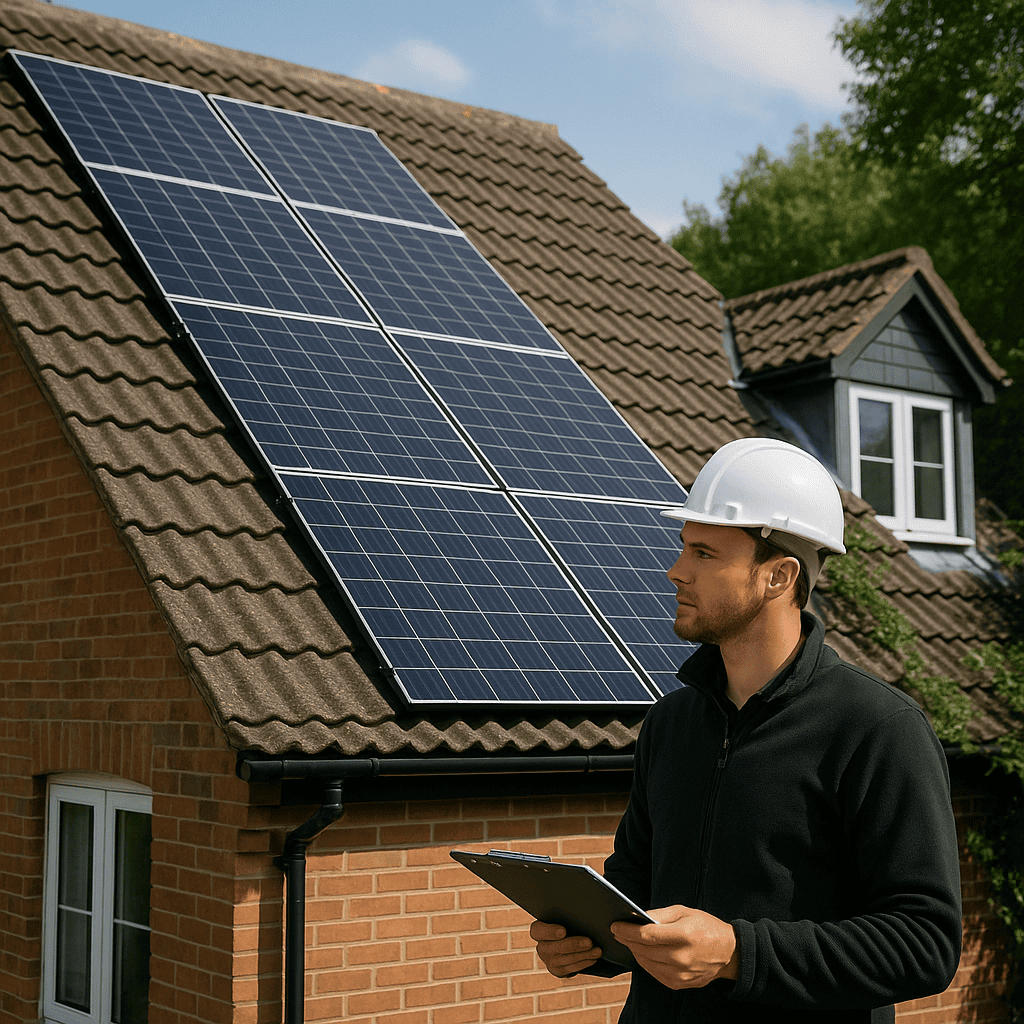
Solar Installation Process: Step by Step
Our comprehensive process begins with a free site assessment to evaluate your roof’s direction and shade levels, ensuring optimal solar panel placement. Our experts consider factors like roof angle and potential obstructions to design a bespoke solar solution tailored to your energy needs.
Next, our certified team handles the seamless installation of your solar PV system and battery storage. We prioritize safety and quality, adhering to industry standards and guidelines from the Renewable Energy Consumer Code. This ensures durability and efficiency, maximizing your investment in renewable energy.
Finally, we offer ongoing maintenance to keep your system running at peak performance. Our support includes regular check-ups and prompt customer service, so you can enjoy savings of £800–£1,200 a year on energy bills with peace of mind. Our end-to-end service guarantees a smooth transition to solar energy for homes and businesses alike.
Top 5 Questions About Roof Direction and Shade for Solar Panels
What roof directions are most suitable for residential solar panel installation?
South-facing roofs are ideal for residential solar panel installation, as they receive maximum sunlight throughout the day. East and west-facing roofs can also be suitable, though they may produce slightly less energy. North-facing roofs are generally less effective.
How does shade from nearby trees or buildings impact solar panel efficiency?
Shade from nearby trees or buildings can significantly reduce solar panel efficiency by obstructing sunlight. Even partial shading can lead to decreased energy production, making it essential to assess potential shade sources when planning solar panel installation for optimal performance.
Can I install solar panels on a north-facing roof?
Yes, solar panels can be installed on a north-facing roof, but they will generally produce less energy compared to south-facing installations. It's advisable to assess shading and consider alternative roof orientations for optimal performance.
What are the best roof types for maximizing solar energy production?
South-facing roofs are ideal for solar energy production, as they receive maximum sunlight throughout the day. Additionally, roofs with a pitch between 30 and 40 degrees enhance efficiency, while minimal shading from nearby structures or trees further optimises performance.
How can I assess the shading on my roof for solar panel placement?
To assess shading on your roof, observe sunlight patterns throughout the day and note any obstructions like trees or buildings. Consider using shading analysis tools or apps that can provide detailed insights into potential shading impacts on solar panel efficiency.