
How does pigeon protection impact the efficiency of residential solar panels?
Pigeon protection plays a crucial role in maintaining the efficiency of residential solar panels. Pigeons and other birds often seek shelter under solar panels, leading to the accumulation of droppings and debris, which can significantly impact the performance of the panels. By implementing effective bird-proofing measures, homeowners can ensure that their solar panels continue to operate at their optimal efficiency.
Bird proofing not only prevents the nesting of pigeons but also reduces the need for frequent cleaning and maintenance. This proactive approach helps in sustaining the energy output of the solar panels, thus maximising the return on investment for homeowners. By addressing the issue of bird interference, one can preserve the functionality and longevity of their solar energy system.
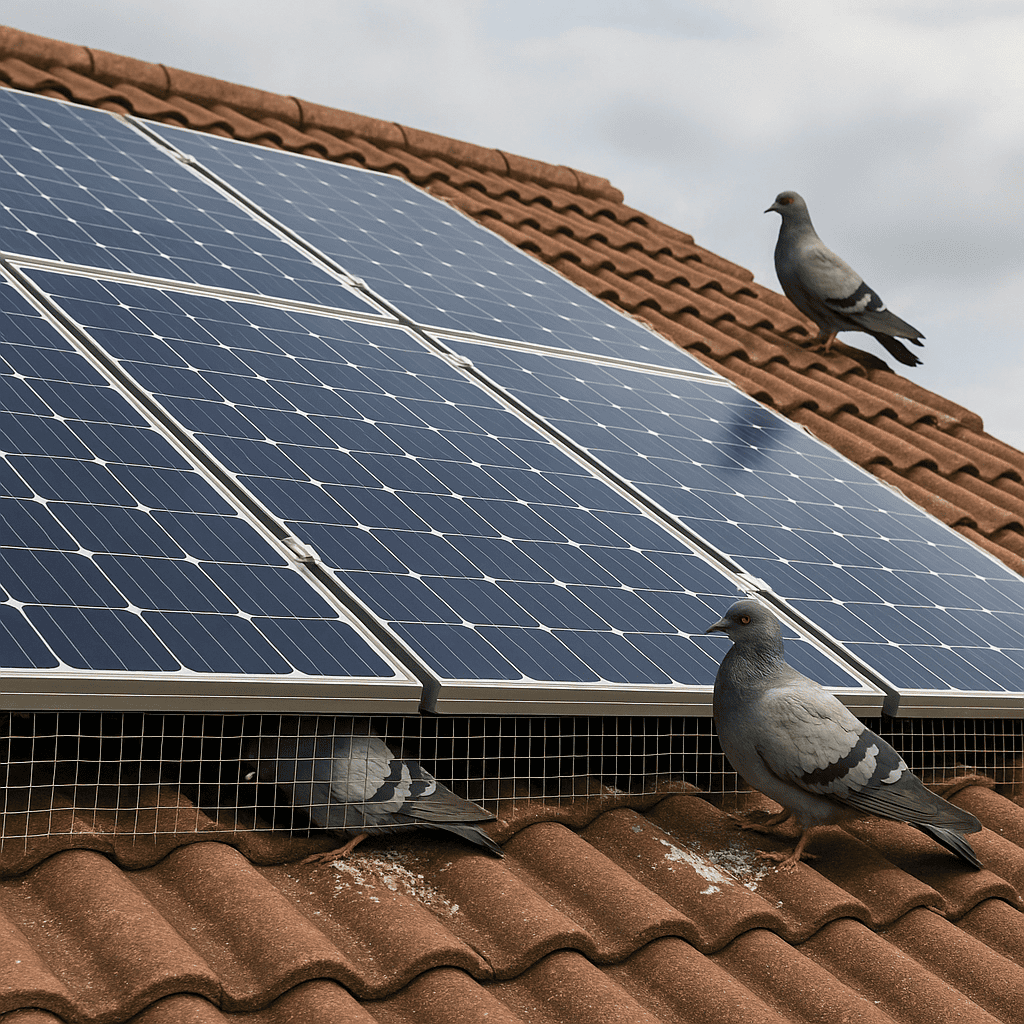
Bird proofing enhances the efficiency of solar panels by preventing pigeons from nesting underneath them, which can cause shading and reduce their energy output. When pigeons nest under panels, their droppings and nesting materials can obstruct sunlight, hindering the panels’ ability to generate electricity. This shading effect can lead to a significant decrease in the overall energy production of the solar system.
Moreover, the acidic nature of bird droppings can cause damage to the surface of solar panels over time, potentially leading to costly repairs or replacements. By installing barriers or deterrents, homeowners can protect their investment by ensuring that their solar panels remain free from such damage.
Different roof types may require specific bird-proofing solutions to effectively safeguard solar panels. For instance, tiled roofs might benefit from mesh or wire barriers, while flat roofs may require alternative methods. Selecting the appropriate protection method can help maintain the performance and efficiency of solar panels across various residential settings.