
How do Worcester's weather conditions affect solar panel efficiency?
Worcester’s weather conditions can significantly influence the efficiency of solar panels. Typically, solar panels operate most effectively under direct sunlight, which is more prevalent during clear, sunny days. However, Worcester’s climate, characterised by its variable weather patterns, including overcast skies and frequent rainfall, can lead to fluctuations in solar energy production. Despite these challenges, solar panels can still perform efficiently even on cloudy days, as they are designed to capture diffuse sunlight.
Understanding the relationship between Worcester’s weather and solar panel efficiency is crucial for maximising energy generation. While solar panels may produce less energy during cloudy or rainy periods, advancements in technology have improved their ability to generate power under less-than-ideal conditions. Moreover, Worcester’s longer daylight hours during certain seasons can help offset the impact of cloudier days, ensuring a consistent energy supply throughout the year.
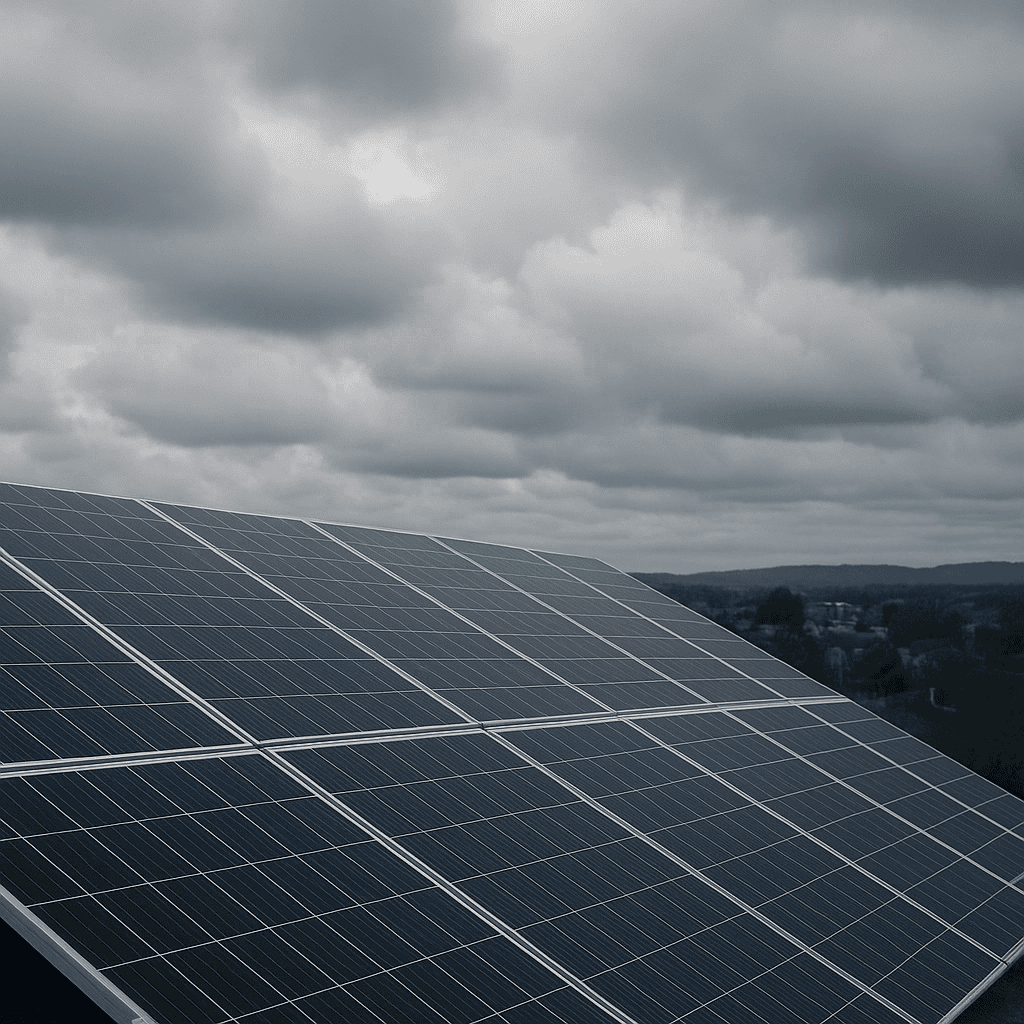
Solar panels are most efficient when they receive unobstructed sunlight, which is sometimes limited in Worcester due to its frequent cloud cover and rain. However, modern solar panels are still capable of absorbing diffuse sunlight, allowing them to generate electricity even when the sun is not directly visible. This adaptability ensures that solar panels remain a viable energy source despite Worcester’s unpredictable weather.
In addition to cloud cover, temperature plays a role in solar panel efficiency. Interestingly, solar panels function most effectively at cooler temperatures. During Worcester’s cooler months, solar panels can perform optimally, provided there is adequate sunlight. This means that even during the colder seasons, residents can still benefit from solar energy, as long as the panels are exposed to sufficient light.
Finally, Worcester’s seasonal variations in daylight hours can impact solar energy production. During the summer months, the extended daylight hours provide ample opportunity for solar panels to capture sunlight and generate electricity. Conversely, shorter days in winter may reduce energy production, but the efficiency of modern solar panels ensures that they can still provide a reliable energy source year-round. By understanding these dynamics, residents can better plan and optimise their solar energy systems to suit Worcester’s unique climate.