
Top 3 things about Scaffolding and Roof Access
Understanding scaffolding and roof access is essential for safe and efficient solar panel installations on flat roofs. Here are three key considerations.
Safety Regulations and Compliance
Adhering to safety regulations is crucial. Ensure that scaffolding meets UK standards to protect workers and prevent accidents during installation.
Access Equipment Selection
Choosing the right access equipment is vital. Options include scaffolding, ladders, or mobile platforms, depending on the roof height and installation complexity.
Weather Considerations
Weather conditions can impact installation safety. Avoid working on roofs during high winds or rain to minimise risks and ensure a secure installation process.
Essential Steps for Safe Roof Access
To initiate the process of scaffolding and roof access for your solar installation, first, it’s essential to conduct a thorough site assessment. This involves evaluating the condition of your flat roof, identifying potential hazards, and determining the best access points for the installation team. Engaging a qualified professional ensures that safety protocols are adhered to, minimizing risks during the installation process.
Once the assessment is complete, the next step is to choose the appropriate scaffolding system. Various options are available, including mobile scaffolding and fixed scaffolding, depending on the height and layout of your roof. Properly erected scaffolding not only provides safe access for installers but also protects your property during the installation. Understanding these initial steps can greatly enhance the efficiency and safety of your solar PV and battery installation project. Continue reading to learn more about the benefits of professional installation services.
Navigating the Installation Process
Our comprehensive solar installation begins with a free site assessment, where we evaluate your flat roof’s suitability for solar panels. This stage involves a detailed inspection to ensure structural integrity and optimal sun exposure, forming the foundation for a bespoke design tailored to your energy needs.
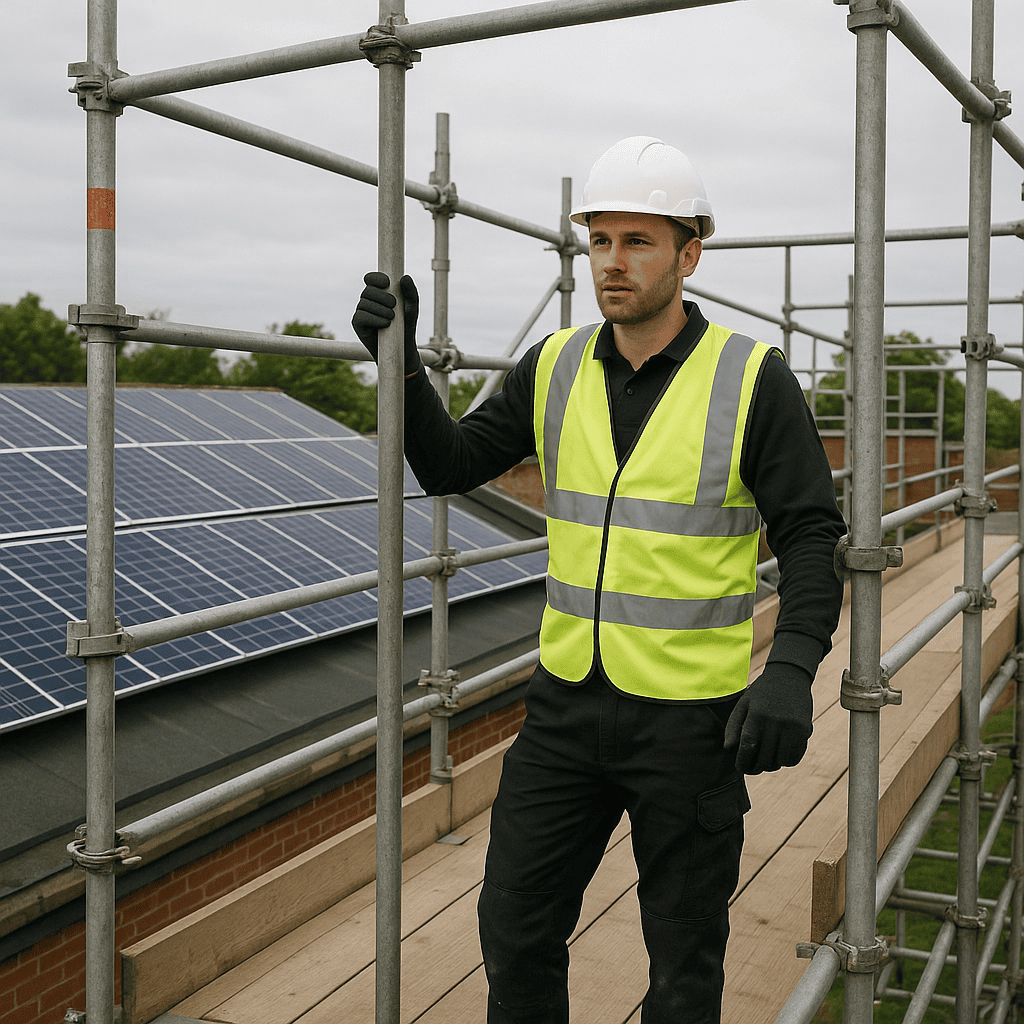
Once the design is finalized, the process progresses to the scaffolding and roof access phase. We ensure safe and efficient access to your roof, adhering to stringent safety protocols. Our team installs scaffolding that facilitates not only the installation but also the future maintenance of your system, ensuring long-term efficiency and safety.
Finally, our certified technicians execute the installation, integrating solar PV and battery systems seamlessly with your existing setup. Post-installation, we provide ongoing maintenance to maximize your energy savings, which typically range from £800 to £1,200 annually for homeowners. Our commitment to quality and safety ensures a smooth transition to sustainable energy.
Top 5 Questions About Scaffolding for Flat Roof Solar Installation
What types of scaffolding are used for residential solar installation?
For residential solar installations, common scaffolding types include tower scaffolds for easy access and mobile scaffolds for flexibility. These options ensure safety and efficiency while working on flat roofs, facilitating the installation of solar panels and battery systems.
How does scaffolding improve safety during solar panel installation?
Scaffolding provides a stable and secure platform for workers during solar panel installation on flat roofs, minimising the risk of falls and accidents. It ensures safe access to elevated areas, allowing for efficient and effective installation while adhering to safety regulations.
What is the process for accessing roofs during solar panel installation?
Accessing roofs for solar panel installation typically involves erecting scaffolding or using specialised access equipment. This ensures safety and stability while allowing technicians to securely install solar panels and battery systems on flat roofs, adhering to all relevant regulations.
Are there specific regulations for scaffolding when installing residential solar systems?
Yes, scaffolding for residential solar installations must comply with Health and Safety Executive regulations. This includes ensuring stability, proper access, and safety measures to protect workers and the public during the installation process on flat roofs.
How can homeowners prepare their roofs for solar installation access?
Homeowners should ensure their roofs are clear of debris, secure any loose tiles, and provide safe access points. It's also advisable to check for any structural issues and inform installers of any potential hazards to facilitate a smooth solar installation process.