
What is the post-install testing process for residential solar systems?
Once your residential solar system has been installed, the post-install testing process begins. This crucial phase ensures that your system operates efficiently and reliably, providing you with the benefits of solar energy. The testing process not only verifies the installation’s quality but also confirms that all components are functioning as expected, safeguarding your investment for the long term.
The post-install testing is a comprehensive procedure that involves checking all aspects of the solar system. It is designed to identify any potential issues before they can impact performance. The process culminates with a handover, where you receive all necessary documentation and guidance to manage your solar system effectively.
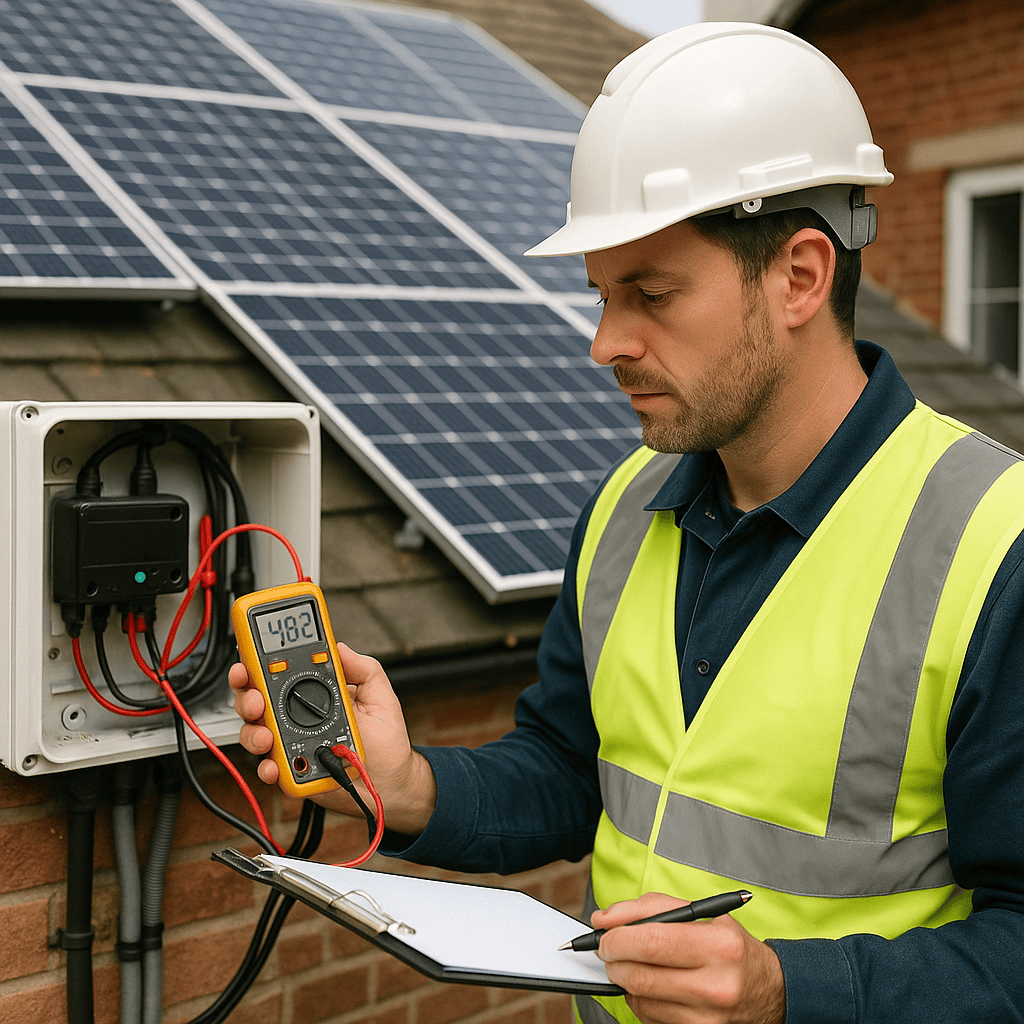
The first step in the post-install testing process is a detailed inspection of the entire solar setup. This includes examining the solar panels, inverter, and wiring to ensure they have been installed correctly and meet all safety standards. Technicians will also check for any physical damage or defects that could hinder performance.
Following the physical inspection, electrical testing is conducted to verify that the system is generating electricity as expected. This involves measuring the voltage and current to ensure that they are within the specified ranges. Additionally, the system’s connectivity to the grid or battery storage is tested to confirm seamless energy transfer.
Finally, the handover process provides you with essential information and documentation. This includes system manuals, warranty details, and performance expectations. You will also receive guidance on system monitoring and maintenance, empowering you to maximise the efficiency and lifespan of your solar investment.