
Top 3 things about Solar for Low Income Households
Understanding solar options can help low income households access affordable energy solutions and reduce their bills through available grants and schemes.
Available Grants and Schemes
Various government grants and schemes exist to support low income households in installing solar panels, making renewable energy more accessible and affordable.
Eligibility Criteria for Support
Eligibility for solar grants often depends on income level, property type, and existing energy efficiency measures, ensuring support reaches those who need it most.
Long-Term Savings on Energy Bills
Installing solar panels can significantly reduce energy bills over time, providing financial relief and promoting energy independence for low income households.
Getting Started with Solar for Low Income Households
To begin your journey towards solar energy, the first step is to explore available grants and financial assistance programs specifically designed for low income households. The UK government, along with various local councils and charities, offers schemes that can significantly reduce the upfront costs of solar installations. Researching these options can provide you with crucial information on eligibility criteria, application processes, and the potential savings you can achieve on your energy bills.
Once you have identified suitable grants, it’s essential to conduct a thorough assessment of your home’s solar potential. This includes evaluating your roof space, orientation, and energy consumption patterns. Many renewable energy companies, including those accredited under the Renewable Energy Consumer Code, offer free site assessments to help determine the best solar solution for your needs. By understanding your options and taking advantage of available resources, you can make informed decisions that lead to significant savings and a more sustainable energy future.
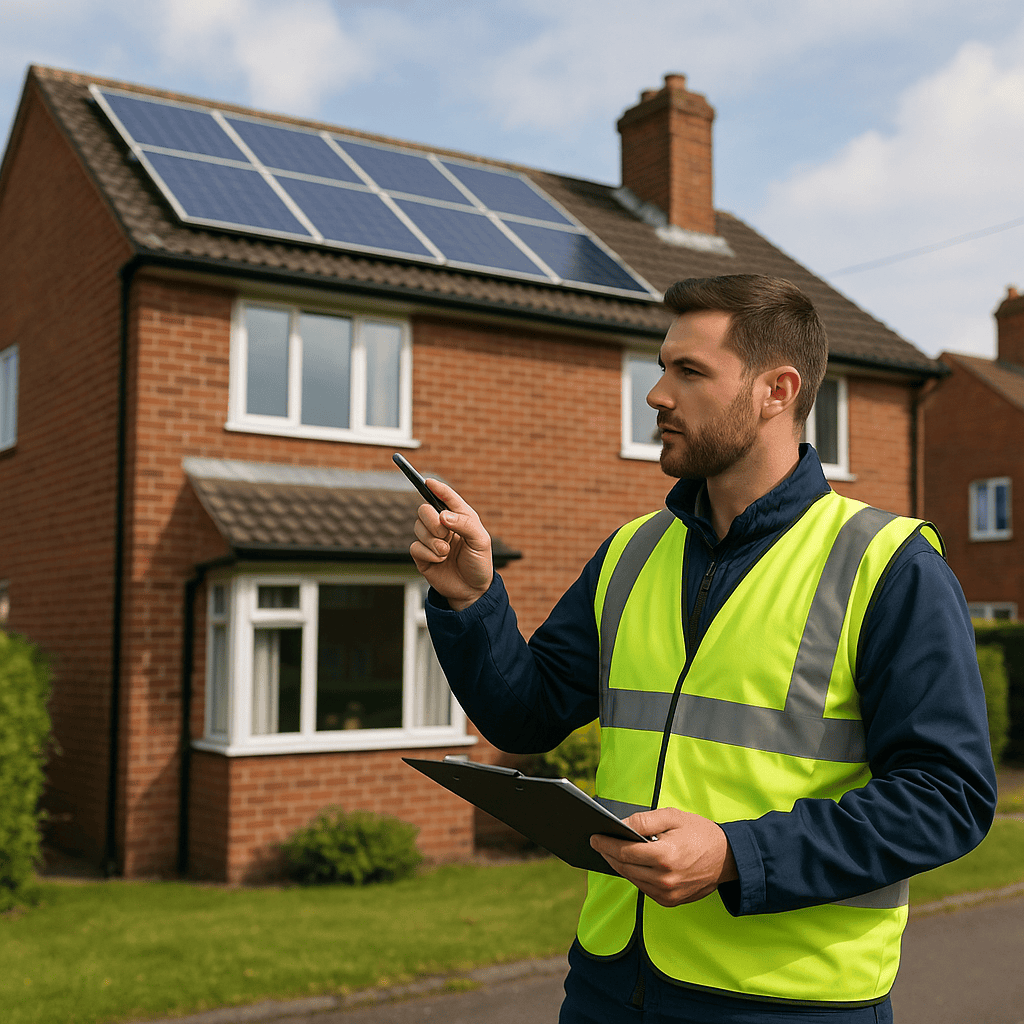
Solar Installation Process for Low Income Households
The first step in accessing affordable solar solutions is a free site assessment. We evaluate your property’s solar potential and discuss the available grants and schemes tailored for low-income households. Our team ensures you understand the financial benefits, including potential savings of £800–£1,200 annually on energy bills.
Following the assessment, we provide a bespoke solar PV and battery storage design. This personalized solution maximizes your energy efficiency. Our certified installation guarantees high-quality and safe implementation, ensuring your solar system operates optimally from day one. We adhere to the Renewable Energy Consumer Code to uphold our commitment to excellence.
After installation, we offer ongoing maintenance to keep your system performing at its best. This includes regular check-ups and support to address any concerns. Our comprehensive service ensures that your transition to renewable energy is seamless and beneficial, empowering you to reduce energy costs sustainably.
Top 5 Questions About Solar Grants for Low Income Households
What grants are available for low-income households to install solar panels?
Low-income households in the UK can access grants such as the Energy Company Obligation (ECO) and the Solar Together scheme, which provide financial support for solar panel installations, helping to reduce energy costs and improve energy efficiency.
How can low-income families access solar energy schemes in their area?
Low-income families can access solar energy schemes through local councils, charities, and government initiatives. It's advisable to check with your local authority or visit government websites for information on available grants and support tailored to your area.
What are the eligibility requirements for solar grants for low-income households?
Eligibility typically includes being a recipient of certain benefits, such as Universal Credit or Pension Credit, and living in a property with low energy efficiency ratings. Specific criteria may vary by grant scheme, so it's essential to check individual programme requirements.
How much can low-income households save on energy bills with solar power?
Low-income households can save between £200 to £400 annually on energy bills by installing solar panels, depending on energy usage and system size. Additionally, government grants and schemes can further reduce installation costs, enhancing overall savings.
What steps should low-income households take to apply for solar installation grants?
Low-income households should first research available grants and schemes through government websites or local authorities. Next, gather necessary documentation, such as proof of income, and then apply directly to the relevant programme or contact approved solar installers for assistance.