
Top 3 things about Winter Solar Performance
Understanding how to enhance solar efficiency during winter can help homeowners maximise energy production despite shorter days and colder temperatures.
Snow and Ice Management
Regularly clear snow and ice from solar panels to prevent shading and maintain optimal energy production. Panels are designed to shed light snow naturally.
Angle of Solar Panels
Adjusting the tilt angle of solar panels can capture more sunlight during winter months. A steeper angle helps reduce snow accumulation and optimises sun exposure.
Monitor Energy Production
Keep track of your solar system's performance through monitoring tools. This helps identify any issues and ensures the system operates efficiently throughout winter.
Practical Steps to Enhance Winter Solar Performance
To optimize your solar system’s performance during the winter months, start by ensuring your panels are clean and free from debris. Snow and ice accumulation can block sunlight, so gently brushing off any snow or using a solar panel heating solution can help maintain efficiency. Regularly check for any shading caused by nearby trees or structures, as even partial shading can significantly impact energy production.
Next, consider the angle of your solar panels. If possible, adjust their tilt to capture more sunlight during the lower winter sun. This can maximize exposure and improve energy output. Additionally, investing in battery storage can store excess energy generated during sunnier winter days for use during darker periods. By taking these practical steps, you can enhance the performance of your solar system, ensuring you continue to benefit from renewable energy throughout the colder months.
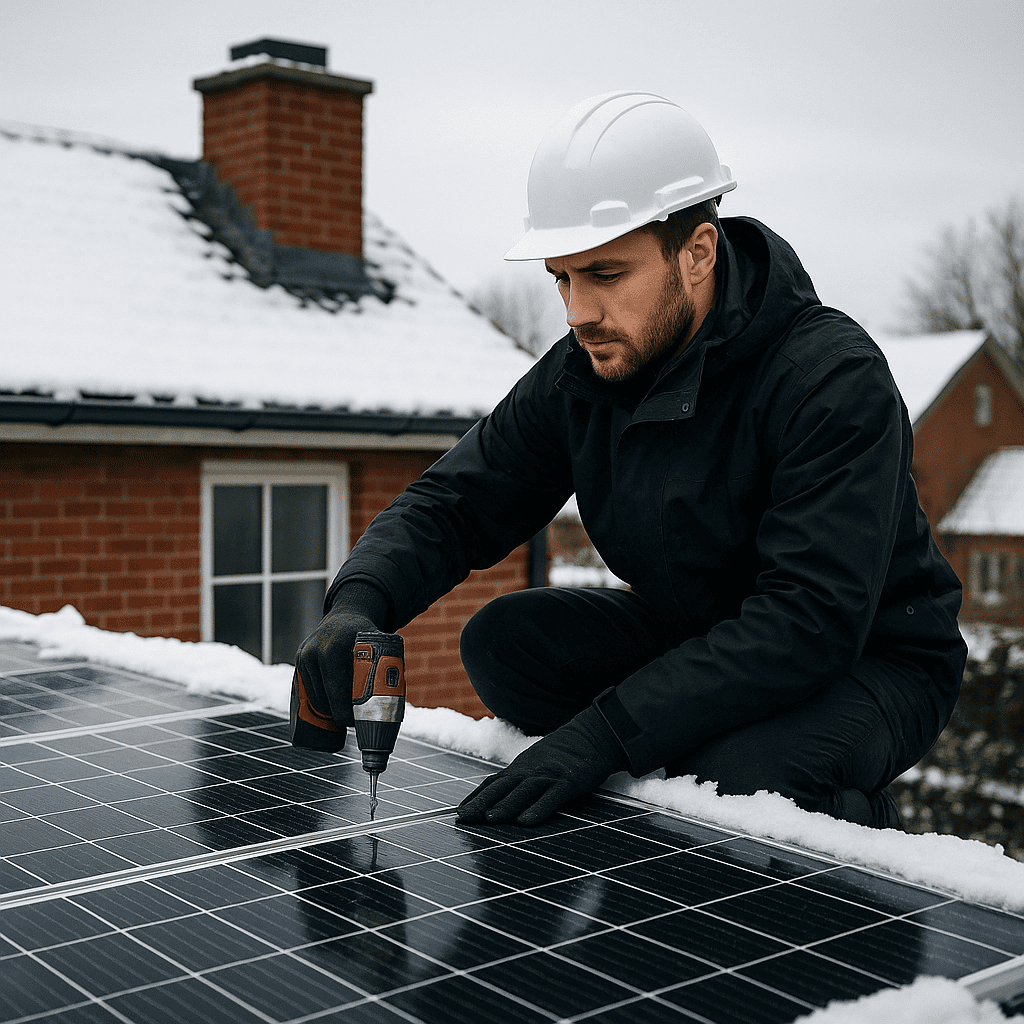
Optimizing Winter Solar Performance
To maximize solar efficiency during winter, our process begins with a comprehensive site assessment. This free evaluation ensures we understand your unique energy needs and the specific challenges posed by shorter daylight hours and potential shading from snow or nearby structures. Our team, certified under the Renewable Energy Consumer Code, uses these insights to craft a bespoke solar PV system design tailored to your home.
Once the design is finalized, our expert installers ensure a seamless and safe installation, adhering to the highest quality standards. We select components that perform optimally even in low-light conditions, enhancing the system’s ability to capture and store solar energy. This attention to detail helps typical homeowners save between £800 and £1,200 annually on energy bills.
Post-installation, we offer ongoing maintenance to keep your system at peak performance. Regular check-ups and cleaning help prevent efficiency losses due to grime or debris, ensuring your solar investment continues to deliver savings throughout the winter months.
Top 5 Questions About Winter Solar Performance
How do solar panels perform in winter weather conditions?
Solar panels can still generate electricity in winter, although efficiency may decrease due to shorter daylight hours and potential snow cover. However, cold temperatures can enhance performance, so regular maintenance and optimising positioning are key for maximising output.
Will snow accumulation on solar panels affect their energy production?
Yes, snow accumulation can temporarily reduce energy production by blocking sunlight. However, solar panels are designed to shed snow easily due to their smooth surfaces and angled installations, often resulting in quick recovery of efficiency once the snow melts.
What steps can I take to optimize my solar system's performance during winter?
To enhance your solar system's efficiency in winter, regularly clear snow and debris from panels, ensure optimal angle for sunlight exposure, and monitor system performance to identify any issues promptly. Regular maintenance will also help maximise energy production.
Do solar panels work efficiently on cloudy or shorter winter days?
Yes, solar panels can still generate electricity on cloudy or shorter winter days, although their efficiency may be reduced. They capture diffused sunlight effectively, ensuring some energy production even in less-than-ideal conditions. Regular maintenance can further enhance performance.
How does temperature impact the efficiency of solar panels in winter?
Solar panels generally operate more efficiently in cooler temperatures. While winter may reduce sunlight hours, the lower temperatures can enhance the panels' performance, allowing them to convert sunlight into electricity more effectively than in hotter conditions.