
How does the size of my roof affect the number of solar panels I can install?
The size of your roof is a critical factor in determining the number of solar panels you can install. Larger roofs generally provide more space for solar panels, allowing for greater energy production. However, it’s not just about the sheer size; the shape and orientation of your roof also play a significant role in the feasibility and efficiency of your solar panel system.
When considering solar panel installation, it is essential to evaluate the usable space on your roof. Obstacles such as chimneys, skylights, and dormer windows can limit the available area. Additionally, the angle and direction of your roof will affect how much sunlight the panels receive, influencing their overall efficiency and the number of panels you might need to meet your energy goals.
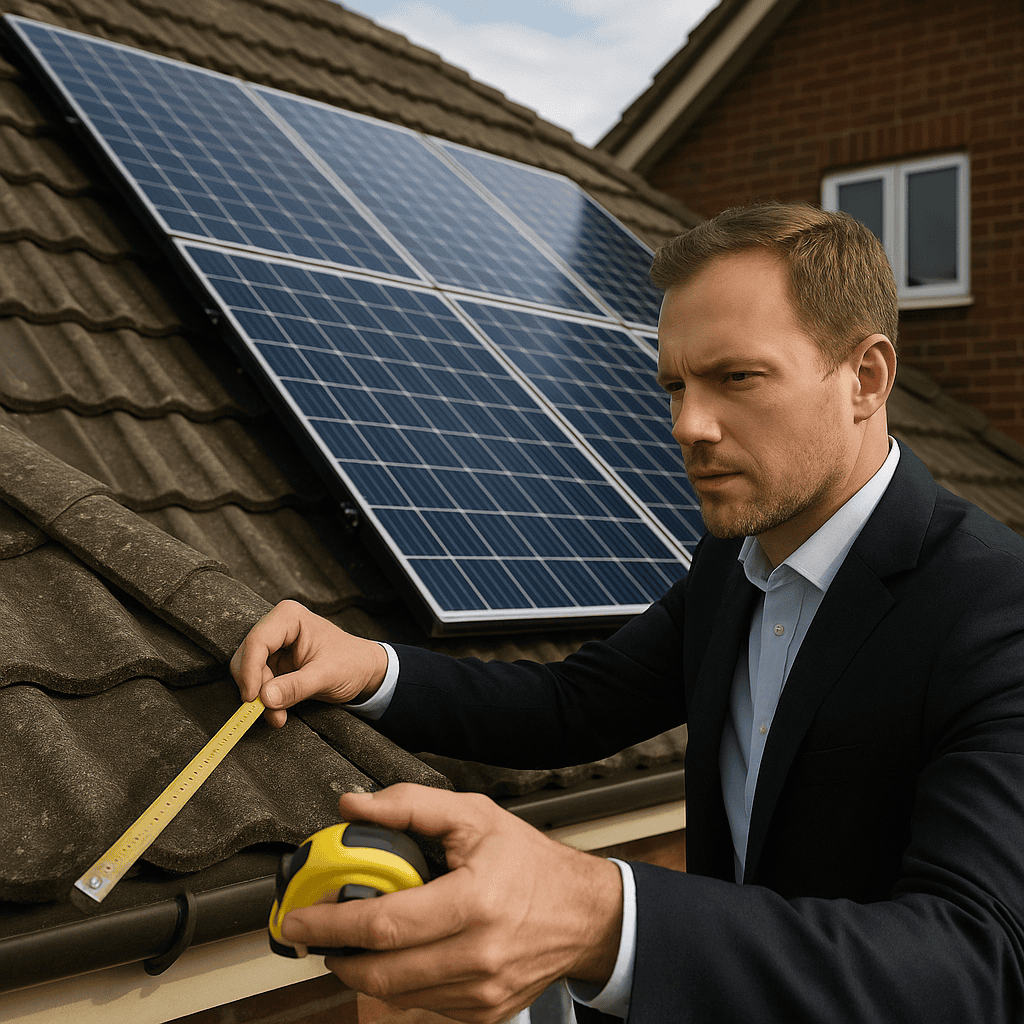
To maximise the potential of your rooftop solar installation, a thorough assessment of your roof’s dimensions is necessary. A professional evaluation will measure the available space, accounting for any obstructions and ensuring that the panels can be optimally placed to capture the most sunlight. This assessment will help determine the number of panels that can fit on your roof while also considering the spacing required for maintenance and safety.
Another crucial factor is the efficiency of the solar panels themselves. More efficient panels may generate more electricity in a smaller area, meaning you might need fewer panels to achieve your desired energy output. Therefore, even if your roof is relatively small, high-efficiency panels can still provide substantial energy savings.
Finally, consider the orientation and tilt of your roof, as these can significantly influence solar panel performance. South-facing roofs typically offer the best conditions for solar energy capture in the UK, but east or west-facing roofs can also be effective. By understanding these factors, you can make informed decisions about the optimal number of solar panels for your roof space.