
Top 3 Things About Running Your House on Solar
Understanding solar energy can help you effectively power your home and reduce electricity costs.
Solar Panel Installation Costs
Initial costs for solar panel installation can be significant, but government incentives and long-term savings on energy bills can offset these expenses over time.
Energy Storage Options
Incorporating battery storage allows you to store excess solar energy for use during non-sunny periods, enhancing your energy independence and reliability.
Maintenance Requirements
Solar panels generally require minimal maintenance, but regular cleaning and occasional inspections can ensure optimal performance and longevity of the system.
Practical Steps to Harness Solar Energy
To start powering your home with solar energy, the first step is to assess your energy needs. Review your recent electricity bills to understand your consumption patterns and identify how much energy you would like to generate through solar panels. Next, consider the orientation and shading of your roof, as these factors significantly impact solar efficiency.
Once you have a clear idea of your energy requirements and roof suitability, schedule a professional site assessment. This assessment will provide tailored recommendations on the right solar PV system for your home, ensuring optimal performance and cost-effectiveness. After selecting a system, certified installation will follow, ensuring high-quality and safe work. With proper maintenance, your solar energy system can provide significant savings on your electricity bills, making it a worthwhile investment for your home. Continue reading to explore more about the benefits of solar energy.
Exploring the Solar Transition
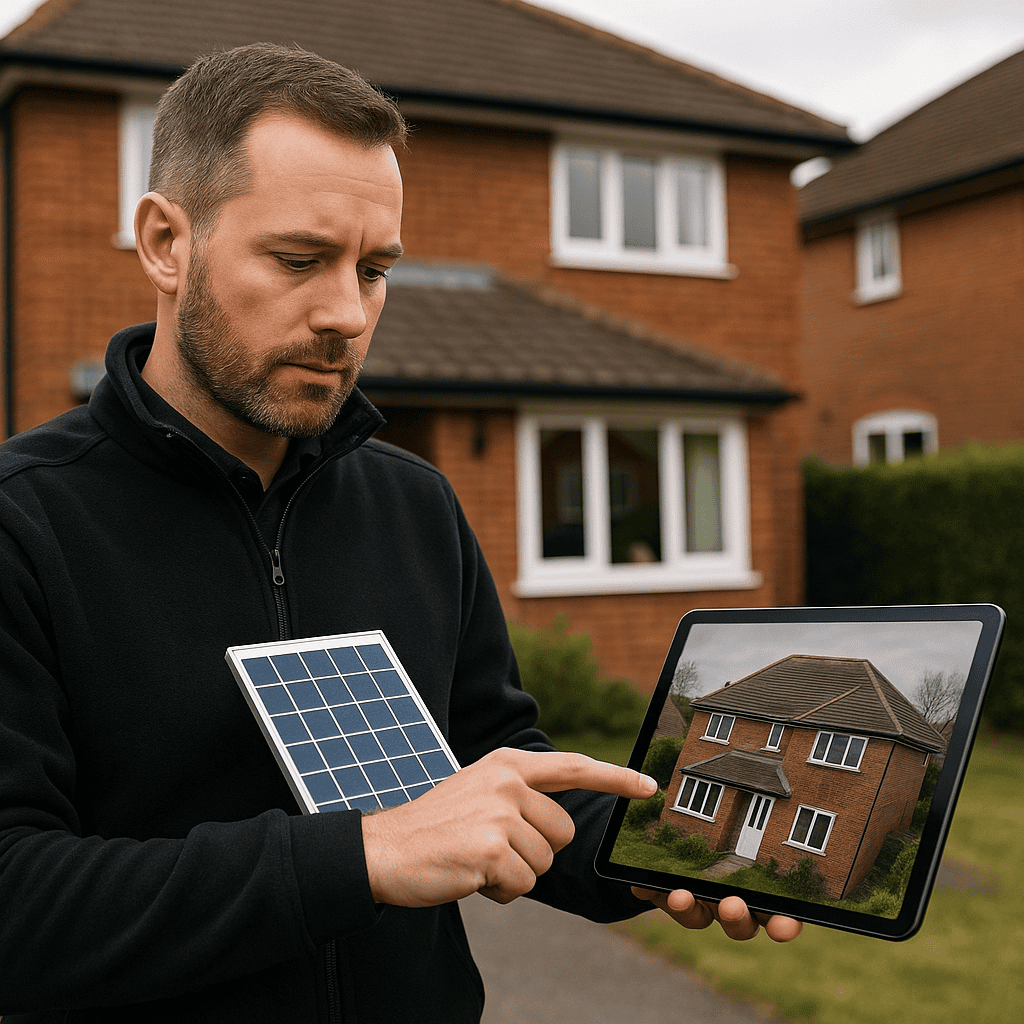
The journey to solar energy begins with a complimentary site assessment conducted by our expert team. This initial step involves evaluating your home’s solar potential, taking into account roof orientation, shading, and energy needs. Our specialists ensure a tailored solution that maximizes efficiency and savings.
Following the assessment, our design team crafts a bespoke solar PV and battery storage plan. This customized approach guarantees that every component is optimized for your unique circumstances, ensuring seamless integration into your home. Our commitment to high-quality work is underscored by our certification with the Renewable Energy Consumer Code, providing peace of mind.
Installation is executed by certified professionals, prioritizing safety and quality at every stage. Post-installation, we offer ongoing maintenance to ensure your system operates at peak performance. With potential savings of £800–£1,200 annually, transitioning to solar not only benefits the environment but also significantly reduces your energy bills.
Top 5 Questions About Running Your House on Solar
Can I run my entire house on solar energy?
Yes, you can power your entire home with solar energy, provided you have a properly sized solar panel system. Factors such as your energy consumption, roof space, and local sunlight availability will influence the system's effectiveness and efficiency.
What appliances can I power with solar energy in my home?
Solar energy can power a wide range of household appliances, including lighting, refrigerators, washing machines, and heating systems. The capacity of your solar system will determine how many appliances you can run simultaneously and their overall energy consumption.
How much solar power do I need to run my house?
The amount of solar power required depends on your energy consumption, typically measured in kilowatt-hours (kWh). On average, a UK home may need a solar system of 3 to 4 kW to cover most of its electricity needs.
Will solar panels work during cloudy or rainy days for my home?
Yes, solar panels can still generate electricity on cloudy or rainy days, although their efficiency may be reduced. They harness diffused sunlight, ensuring you can benefit from solar energy even in less-than-ideal weather conditions.
What are the costs and savings of running a house on solar energy?
The initial cost of installing solar panels typically ranges from £4,000 to £8,000, depending on the system size. Homeowners can save up to £300 annually on electricity bills, with potential additional income from selling excess energy back to the grid.