
Top 3 things about Home Solar Payback Period
Understanding the payback period for home solar systems is essential for homeowners considering solar energy investments. Here are the key factors to consider.
Initial Installation Costs
The upfront cost of solar panel installation greatly influences the payback period. Higher initial investments typically lead to longer payback durations, depending on energy savings.
Energy Savings Calculation
Estimating potential energy savings is crucial. This includes analysing current energy bills and predicting future energy price increases to determine overall savings from solar.
Government Incentives and Grants
Available government incentives, such as grants or feed-in tariffs, can significantly reduce the payback period by lowering initial costs and enhancing overall savings.
Getting Started with Solar Payback Calculations
To estimate the payback period for your home solar system, begin by assessing your energy consumption. Review your recent electricity bills to determine your average monthly usage in kilowatt-hours (kWh). This will help you understand how much energy your solar panels need to generate to offset your costs. Next, consider the size and capacity of the solar system you plan to install, as this will directly impact your potential savings and payback period.
Once you have this information, you can calculate the initial investment required for your solar panels and battery storage. Factor in installation costs, available incentives, and the expected annual savings on energy bills, which typically range from £800 to £1,200 for homeowners. By comparing your investment with your annual savings, you can derive the payback period, helping you make an informed decision about moving forward with solar energy for your home.
Navigating the Solar Installation Process
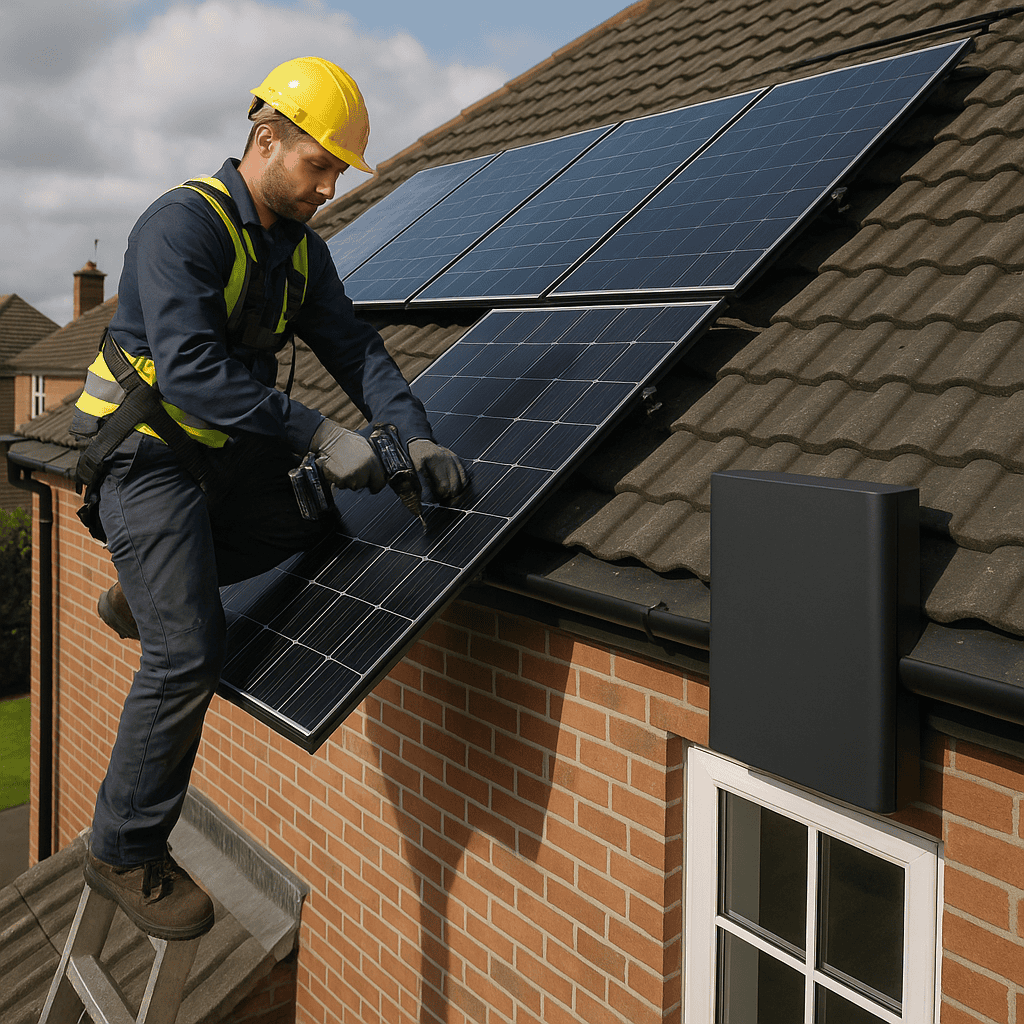
Our comprehensive solar installation process begins with a free site assessment where our experts evaluate your property’s suitability for solar panels. This step ensures that the solar system is tailored to your energy needs and maximizes efficiency.
Following the assessment, we design a bespoke solar solution, integrating solar panels and battery storage to optimize your energy savings. Our team handles all aspects of the design, ensuring compliance with the Renewable Energy Consumer Code standards for safety and quality.
Once the design is finalized, our certified technicians proceed with the installation, carefully positioning panels for optimal sun exposure. Post-installation, we offer ongoing maintenance to ensure your system operates at peak performance. With our solutions, homeowners typically save between £800–£1,200 annually on energy bills, making solar a financially wise investment.
Top 5 Questions About Home Solar Payback Period
What is the average payback period for home solar systems?
The average payback period for home solar systems in the UK typically ranges from 5 to 10 years, depending on factors such as installation costs, energy consumption, and available incentives. This timeframe allows homeowners to start realising savings on energy bills.
How do installation costs affect the payback period for residential solar?
Higher installation costs can extend the payback period for residential solar systems, as they increase the initial investment. Conversely, lower installation costs can shorten the payback period, allowing homeowners to recoup their expenses more quickly through energy savings.
What factors influence the payback period for solar energy in homes?
Key factors include the initial installation cost, local electricity rates, available government incentives, solar panel efficiency, energy consumption patterns, and the amount of sunlight your location receives. These elements collectively determine how quickly you can recoup your investment.
How can homeowners calculate the payback period for their solar investment?
Homeowners can calculate the payback period by dividing the total installation cost of the solar panels by the annual savings on energy bills. This will provide an estimate of how many years it will take to recoup the initial investment.
What incentives can shorten the payback period for home solar systems?
Government incentives such as the Smart Export Guarantee (SEG) and various local grants can significantly reduce the initial costs of solar installations, thereby shortening the payback period. Additionally, tax reliefs and financing options may further enhance savings on energy costs.