
How Solar Panels Reduce Energy Costs
Solar panels are a smart investment for businesses looking to cut energy costs. By harnessing renewable energy, they provide significant savings while contributing to sustainability goals.
Maximising Energy Efficiency
Clean solar panels operate at peak efficiency, ensuring that businesses benefit from the maximum energy output possible. This leads to substantial reductions in electricity bills.
Long-term Financial Benefits
Investing in solar energy not only lowers immediate expenses but also protects against rising energy prices, providing long-term financial stability for your business.
Environmental and Economic Impact
By reducing reliance on fossil fuels, solar panels enhance corporate responsibility while promoting cost savings, making them an essential component of modern business strategy.
The Cleaning and Maintenance Process
To ensure optimal performance and longevity of solar panels, regular cleaning and maintenance are crucial. The process begins with a thorough assessment to determine the level of soiling, which can include dust, bird droppings, and other debris affecting efficiency. This initial evaluation is essential for tailoring the cleaning approach to the specific needs of the panels, ensuring that the most effective methods and solutions are employed.
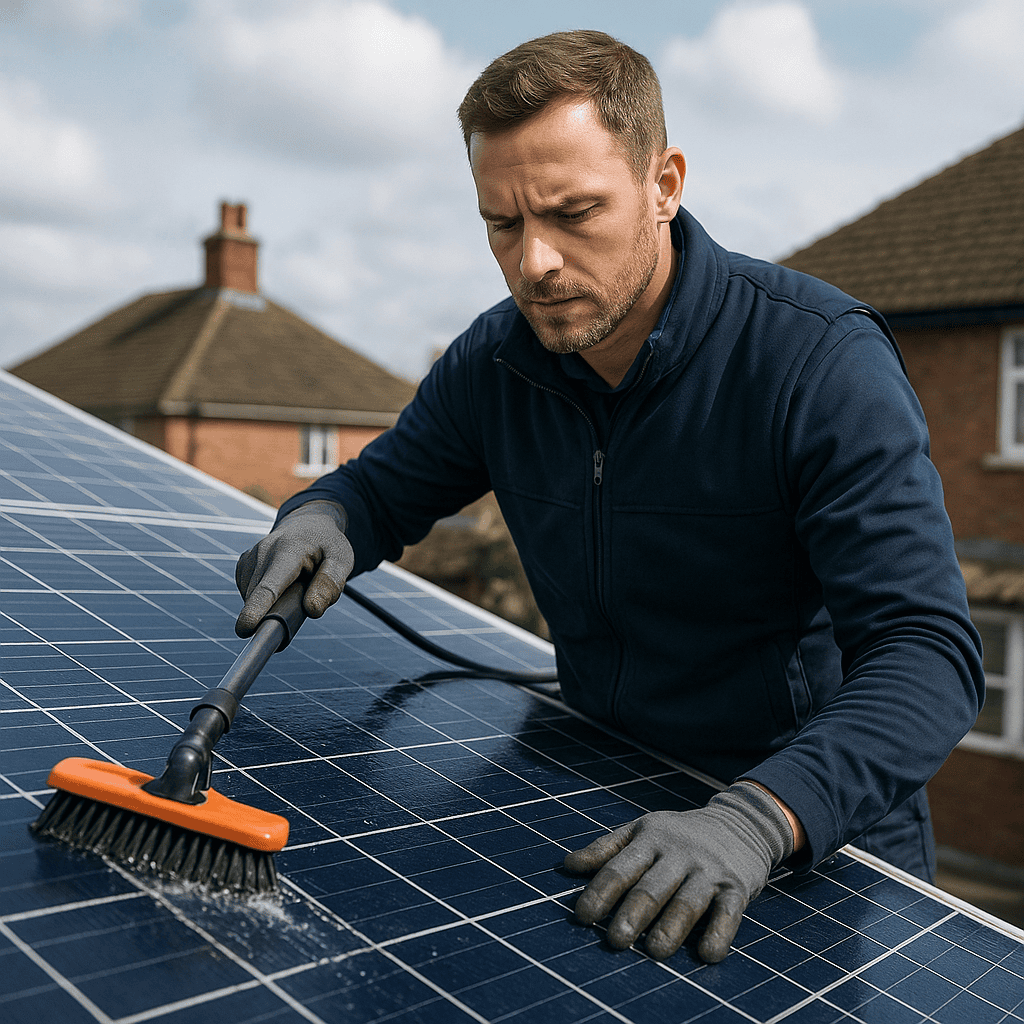
Once the assessment is completed, the actual cleaning process is carried out using specialized equipment and eco-friendly cleaning agents. The use of soft brushes and low-pressure water jets ensures that the solar panels are cleaned without causing any damage to their surface. This careful approach not only restores the panels’ efficiency but also helps prevent potential issues that might arise from improper cleaning techniques.
After cleaning, a detailed inspection is conducted to check for any signs of wear or damage, such as cracks or loose connections. This step is vital for early detection of issues that could compromise the system’s performance. Ongoing maintenance, including regular inspections and cleanings, is recommended to uphold the high standards of efficiency and safety that the company is known for. This proactive approach not only enhances energy savings but also extends the lifespan of the solar PV systems.
Solar Panel Cleanliness
Dirty solar panels can lose up to 20% efficiency, making regular cleaning key for optimal energy production.
Essential Steps for Maintaining Solar Panel Efficiency
To ensure your solar panels operate at peak efficiency, start by scheduling regular inspections. Assessing the panels every six months helps identify any dirt, debris, or potential damage that could hinder performance. Clean solar panels with a soft brush or sponge using water, especially during the early morning or late afternoon to avoid rapid evaporation. Avoid abrasive cleaners that may scratch the surface and reduce efficiency.
Next, monitor your energy production consistently. Most solar systems come with monitoring tools that allow you to track energy output in real-time. If you notice a significant drop in performance, investigate further to determine if external factors like shading from nearby trees or buildings are affecting your system. Staying proactive about maintenance and monitoring will not only keep your solar panels clean but also enhance their longevity and effectiveness, ultimately leading to greater energy savings.
Top 3 things about Cleaning Solar Panels
Understanding how to clean solar panels can enhance their efficiency and longevity. Here are the key considerations for effective maintenance.
Frequency of Cleaning
Solar panels should be cleaned at least twice a year, or more frequently in areas with high dust, pollen, or bird activity to maintain optimal performance.
Safe Cleaning Methods
Use soft brushes or squeegees with warm, soapy water. Avoid abrasive materials that can scratch the surface, potentially reducing efficiency and lifespan.
Weather Considerations
Clean solar panels on cool, overcast days to prevent rapid drying, which can leave streaks and reduce the effectiveness of the cleaning process.
Top 5 Questions About Cleaning Solar Panels
What are the common causes of soiling loss in solar panels?
Common causes of soiling loss in solar panels include dust, bird droppings, pollen, and environmental pollutants. These contaminants can accumulate on the surface, reducing light absorption and overall efficiency, necessitating regular cleaning to maintain optimal performance.
How often should solar panels be cleaned to maximize their performance?
Solar panels should ideally be cleaned every six months to a year, depending on local environmental conditions. Regular cleaning helps remove dirt, dust, and debris, ensuring optimal performance and efficiency in energy production.
What are the best methods for cleaning solar panels to reduce soiling loss?
To effectively clean solar panels and minimise soiling loss, use a soft brush or sponge with warm, soapy water. Avoid harsh chemicals and abrasive materials. Regularly inspect and clean panels, especially in areas with heavy dust or bird droppings.
How does soiling affect the overall efficiency of solar energy systems?
Soiling can significantly reduce the efficiency of solar energy systems by blocking sunlight from reaching the panels. Accumulated dirt, dust, and debris can lead to energy production losses of up to 25%, emphasising the importance of regular cleaning for optimal performance.
What are the cost implications of soiling loss on solar technology performance?
Soiling loss can significantly reduce solar panel efficiency, leading to decreased energy output. This reduction can result in lower financial returns, as less electricity is generated for sale or self-consumption, ultimately affecting the overall profitability of solar investments.