
What are the different types of solar panels available for residential use?
When considering solar panels for residential use, it’s essential to understand the various types available to make an informed decision. Solar panels are a significant investment, and choosing the right type can maximise efficiency and cost-effectiveness for your home. Each type of solar panel comes with its own set of benefits, characteristics, and price points.
The main types of solar panels available for residential use are monocrystalline, polycrystalline, and thin-film. Each type has distinct features that cater to different needs and preferences. By exploring these options, homeowners can select the most suitable solar panel to meet their energy requirements and budget constraints.
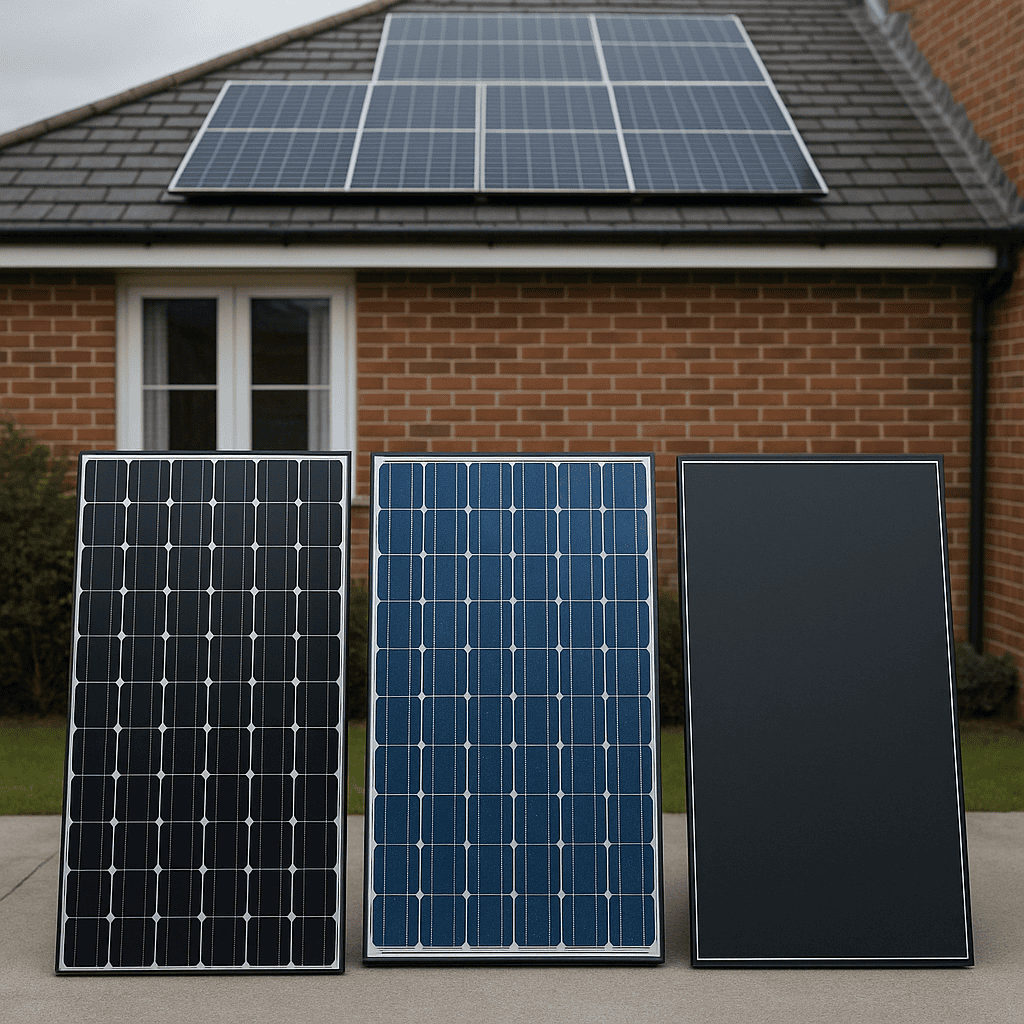
Monocrystalline solar panels are renowned for their high efficiency and sleek appearance. They are made from a single crystal structure, which allows electrons to move more freely, resulting in superior performance, especially in limited space. Although they tend to be more expensive, their longevity and efficiency make them a popular choice for homeowners seeking maximum energy output.
Polycrystalline solar panels, on the other hand, are made from multiple silicon crystals. This manufacturing process is generally less costly, making them a more budget-friendly option. While they are typically less efficient than monocrystalline panels, they still offer a reliable energy solution for many residential settings.
Thin-film solar panels are the most versatile in terms of application, due to their lightweight and flexible nature. They are generally less efficient than crystalline panels but can be a suitable option for unique installations or when aesthetics are a primary concern. Their lower cost and adaptability make them an attractive choice for certain situations, despite their larger space requirements for equivalent energy output.