
How do solar panels work and what are their main components?
Solar panels are a cornerstone of renewable energy technology, converting sunlight into usable electricity. This transformation is achieved through a fascinating process that begins when sunlight strikes the panel. The panels are primarily made of photovoltaic (PV) cells, which harness the sun’s energy and generate an electric current. Understanding how solar panels work involves delving into both the science behind photovoltaic technology and the components that make up these efficient devices.
Examining the main components of solar panels reveals a synergy of elements working together to capture and convert solar energy. The key components include PV cells, a protective glass layer, a backing sheet, and a metal frame. Additionally, an inverter is crucial for converting the direct current (DC) generated into alternating current (AC), which is used by most household appliances. Together, these components create an effective system for harnessing sustainable energy.
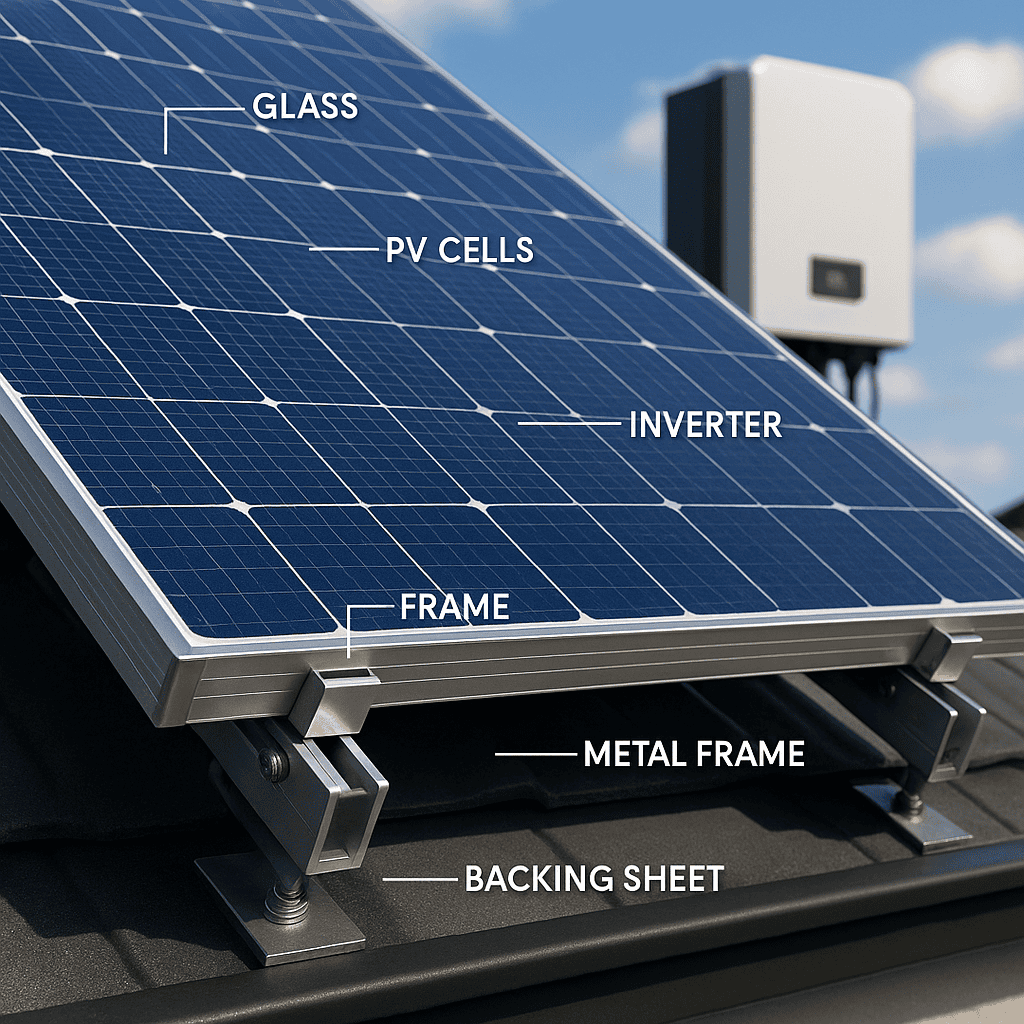
At the heart of a solar panel are photovoltaic cells, typically made from silicon. When sunlight hits these cells, it excites electrons, creating an electric current. This process is known as the photovoltaic effect. Each PV cell generates a small amount of electricity, but when combined in large numbers within a panel, they produce a significant output. The efficiency of these cells is crucial, as it determines how much sunlight can be converted into usable electricity.
The protective glass layer covering the PV cells serves a dual purpose. It shields the cells from environmental damage while allowing maximum sunlight to penetrate. Beneath the glass, a backing sheet provides additional protection and insulation, enhancing the durability and longevity of the panel. The metal frame holds everything together, ensuring structural integrity and ease of installation on rooftops or other surfaces.
The inverter is an essential component of the solar panel system, responsible for converting the direct current (DC) produced by the PV cells into alternating current (AC). AC is the standard form of electricity used in homes and businesses, making this conversion crucial for practical use. This entire system, from the PV cells to the inverter, works in harmony to provide a reliable and renewable source of energy, reducing reliance on conventional power sources and contributing to environmental sustainability.