How Solar Panels Reduce Energy Costs
Solar panels are a smart investment for businesses aiming to lower energy expenses. By harnessing renewable energy, companies can significantly cut their reliance on conventional power sources and reduce overhead costs.
Lowering Utility Bills
Solar panels generate electricity from sunlight, which can directly power business operations and reduce monthly utility bills significantly.
Long-Term Savings
Investing in solar technology leads to substantial long-term savings as businesses benefit from reduced energy costs and potential government incentives.
Increased Property Value
Installing solar panels can enhance property value, making the premises more attractive to potential buyers or tenants, thus benefiting business owners financially.
Navigating the Solar Installation Journey
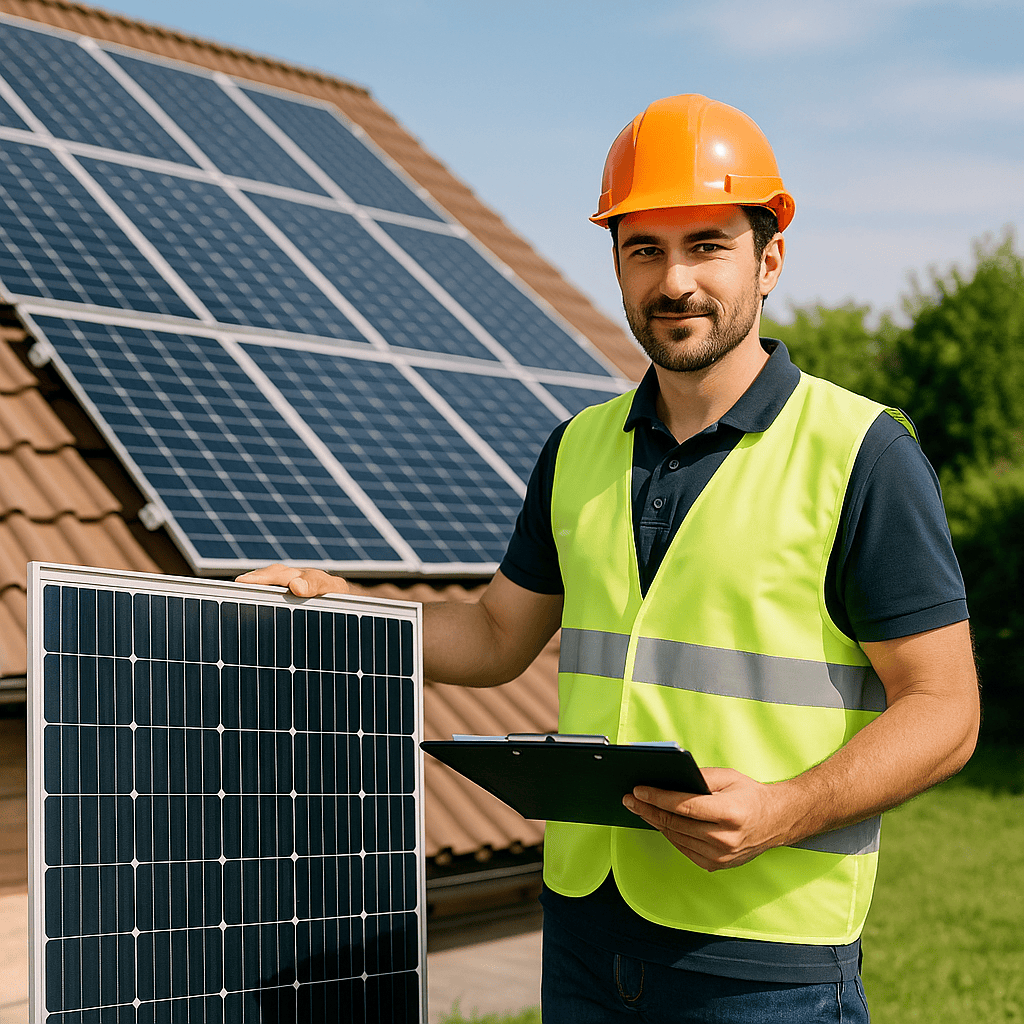
Embarking on the path to solar energy with our UK-based renewable energy company is a seamless and rewarding experience. It all begins with a complimentary site assessment, where our experts evaluate your home or business for solar PV compatibility. This initial step ensures that you receive a system tailored to your energy needs, maximizing both efficiency and savings.
Once the assessment is complete, our team crafts a bespoke design that aligns with your property’s unique characteristics and energy goals. This custom approach not only enhances performance but also guarantees a high-quality installation. Certified by the Renewable Energy Consumer Code, our installations prioritize safety and excellence, providing peace of mind and compliance with industry standards.
The journey doesn’t end with installation. We offer ongoing maintenance to ensure your solar system operates at peak efficiency, safeguarding your investment and contributing to significant energy bill savings—typically between £800–£1,200 annually. This commitment to quality and customer satisfaction makes transitioning to solar power a smart and sustainable choice.
Solar Power Surge
The UK is rapidly adopting solar, with installations reaching over 15 GW as of 2023, powering millions of homes.
Getting Started with Solar Technology
To begin exploring solar technology for your home or business, the first step is to conduct a thorough energy assessment. This involves evaluating your current energy consumption and understanding how solar photovoltaic (PV) systems can best meet your needs. You can use online tools or consult with professionals to get insights on your energy usage patterns and potential savings.
Next, familiarize yourself with the different types of solar panels and battery storage options available in the market. Research reputable solar technology providers to compare their offerings and understand the benefits of each system. Look for companies that are accredited, such as those listed with the Renewable Energy Consumer Code, ensuring high-quality installations and ongoing support. This foundational knowledge will empower you to make informed decisions about integrating solar technology into your energy plan, ultimately leading to significant savings and a reduced carbon footprint.
Top 3 things about Solar Technology Basics
Understanding solar technology is essential for harnessing renewable energy effectively. Here are three key aspects to consider.
How Solar Panels Work
Solar panels convert sunlight into electricity using photovoltaic cells, which generate direct current (DC) that is then converted to alternating current (AC) for home use.
Types of Solar Panels
The main types of solar panels are monocrystalline, polycrystalline, and thin-film, each with varying efficiency, cost, and installation requirements.
Benefits of Solar Energy
Solar energy reduces electricity bills, lowers carbon emissions, and can increase property value, making it a sustainable choice for energy generation.
Top 5 Questions About Solar Technology
What are the key terms related to solar technology that everyone should know?
Key terms include photovoltaic (PV), which refers to the technology that converts sunlight into electricity; solar thermal, which captures heat from the sun; inverter, a device that converts DC to AC power; and net metering, allowing users to sell excess energy back to the grid.
How do solar panels work and what are their main components?
Solar panels convert sunlight into electricity using photovoltaic cells. These cells, made of semiconductor materials, generate direct current (DC) when exposed to sunlight. Key components include the solar cells, a protective glass layer, a backing material, and an inverter to convert DC to alternating current (AC).
What is the difference between photovoltaic and thermal solar technology?
Photovoltaic technology converts sunlight directly into electricity using solar cells, while thermal solar technology captures heat from the sun to produce hot water or steam for heating and power generation. Each serves distinct energy needs and applications.
What factors influence the cost of solar energy systems?
The cost of solar energy systems is influenced by factors such as system size, technology type, installation complexity, location, government incentives, and market demand. Additionally, the quality of components and labour costs can significantly impact overall pricing.
What are common misconceptions about solar technology and its costs?
Many believe solar technology is prohibitively expensive and ineffective in the UK’s climate. In reality, costs have significantly decreased, and modern systems are highly efficient, making solar energy a viable and sustainable option for many households and businesses.