
What are the different types of solar panels and how do they function?
Solar panels are a crucial component of modern renewable energy solutions, offering a sustainable means of harnessing the sun’s power. Understanding the different types of solar panels and their functions is essential for making informed decisions about energy solutions. The three main types of solar panels are monocrystalline, polycrystalline, and thin-film, each with unique characteristics and efficiencies.
Monocrystalline panels are known for their high efficiency and sleek appearance, making them a popular choice for residential use. Polycrystalline panels, while slightly less efficient, offer a cost-effective alternative. Thin-film panels, on the other hand, are valued for their versatility and lightweight design, suitable for a variety of applications. By exploring these options, one can determine the most suitable solar panel type for specific energy needs.
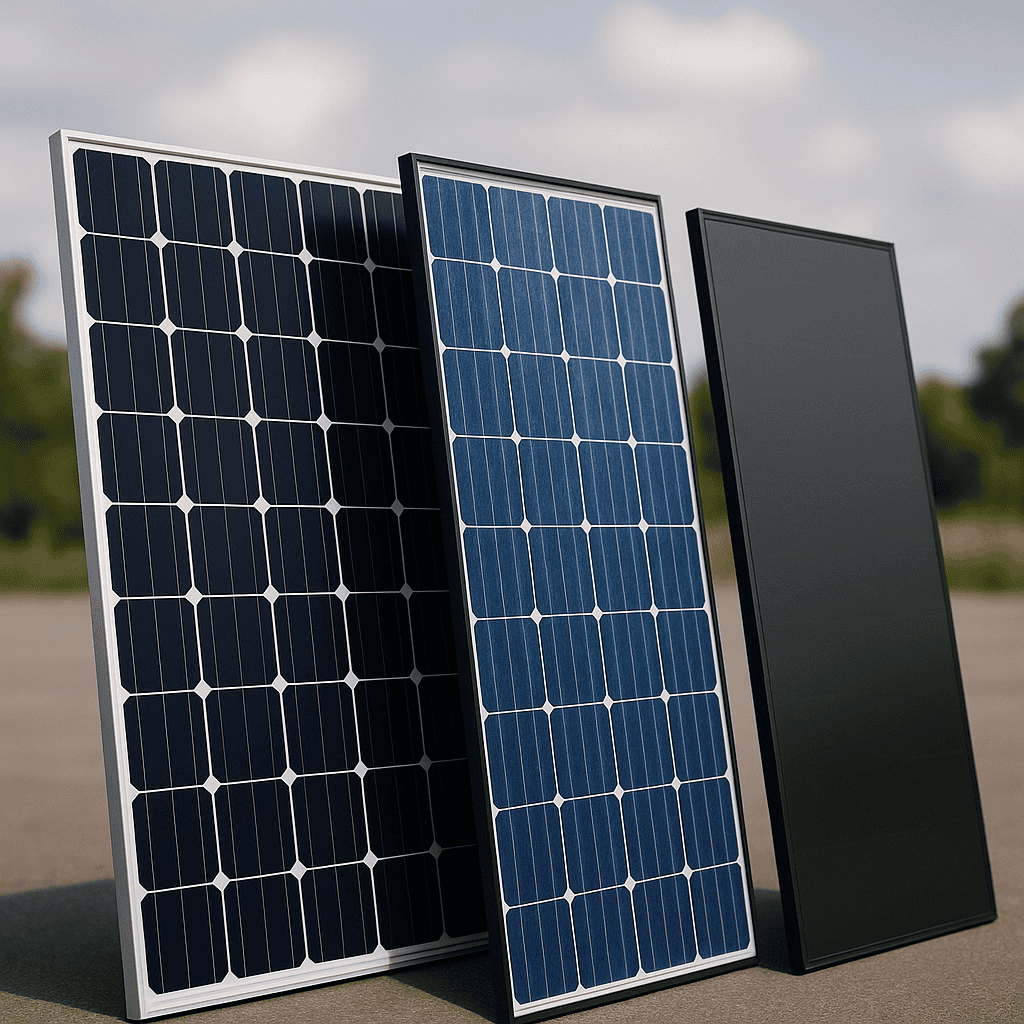
Monocrystalline solar panels are crafted from a single, pure crystal structure, which allows electrons to move more freely and results in higher efficiency rates. These panels are typically more expensive due to their complex manufacturing process but offer the best performance in terms of space efficiency and longevity, particularly in areas with limited roof space and high energy demands.
Polycrystalline solar panels are made from multiple silicon crystals, giving them a distinctive blue hue. While they have a slightly lower efficiency compared to monocrystalline panels, they are more affordable and still provide excellent performance. Polycrystalline panels are ideal for those looking for a balance between cost and efficiency, especially in larger installations where space is not a constraint.
Thin-film solar panels are produced by depositing photovoltaic material onto a substrate, resulting in a lighter and more flexible product. Although they generally have lower efficiency compared to crystalline panels, their adaptability makes them suitable for unconventional surfaces, such as curved or portable applications. Thin-film panels are often used in large-scale projects where space is abundant and cost-effectiveness is a priority.