
What materials are commonly used in ground mount solar systems?
Ground mount solar systems are an increasingly popular choice for harnessing solar energy, offering flexibility and efficiency for various applications. These systems require robust materials to ensure stability, durability, and optimal performance. Commonly, ground mount solar systems utilise materials such as aluminium, galvanised steel, and concrete. Each of these materials plays a crucial role in supporting the solar panels and withstanding environmental stresses.
Aluminium is prized for its lightweight nature and resistance to corrosion, making it an ideal choice for many solar installations. Galvanised steel, known for its strength and durability, provides a sturdy framework that can endure harsh weather conditions. Concrete is often used for anchoring the structures securely to the ground, ensuring stability even in adverse conditions. Together, these materials contribute to the creation of reliable and efficient ground mount solar systems.
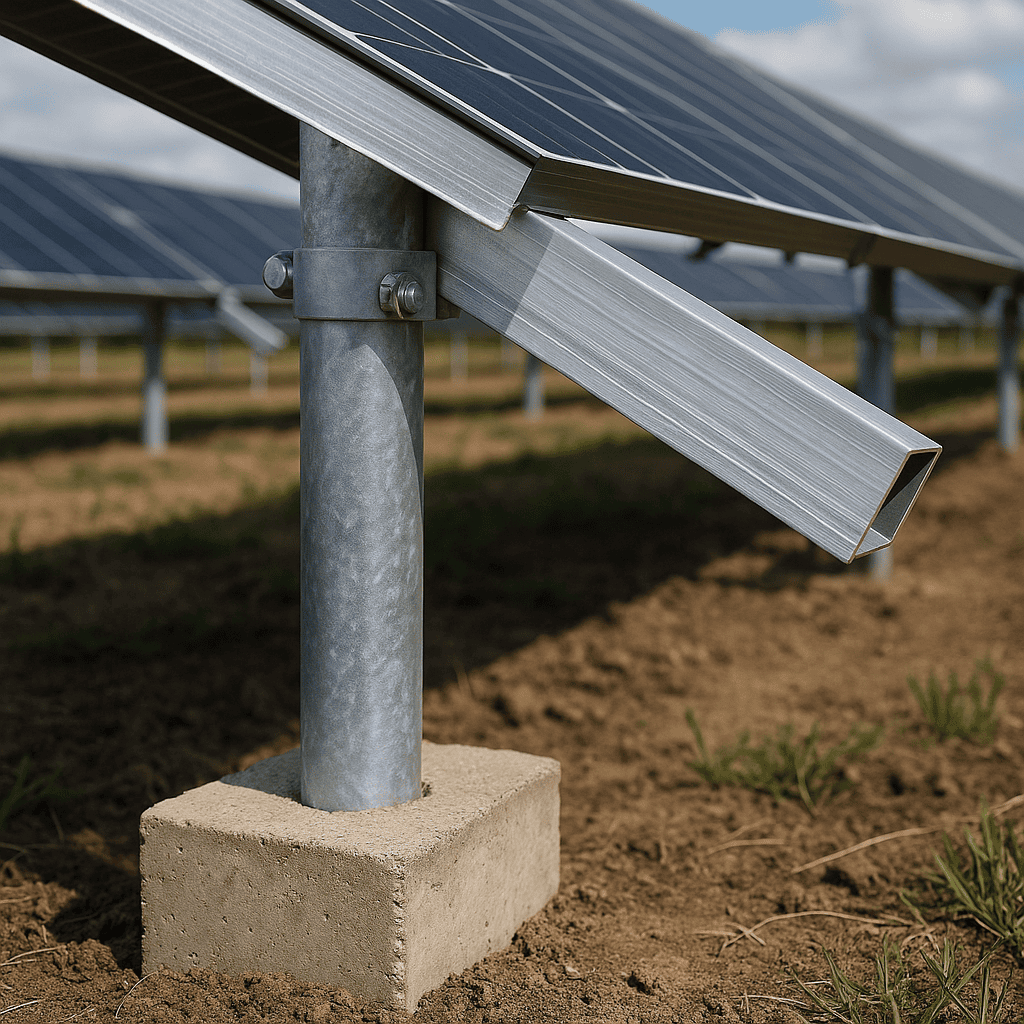
Aluminium is a preferred material in ground mount solar systems due to its excellent balance of strength and light weight. This metal’s natural resistance to corrosion reduces maintenance needs and extends the lifespan of the structures. Additionally, aluminium’s flexibility allows for easier installation and transportation, making it a favourable option for various terrains and locations.
Galvanised steel is another popular choice, especially for its robustness and cost-effectiveness. The galvanisation process involves coating the steel with zinc, which enhances its resistance to rust and corrosion. This makes galvanised steel an ideal choice for solar systems exposed to harsh weather conditions, ensuring the longevity and reliability of the installation.
Concrete plays a vital role in anchoring ground mount solar systems. Used primarily for the foundations, concrete provides the necessary weight and stability to keep the structures secure against wind and other environmental forces. By ensuring a solid base, concrete helps maintain the integrity and efficiency of solar installations over time.
