
How do hybrid inverters compare to traditional inverters in terms of efficiency and cost?
When considering solar technology, the choice between hybrid and traditional inverters is pivotal. Hybrid inverters, known for their advanced capabilities, integrate seamlessly with battery storage systems, offering a modern solution for energy management. In contrast, traditional inverters have long been the standard, converting direct current (DC) from solar panels to alternating current (AC) for use in homes and businesses.
The efficiency and cost of these two types of inverters can significantly impact the overall performance and financial viability of a solar power system. Understanding the differences can aid in making an informed decision that aligns with your energy needs and budgetary constraints.
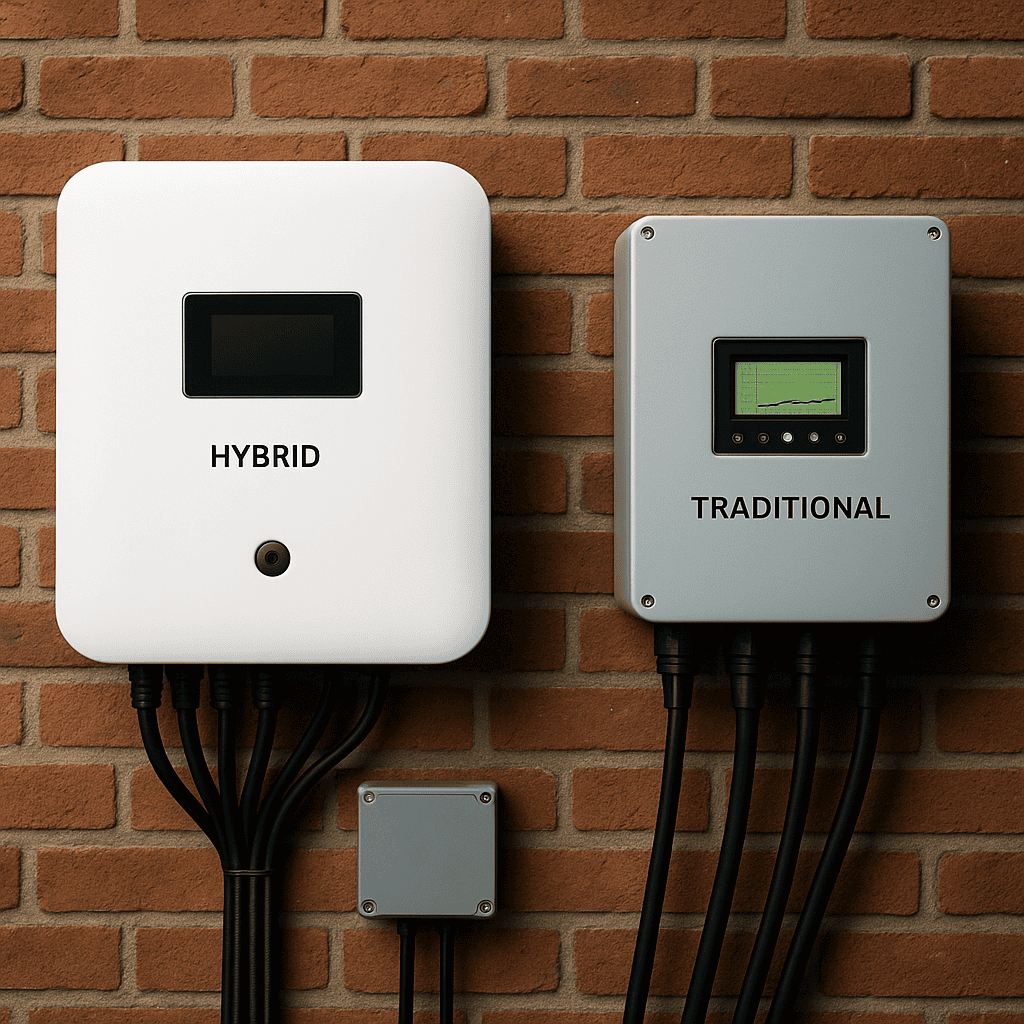
In terms of efficiency, hybrid inverters often have the upper hand. They are designed to optimise energy usage by allowing excess power to be stored when it is plentiful and utilised when needed, reducing reliance on the grid. This capability can lead to a higher overall efficiency compared to traditional inverters, which solely convert power without storage integration.
Cost is another crucial factor in this comparison. While hybrid inverters generally come with a higher upfront cost due to their advanced technology and additional features, they often provide long-term savings. By enabling energy storage, hybrid systems can reduce electricity bills and provide a buffer against rising energy costs, which may justify the initial investment over time.
Traditional inverters, on the other hand, are typically less expensive initially but do not offer the same potential for energy savings. They may be more suitable for situations where energy storage is not a priority or where budget constraints are a major consideration. Ultimately, the decision should be guided by your specific energy goals and financial situation.