Solar Panels and Energy Cost Reduction
Solar panels offer a sustainable solution to reducing energy costs for businesses. By harnessing renewable energy, companies can significantly lower their electricity bills while promoting environmental responsibility.
How Solar Panels Work
Solar panels convert sunlight into electricity, providing businesses with a reliable energy source that can directly power operations and reduce reliance on traditional energy grids.
Cost Savings Through Solar Energy
Utilising solar energy can lead to substantial savings on energy bills, allowing businesses to allocate resources to other critical areas of operation and growth.
Long-Term Financial Benefits
Investing in solar panels not only reduces immediate costs but also protects against future energy price increases, ensuring long-term financial stability for businesses.
Navigating the AC vs DC Conversion Process
The journey begins with a comprehensive site assessment, where our experts evaluate your property’s potential for solar PV and battery storage. This step is crucial as it determines the feasibility and the most efficient configuration for your system. Our team conducts a thorough analysis, focusing on factors such as roof orientation, shading, and energy consumption patterns to ensure optimal performance and safety.
Following the assessment, we design a bespoke solar solution tailored to your specific needs, balancing AC and DC components to maximize energy conversion and storage. Our designs prioritize safety, adhering to the highest industry standards and regulations, ensuring seamless integration with your existing electrical setup. This phase also involves selecting high-quality inverters and components that will provide reliable, long-term performance.
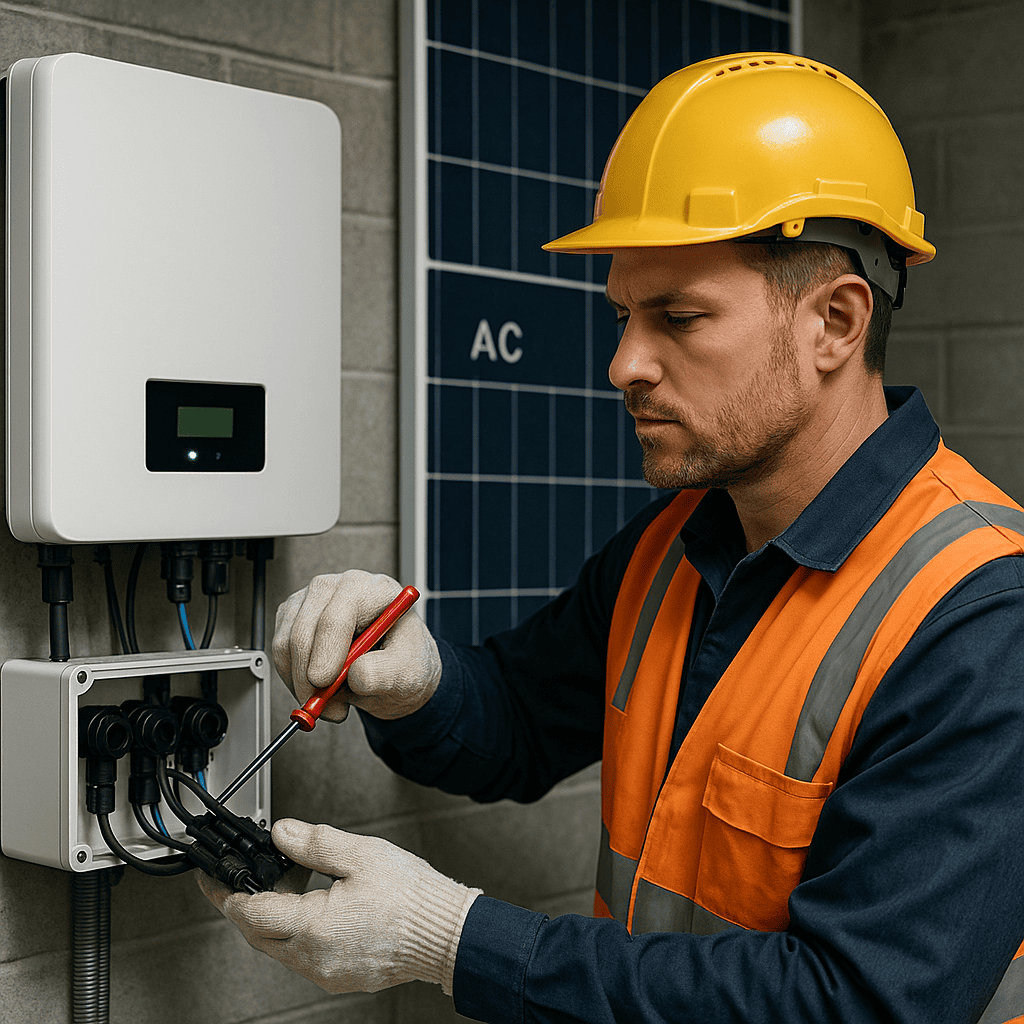
Once the design is finalized, our certified installation team takes over. They handle the intricate process of installing and connecting the solar panels and inverters, ensuring all safety protocols are strictly followed. Our commitment to quality extends beyond installation, as we offer ongoing maintenance and monitoring services, ensuring your system operates efficiently and safely throughout its lifespan.
AC vs DC
Did you know? AC power is more efficient for long-distance transmission, while DC is better for short distances.
Understanding Inverter Types and Safety Measures
To get started with inverters and their safety implications, it’s essential to first understand the two primary types: Alternating Current (AC) and Direct Current (DC). AC is commonly used in homes and businesses, while DC is primarily found in solar panels and batteries. Each comes with its own set of safety considerations, such as the need for proper grounding and circuit protection to prevent electrical hazards. Familiarizing yourself with these aspects can significantly enhance your safety when dealing with solar PV systems.
Next, consider the importance of choosing certified equipment and installations. Look for products that comply with safety standards and are installed by qualified professionals, as this reduces the risk of malfunctions. Additionally, routinely maintaining your systems and ensuring they are up to code will further protect against potential hazards. Understanding these fundamentals will not only help you make informed decisions but also ensure a safer energy solution for your home or business.
Top 3 things about AC vs DC Safety
Understanding the differences between AC and DC is crucial for safety in electrical systems. Here are three key points to consider.
AC and DC Defined
Alternating Current (AC) changes direction periodically, while Direct Current (DC) flows in a single direction. Each type has distinct applications and safety considerations.
Safety Risks of AC
AC can cause severe electric shocks due to its higher voltage levels and ability to induce muscle contractions, making it more dangerous in certain situations.
Safety Risks of DC
DC is generally safer at lower voltages, but high-voltage DC can cause burns and is difficult to interrupt, posing unique hazards during electrical faults.
Top 5 Questions About AC and DC Safety
What are the key differences between AC and DC in solar inverters?
AC (alternating current) changes direction periodically, making it suitable for powering homes, while DC (direct current) flows in one direction, commonly produced by solar panels. Inverters convert DC from solar panels into AC for household use, ensuring compatibility with electrical systems.
How does AC and DC affect the safety of solar energy systems?
AC systems are generally safer for solar energy applications due to their lower risk of electric shock and easier integration with the grid. However, DC systems require careful handling to prevent hazards, as they can maintain a dangerous voltage even when disconnected.
What are the cost implications of choosing AC vs DC solar inverters?
AC solar inverters typically have a higher upfront cost but offer greater compatibility with existing electrical systems and appliances. DC inverters may be cheaper initially, but additional equipment for conversion may increase overall expenses, impacting long-term savings.
How do AC and DC systems impact the efficiency of solar technology?
AC systems are typically more efficient for long-distance transmission, while DC systems minimise energy loss in solar technology. Converting solar energy to AC allows for compatibility with the grid, enhancing overall system efficiency and performance.
What safety measures should be considered for AC and DC solar installations?
For AC and DC solar installations, ensure proper grounding, use appropriate circuit breakers, and install surge protection devices. Regular inspections and adherence to local regulations are essential to maintain safety and prevent electrical hazards.