
What is the role of Battery Management Systems (BMS) in solar technology?
Battery Management Systems (BMS) play a crucial role in solar technology by ensuring the optimal performance and longevity of solar batteries. These systems are designed to monitor, control, and regulate various parameters of the battery, such as voltage, current, and temperature, to maintain safe and efficient operation. Without a robust BMS, solar batteries could be susceptible to overcharging, undercharging, and other issues that can significantly impact their lifespan and effectiveness.
In essence, a BMS acts as the brain of a solar energy storage system, providing vital information and control mechanisms. By doing so, it not only safeguards the batteries but also enhances the overall efficiency and reliability of solar energy systems. This, in turn, helps users maximise their investment in solar technology while contributing to a more sustainable and energy-efficient future.
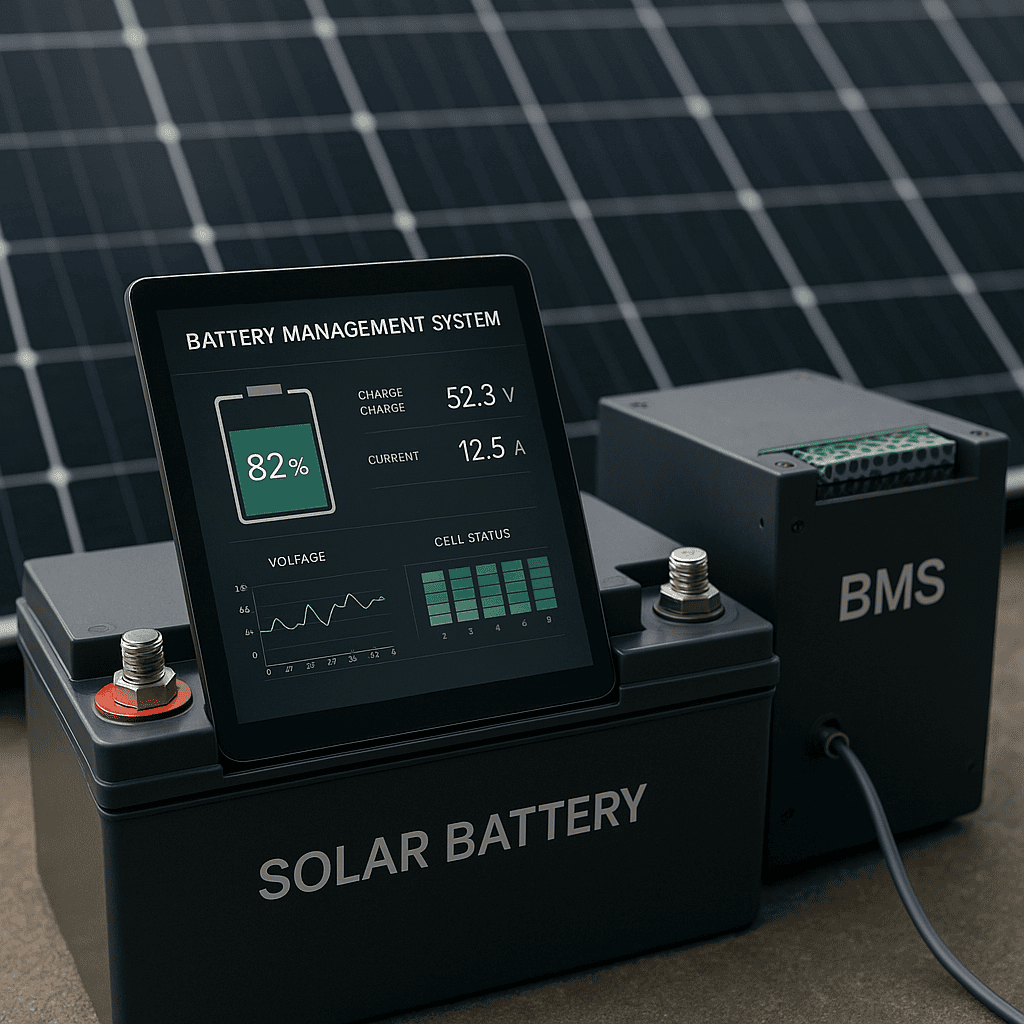
At its core, a Battery Management System ensures that solar batteries operate within their safe limits, preventing damage from extreme conditions. By continuously monitoring the state of charge and health of the battery, a BMS can automatically adjust charging and discharging rates. This helps in avoiding overcharging and deep discharging, both of which can degrade battery performance over time.
Furthermore, a BMS provides valuable data that can be used for performance analysis and predictive maintenance. By offering insights into the battery’s condition and usage patterns, it allows users to make informed decisions about energy consumption and storage. This data-driven approach not only reduces the risk of unexpected failures but also helps in planning timely maintenance, thereby extending the battery’s lifespan.
Moreover, in solar technology, the efficiency of energy storage is paramount. A well-designed BMS contributes to this efficiency by balancing the charge among individual cells in a battery pack. This cell balancing is essential for maintaining uniform performance across the battery, ensuring that each cell operates optimally. In doing so, the BMS plays a pivotal role in maximising the overall efficiency and cost-effectiveness of solar energy systems.