
Getting Started with Solar Solutions for Data Centres
To initiate the process of integrating solar energy into your data centre, begin by conducting a comprehensive energy audit. This audit will help identify your current energy consumption patterns and peak usage times, allowing for a tailored approach to solar implementation. Gathering data on your facility’s energy needs is essential in determining the appropriate size and type of solar PV system that will best suit your operations.
Next, engage with a reputable renewable energy company to discuss your findings and explore tailored solar solutions. They will provide a free site assessment to evaluate your location’s solar potential and design a bespoke system that aligns with your energy goals. Be sure to consider the benefits of battery storage, which can enhance your energy resilience and reduce reliance on the grid. By taking these steps, you can effectively position your data centre to benefit from sustainable energy solutions, paving the way for improved efficiency and cost savings.
Maximize Efficiency and Savings with Solar for Data Centres
Implementing solar solutions in data centers offers numerous benefits, enhancing operational efficiency, reducing costs, and supporting sustainability goals for long-term success.
Reduced Energy Costs
Solar power decreases reliance on traditional energy sources, significantly lowering operational costs for data centers.
Enhanced Energy Security
Solar installations provide a reliable energy source, minimizing risks associated with power outages and fluctuating energy prices.
Scalability and Flexibility
Solar systems can be scaled to meet growing energy demands, ensuring alignment with data center expansion plans.
Reduced Carbon Footprint
Adopting solar energy helps data centers substantially cut greenhouse gas emissions, supporting environmental sustainability initiatives.
Improved Corporate Image
Utilizing solar power demonstrates a commitment to innovation and sustainability, enhancing corporate reputation and stakeholder trust.
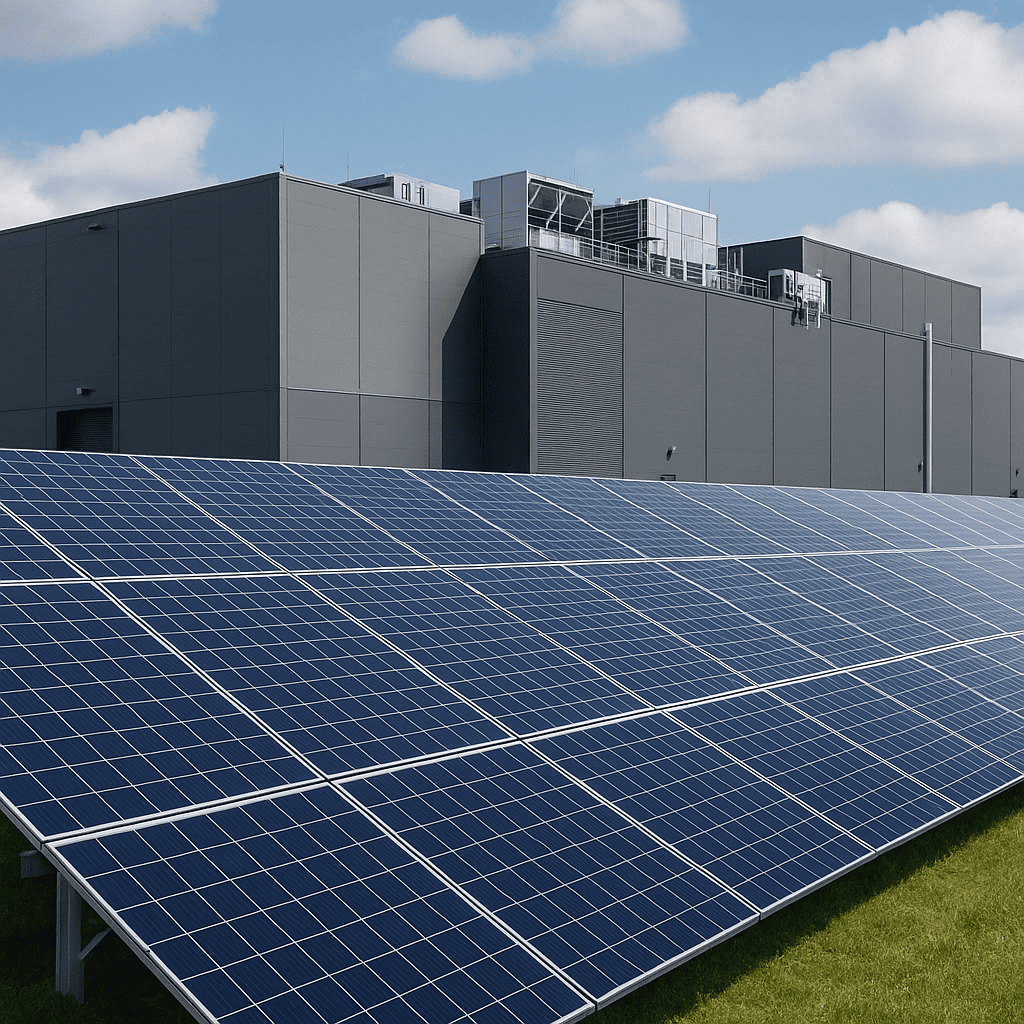
Implementing Solar Solutions
The journey to integrating solar solutions into data centers begins with a comprehensive site assessment. This involves evaluating the facility’s energy requirements and identifying optimal locations for solar panel installation. Once the assessment is complete, a tailored design plan is created to ensure maximum efficiency and cost-effectiveness.
The next phase involves the installation of solar panels and connecting them to the data center’s energy system. This step requires skilled technicians to ensure seamless integration without disrupting ongoing operations. Advanced monitoring systems are also installed to track performance and address any issues swiftly.
Finally, post-installation support is crucial for maintaining the system’s efficiency. This includes regular maintenance and updates to the solar infrastructure. With continuous advancements in solar technology, data centers can expect ongoing improvements in energy savings and sustainability, making solar energy a viable long-term solution for reducing operational costs and environmental impact.
Solar Power
Did you know? Solar panels can reduce data center energy costs by up to 40% annually!
Top 5 Questions About Solar Solutions for Data Centres
What are the benefits of using solar energy for data centres?
Utilising solar energy in data centres enhances energy efficiency, reduces operational costs, and lowers carbon emissions. It provides a reliable power source, mitigates reliance on fossil fuels, and supports sustainability goals, ultimately contributing to a greener and more resilient infrastructure.
How can solar power reduce operational costs for data centre facilities?
Solar power can significantly lower operational costs for data centres by reducing reliance on grid electricity, decreasing energy bills, and providing predictable energy pricing. Additionally, government incentives for renewable energy can further enhance cost savings and improve overall financial sustainability.
What are the key considerations for implementing solar solutions in data centres?
Key considerations include assessing energy needs, evaluating roof space and structural integrity, understanding local regulations, selecting appropriate solar technology, and ensuring integration with existing systems. Additionally, consider potential savings and the impact on sustainability goals.
How does solar energy impact the sustainability goals of data centres?
Solar energy significantly enhances data centres' sustainability by reducing reliance on fossil fuels, lowering carbon emissions, and decreasing energy costs. Implementing solar solutions contributes to long-term environmental goals while promoting energy independence and operational efficiency.
What types of solar technologies are best suited for data centre applications?
Photovoltaic (PV) panels, particularly monocrystalline and bifacial types, are ideal for data centres due to their high efficiency and space utilisation. Additionally, solar thermal systems can be employed for cooling, enhancing overall energy efficiency and sustainability.