
Initiating Your Solar Project
To begin your solar project, the first step is to conduct a free site assessment. This evaluation will help identify the solar potential of your property, taking into account factors such as roof orientation, shading, and local climate conditions. Understanding these elements is crucial for tailoring a solar solution that maximizes energy generation and efficiency.
Once the assessment is complete, the next phase involves collaborating with our design team to create a bespoke solar system tailored to your specific energy needs and financial goals. This customized approach ensures that you receive a solution that not only aligns with your requirements but also adheres to safety and quality standards. By focusing on these foundational steps, you set the stage for a successful solar installation that can lead to significant savings on your energy bills. Continue reading to discover more about our comprehensive services and how they can benefit you.
Maximize Your Commercial Solar Investment with Expert Design and Engineering
Our tailored design and engineering services ensure your commercial solar project is efficient, cost-effective, and built for long-term success.
Optimized Energy Output
Advanced design techniques maximize solar panel efficiency, ensuring optimal energy production for your commercial needs.
Reduced Operational Costs
Strategic engineering solutions lower maintenance expenses and enhance system longevity, reducing overall operational costs.
Custom Solutions for Unique Needs
Tailored designs address specific site conditions and business requirements, providing solutions that meet unique project goals.
Accelerated Project Timelines
Streamlined processes and expert project management ensure timely delivery, minimizing disruptions to your business operations.
Enhanced Sustainability Credentials
Our designs support eco-friendly practices, boosting your company’s sustainability profile and meeting regulatory standards.
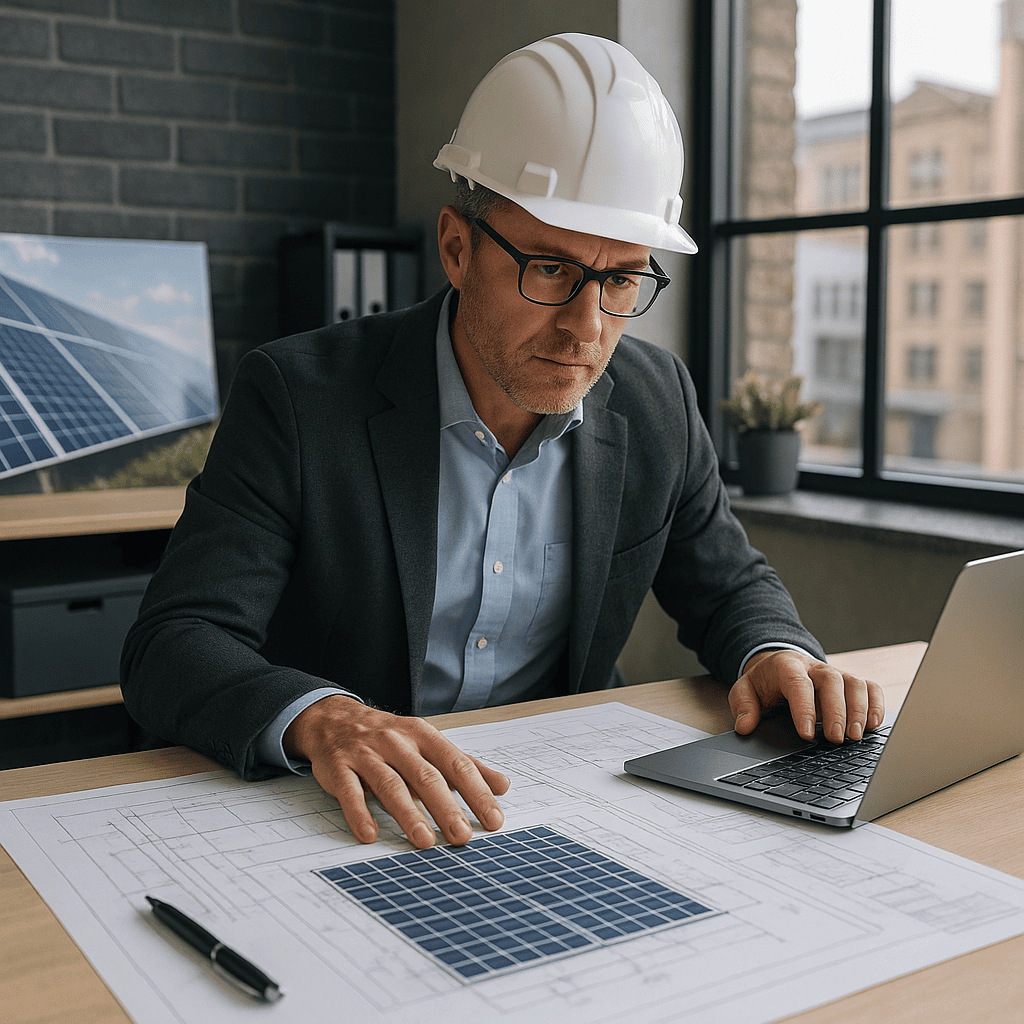
The Solar Design Process
Our process begins with a comprehensive site assessment to understand your specific energy needs and environmental conditions. This involves analyzing site orientation, shading, and local climate data to ensure optimal solar panel placement. Our expert team evaluates these factors to create a tailored solar solution that maximizes efficiency and energy savings.
Following the initial assessment, we move to the design phase where advanced software tools are utilized to draft detailed engineering plans. These plans include precise system layouts, electrical configurations, and integration with existing infrastructure. Our engineers ensure that every component is designed for peak performance and durability, aligning with both industry standards and your project goals.
The final stage involves seamless installation and rigorous testing. Our technicians work diligently to install the system with minimal disruption, adhering to safety protocols and quality standards. Post-installation, we perform thorough testing to confirm system efficiency and reliability, providing you with a sustainable energy solution for years to come.
Solar Efficiency
Solar panels can convert sunlight into electricity with efficiencies of up to 22%, powering sustainable solutions.
Top 5 Questions About Solar Design and Engineering
What are the key design considerations for commercial solar projects?
Key design considerations include site assessment for optimal solar exposure, system sizing based on energy needs, structural integrity of mounting systems, compliance with regulations, and integration with existing infrastructure to ensure efficiency and sustainability of the solar installation.
How does effective engineering impact the success of solar energy installations?
Effective engineering ensures optimal system performance, maximises energy output, and enhances reliability in solar energy installations. By addressing site-specific challenges and integrating advanced technologies, it contributes to the sustainability and long-term success of commercial solar projects.
What steps are involved in the planning and engineering phase of commercial solar projects?
The planning and engineering phase includes site assessment, energy needs analysis, system design, structural evaluations, and compliance checks. These steps ensure optimal performance, safety, and adherence to regulations, laying a solid foundation for successful solar project implementation.
How can businesses optimize their solar system design for maximum efficiency?
Businesses can enhance solar system efficiency by conducting a thorough site assessment, selecting high-quality components, optimising panel orientation and tilt, and integrating advanced monitoring systems to track performance and make data-driven adjustments as needed.
What role do regulations and standards play in the design and engineering of commercial solar systems?
Regulations and standards ensure that commercial solar systems are designed for safety, efficiency, and environmental compliance. Adhering to these guidelines helps optimise system performance, minimises risks, and ensures alignment with industry best practices and legal requirements.