
How often should commercial solar panels be cleaned for optimal performance?
Ensuring that commercial solar panels are operating at their highest efficiency is crucial for maximising their energy output and ensuring a good return on investment. A key factor in maintaining this efficiency is regular cleaning. Generally, commercial solar panels should be cleaned at least twice a year. However, this frequency can vary based on several environmental factors, such as local weather conditions and the presence of dust, pollution, or bird droppings.
Regular cleaning not only enhances the performance of the solar panels but also extends their lifespan. A clean solar panel can increase energy production by up to 20%, making it a vital part of solar panel maintenance. By understanding the specific needs of your location and the conditions your panels are exposed to, you can tailor a cleaning schedule that ensures optimal performance and efficiency.
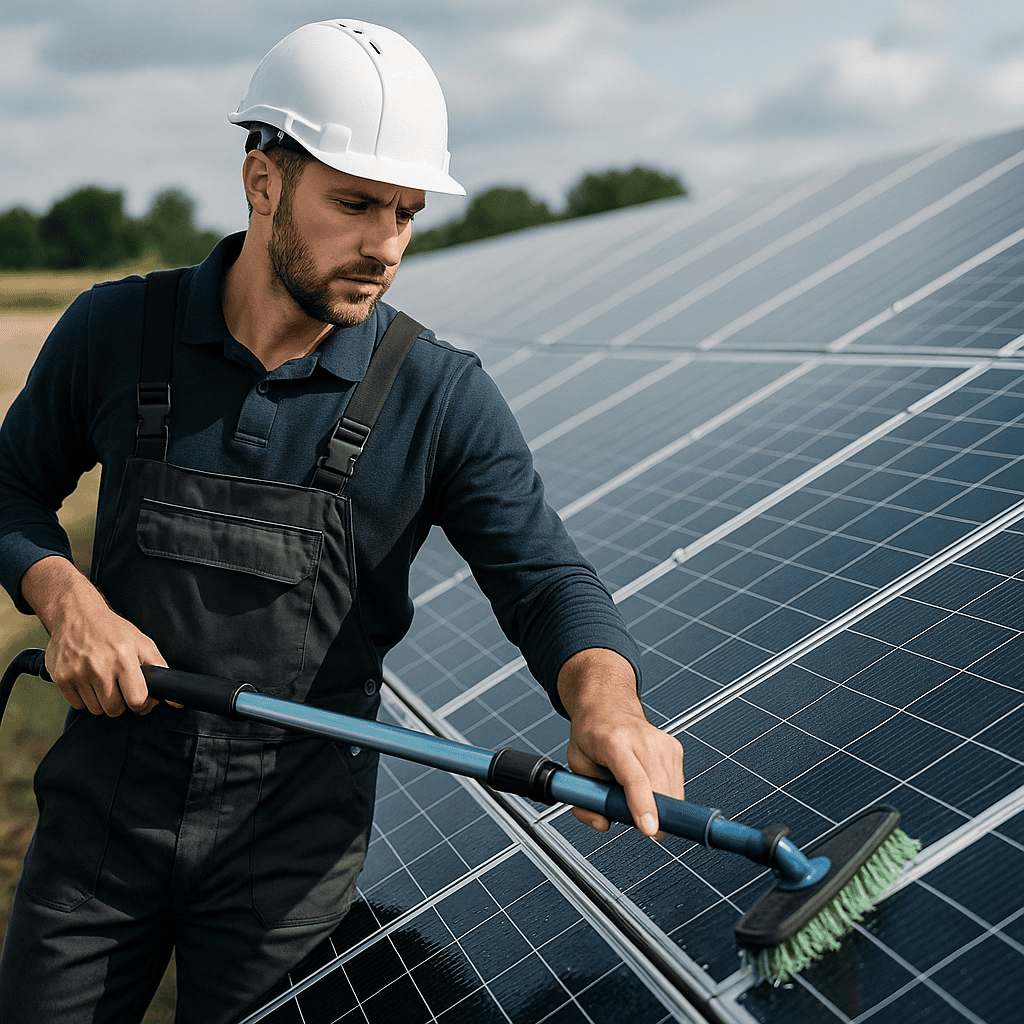
The frequency of cleaning commercial solar panels largely depends on their location. In areas with high levels of dust, pollution, or pollen, more frequent cleaning may be necessary. For instance, panels situated near factories or in agricultural areas might accumulate more dirt and require cleaning every three to four months. Conversely, in cleaner, less polluted environments, bi-annual cleaning may suffice.
Seasonal weather patterns also play a role in determining cleaning frequency. During dry seasons or periods of low rainfall, dirt and debris can accumulate more quickly, necessitating more frequent cleaning. In contrast, areas that experience regular rainfall may benefit from the natural cleaning effect of rain, potentially reducing the need for manual cleaning.
Regular inspections are also recommended to assess the condition of the panels and identify any issues that may require attention. By combining these inspections with a well-planned cleaning schedule, businesses can ensure that their solar panels continue to operate efficiently and effectively, maximising energy production and extending the lifespan of the installation.