What tools are available for monitoring commercial solar asset performance?
In the realm of commercial solar energy, monitoring the performance of solar assets is crucial for ensuring optimal efficiency and longevity. Various tools are available to assist in this task, providing comprehensive insights into the functioning of solar installations. These tools help in identifying issues, optimising performance, and ensuring that the solar assets deliver the expected return on investment.
Monitoring tools for commercial solar assets are designed to offer real-time data on energy production, system health, and potential faults. By leveraging advanced analytics, these tools enable proactive maintenance and operational adjustments. This ensures not only the smooth operation of solar systems but also extends their lifespan, thus maximising the benefits of solar investments.
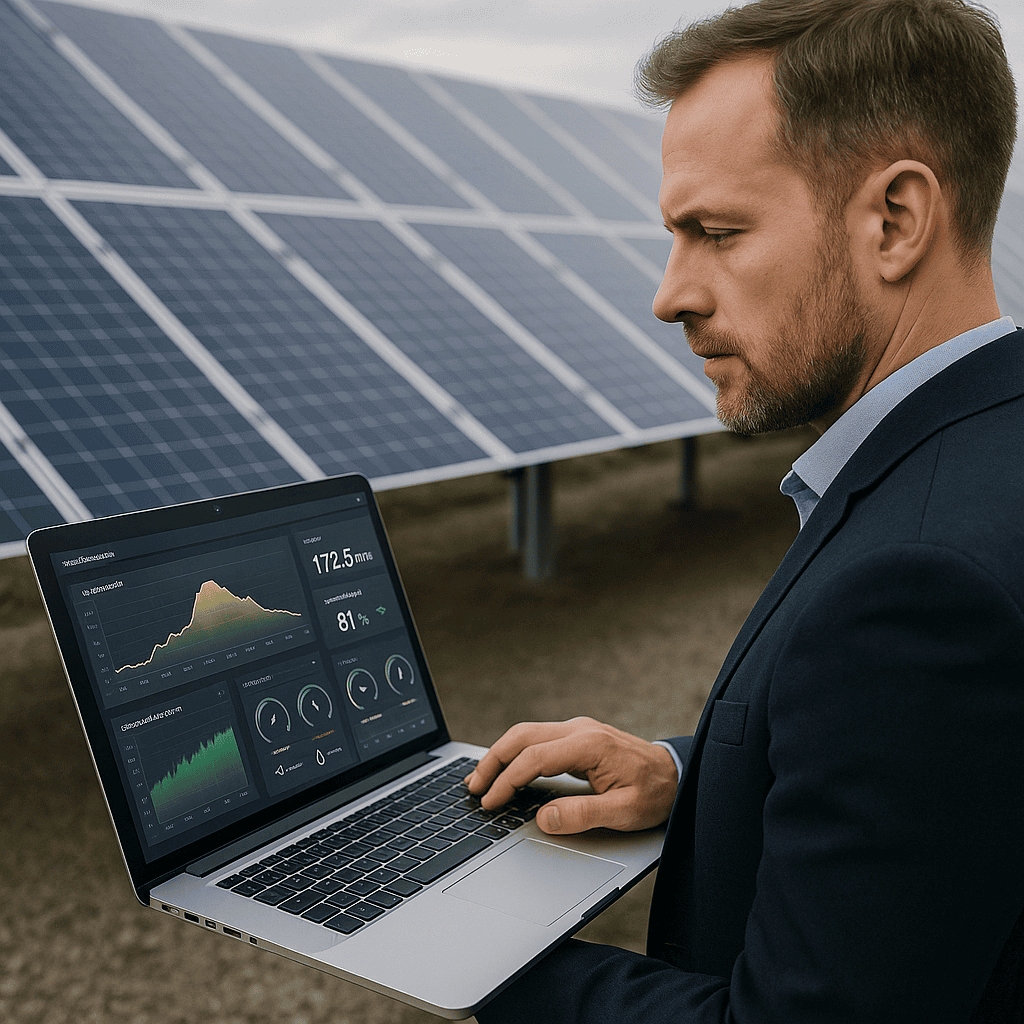
One of the primary tools used in monitoring commercial solar asset performance is the solar monitoring software platform. This tool provides detailed analytics and reporting on energy production, system efficiency, and potential issues. It allows users to access real-time data remotely, offering a comprehensive overview of the system’s health and performance metrics.
Additionally, remote monitoring systems are essential for identifying performance anomalies. These systems use sensors and data loggers to track various parameters, such as voltage, current, and temperature. By analysing this data, operators can swiftly detect and address any deviation from expected performance, thereby preventing minor issues from escalating into significant problems.
Furthermore, predictive maintenance tools play a vital role in solar asset management. These tools utilise machine learning algorithms to predict potential failures before they occur. By analysing historical data and identifying patterns, they enable operators to schedule maintenance activities proactively, reducing downtime and enhancing the overall efficiency of the solar installation.