
How does solar EV charging work for commercial fleets?
Solar EV charging for commercial fleets involves harnessing solar energy to power electric vehicles. This sustainable approach uses solar panels to capture sunlight, converting it into electricity that charges the vehicle’s batteries. By integrating solar energy into the charging process, businesses can significantly reduce their carbon footprint and reliance on traditional energy sources.
The adoption of solar EV charging solutions offers numerous advantages for commercial fleets. Not only does it provide a cost-effective and environmentally friendly alternative to conventional charging methods, but it also enhances energy independence. Businesses can enjoy long-term savings on energy costs while contributing to a greener future.
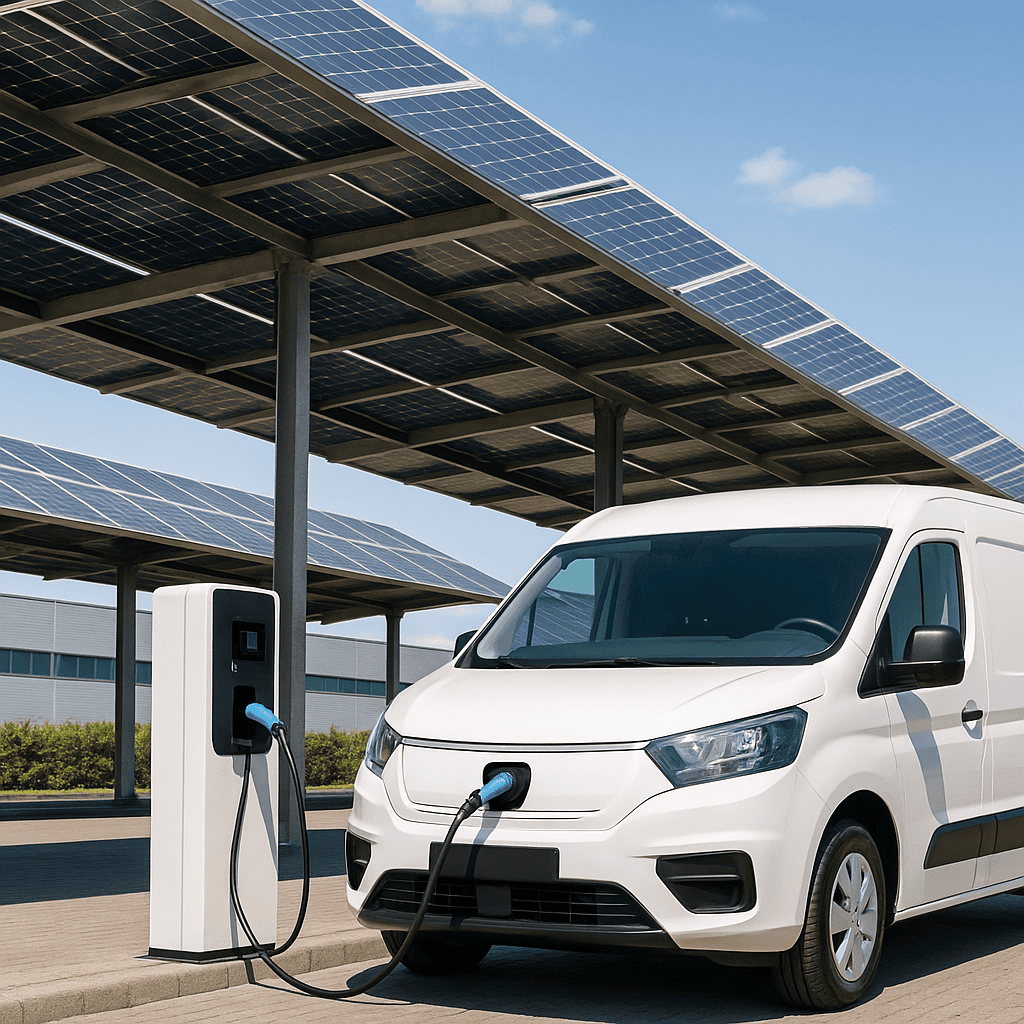
Implementing solar EV charging for commercial fleets begins with the installation of solar panels, typically mounted on rooftops or dedicated solar canopies. These panels convert sunlight into direct current (DC) electricity, which is then transformed into alternating current (AC) via an inverter. The AC electricity is used to charge the electric vehicles, making the process efficient and sustainable.
One of the key benefits of solar EV charging is the reduction in operational costs. By utilising renewable energy, businesses can decrease their dependence on grid electricity, leading to lower energy bills. Additionally, this approach mitigates the impact of fluctuating energy prices, providing more predictable budgeting for fleet operations.
Moreover, by investing in solar EV charging solutions, companies demonstrate their commitment to sustainability. This not only enhances their corporate image but also aligns with regulatory requirements and environmental goals. As the demand for greener practices grows, solar EV charging becomes an integral part of a forward-thinking business strategy.