
Practical Steps to Implement Fleet EV Charging
To initiate your fleet EV charging solution, the first step is to assess your fleet’s charging needs. Evaluate the number of electric vehicles in your fleet, their daily mileage, and the types of routes they cover. This information will help determine the optimal number of charging stations required and their placement to ensure minimal downtime for your vehicles.
Next, consider the available charging technologies and infrastructure options. Research various charging station types, such as fast and standard chargers, and assess their compatibility with your fleet vehicles. Engaging with a renewable energy provider can streamline this process, as they can offer tailored solutions that incorporate solar PV and battery storage systems. This can enhance your energy efficiency and reduce operating costs. By taking these initial steps, you can lay a solid foundation for an effective fleet EV charging strategy and continue exploring the benefits of sustainable energy solutions for your business.
Maximizing Efficiency and Savings with Fleet EV Charging
Fleet EV charging solutions offer significant benefits for commercial operations, driving cost savings, operational efficiency, and sustainability in your business.
Reduced Operational Costs
Lower fuel and maintenance expenses lead to substantial savings when transitioning to electric fleet vehicles.
Enhanced Fleet Management
Real-time data and analytics improve scheduling, monitoring, and overall fleet performance efficiency.
Increased Uptime
Fast and reliable charging infrastructure minimizes downtime, keeping your fleet on the move consistently.
Environmental Compliance
Adopting EVs helps meet regulatory standards and reduces the carbon footprint of your fleet operations.
Scalable Infrastructure
Scalable charging solutions grow with your fleet, ensuring future-proofing and adaptability for expanding operations.
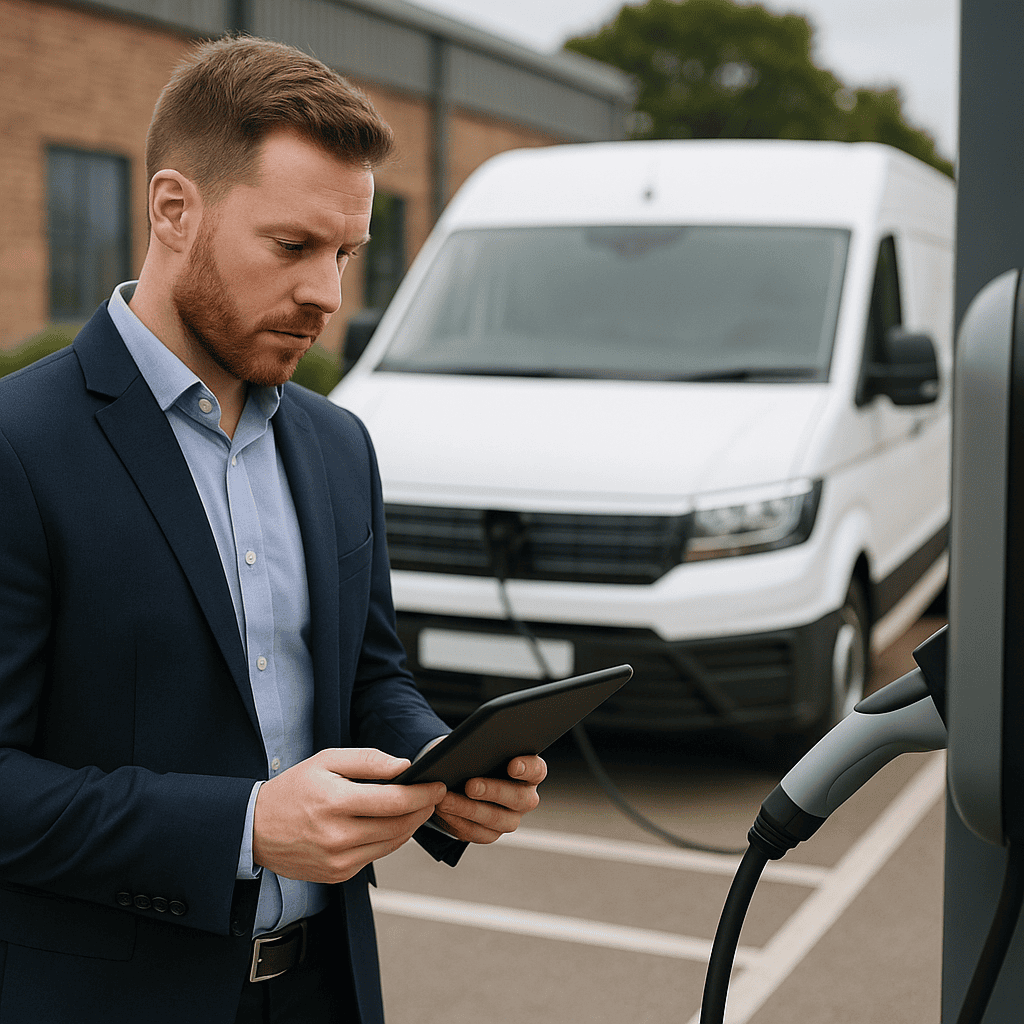
Navigating the Fleet EV Charging Process
Implementing fleet EV charging solutions involves several key steps. Initially, an assessment of your fleet’s specific needs is crucial. This includes evaluating the number of vehicles, their usage patterns, and the existing infrastructure to ensure the right charging solution.
Next, selecting the appropriate charging equipment is vital. Businesses must choose between Level 2 or DC fast chargers, considering factors like charging speed, cost, and compatibility with the fleet’s vehicles. Tailoring the equipment to meet the operational demands will enhance efficiency and minimize downtime.
Lastly, installation and maintenance are essential components. Partnering with experienced providers ensures seamless integration into existing operations. Regular maintenance schedules and monitoring systems will help sustain performance and address any issues promptly, ensuring that the fleet remains fully operational and aligned with business objectives.
Charging Revolution
Fleet EV charging solutions can reduce carbon emissions and fuel costs, boosting sustainability and operational efficiency.
Top 5 Questions About Fleet EV Charging
What are the benefits of fleet EV charging for commercial solar operations?
Fleet EV charging enhances operational efficiency by reducing fuel costs, lowering carbon emissions, and enabling the use of renewable energy sources. This integration supports sustainability goals while ensuring reliable and cost-effective energy solutions for commercial solar operations.
How does fleet EV charging integrate with existing solar energy systems?
Fleet EV charging can seamlessly integrate with existing solar energy systems by utilising solar power to charge electric vehicles. This reduces reliance on grid electricity, lowers operational costs, and enhances sustainability, making it an efficient solution for commercial operations.
What factors should businesses consider when implementing fleet EV charging solutions?
Businesses should assess their fleet size, charging infrastructure requirements, energy costs, vehicle range, and the potential for renewable energy integration. Additionally, consider the installation space, maintenance needs, and the impact on operational efficiency to ensure a smooth transition.
How can fleet EV charging reduce operational costs for companies using commercial solar?
Utilising fleet EV charging alongside commercial solar can significantly lower energy costs by harnessing free, renewable energy. This reduces reliance on grid electricity, minimises fuel expenses, and can lead to substantial savings on overall operational costs for businesses.
What role does government policy play in promoting fleet EV charging alongside solar energy?
Government policy plays a crucial role in incentivising fleet EV charging and solar energy adoption through grants, tax relief, and infrastructure investment, fostering a sustainable transition to electric vehicles while promoting renewable energy integration within commercial operations.