
Initial Steps for Grid Export Compliance
To begin navigating grid export and metering standards, the first step is to familiarize yourself with the relevant regulations set by your local energy authority. Understanding these compliance requirements will ensure that your solar PV system is designed and installed according to current legal and safety standards. This may include guidelines on the maximum export capacity, metering specifications, and necessary certifications.
Next, consider conducting a comprehensive assessment of your property’s energy consumption and production potential. This will help you determine the appropriate solar PV and battery storage solutions tailored to your needs. Engaging a certified installer with experience in grid export compliance can provide valuable insights and ensure that your system is not only efficient but also compliant with all necessary regulations. By taking these initial steps, you can confidently move forward in optimizing your solar energy system for both performance and compliance.
Maximize Efficiency and Compliance with Grid Export and Metering
Understanding grid export and metering requirements is crucial for commercial solar systems, ensuring efficiency, compliance, and financial benefits for your business.
Enhanced Energy Management
Accurate metering allows for precise energy usage tracking, optimizing solar output and reducing energy costs.
Regulatory Compliance
Adhering to grid export standards ensures your commercial solar system meets legal requirements, avoiding fines and operational disruptions.
Financial Incentives
Proper metering can qualify your business for government incentives, enhancing the return on investment for your solar system.
Improved System Longevity
Monitoring export levels helps maintain system health, potentially extending the lifespan of your solar infrastructure.
Sustainable Business Practices
Meeting grid export standards underscores your commitment to sustainability, enhancing your business's reputation and stakeholder relations.
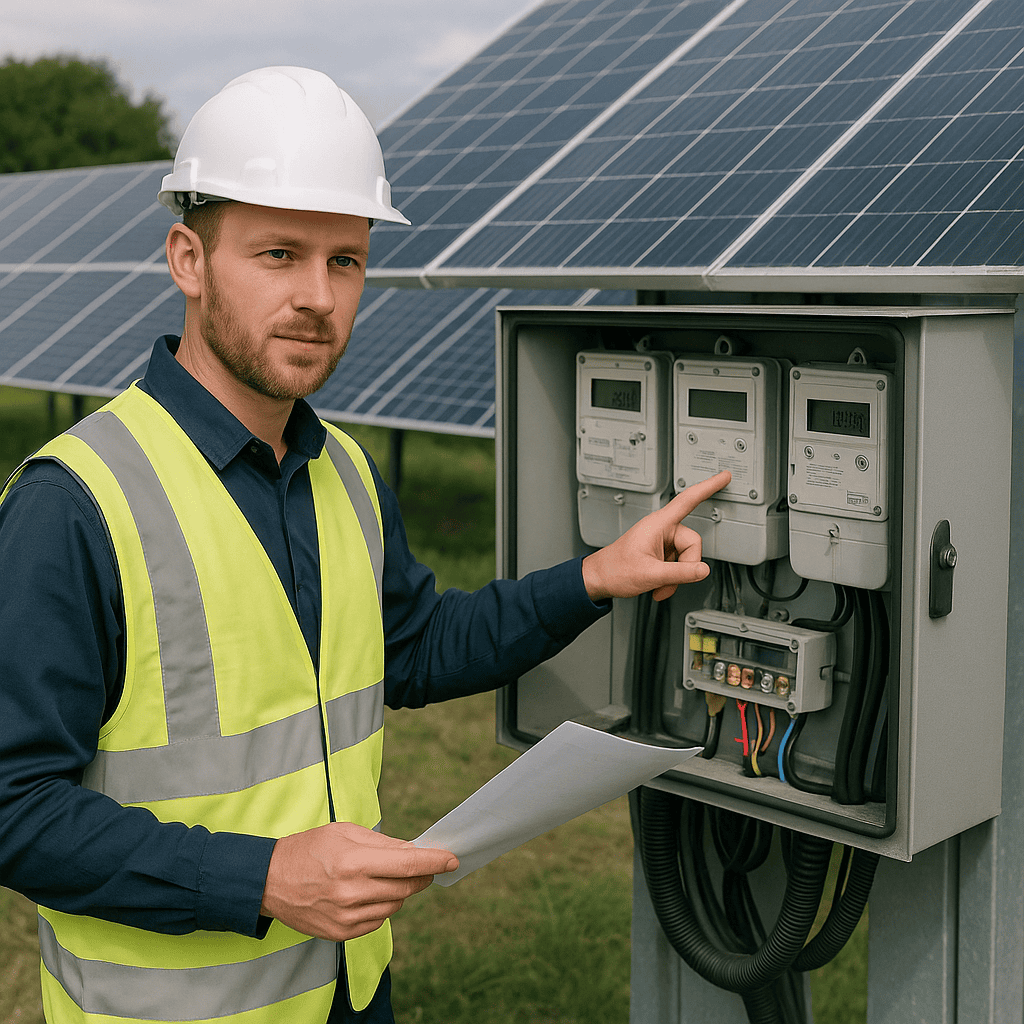
Navigating Grid Export and Metering
To achieve compliance with grid export standards, it’s crucial to understand the local regulations and requirements. This involves researching specific guidelines for grid connections, which may vary by region. Initial assessments ensure that solar systems can safely and efficiently export energy to the grid.
Next, proper installation and commissioning of metering equipment are essential. This process involves installing meters that accurately measure energy production and consumption. These meters must be compliant with local standards to ensure precise data for billing and grid management.
Finally, ongoing monitoring and maintenance are key to sustaining compliance. Regular audits and inspections help identify any potential issues with the system’s performance or metering accuracy. By staying proactive, commercial solar operators can ensure they meet all necessary standards and continue to benefit from grid export opportunities.
Solar Export
Did you know? Solar panels can sometimes produce more energy than needed, allowing you to sell excess back to the grid!
Top 5 Questions About Grid Export and Metering
What are the compliance standards for grid export in commercial solar installations?
Compliance standards for grid export in commercial solar installations include adherence to the G59 and G83 regulations, ensuring proper metering, and obtaining necessary approvals from the Distribution Network Operator (DNO) to safely connect and export electricity to the grid.
How do metering requirements affect grid export for commercial solar systems?
Metering requirements ensure accurate measurement of electricity exported to the grid from commercial solar systems. Compliance with these standards is essential for receiving appropriate compensation and maintaining system efficiency, while also adhering to regulatory obligations set by energy authorities.
What regulations must be followed for grid export in the solar industry?
Grid export in the solar industry must comply with regulations set by Ofgem and the Distribution Network Operator (DNO). This includes adherence to the Grid Code, ensuring safety, metering accuracy, and proper connection agreements for exporting electricity.
How can businesses ensure compliance with grid export standards for their solar projects?
Businesses can ensure compliance with grid export standards by adhering to the relevant regulations set by Ofgem and the Distribution Network Operator. Regularly consulting with certified installers and conducting thorough inspections of metering equipment also helps maintain compliance.
What are the best practices for metering in commercial solar grid export applications?
Best practices for metering in commercial solar grid export applications include using certified meters that comply with relevant standards, ensuring accurate calibration, implementing regular maintenance checks, and integrating real-time monitoring systems to track energy export and facilitate compliance with regulatory requirements.