
Getting Started with Industrial Solar Installations
To begin with industrial solar installations, the first step is to conduct a comprehensive site assessment. This involves evaluating your commercial property’s energy consumption, available roof or ground space, and the solar potential of the site. It’s crucial to understand any specific regulations or incentives that may apply in your region, as this can significantly influence the design and cost-effectiveness of your solar system.
Once you’ve completed the assessment, the next step is to engage with a reputable renewable energy company that specializes in solar photovoltaic (PV) systems. They will provide a bespoke design tailored to your energy needs and budget, ensuring optimal efficiency. Following the design phase, certified installation and ongoing maintenance will be essential to maximize your system’s performance and longevity. By understanding these practical steps, you can make informed decisions that contribute to your business’s sustainability goals while reducing energy costs.
Maximize Efficiency and Savings with Industrial Solar Installations
Industrial solar installations offer substantial benefits for businesses looking to reduce energy costs and enhance sustainability. Explore how solar energy can transform your industrial operations.
Significant Cost Reductions
Cut energy bills drastically by harnessing solar power, reducing reliance on traditional and more expensive energy sources.
Enhanced Energy Independence
Gain control over your energy supply, minimizing the impact of fluctuating utility rates and ensuring consistent power availability.
Improved Sustainability Profile
Demonstrate your commitment to sustainability by reducing carbon emissions and enhancing your company’s environmental responsibility.
Scalability and Flexibility
Easily scale your solar system as your business grows, adapting to increasing energy demands without significant infrastructure changes.
Attractive Financial Incentives
Take advantage of tax credits, rebates, and other financial incentives to lower the initial investment in solar technology.
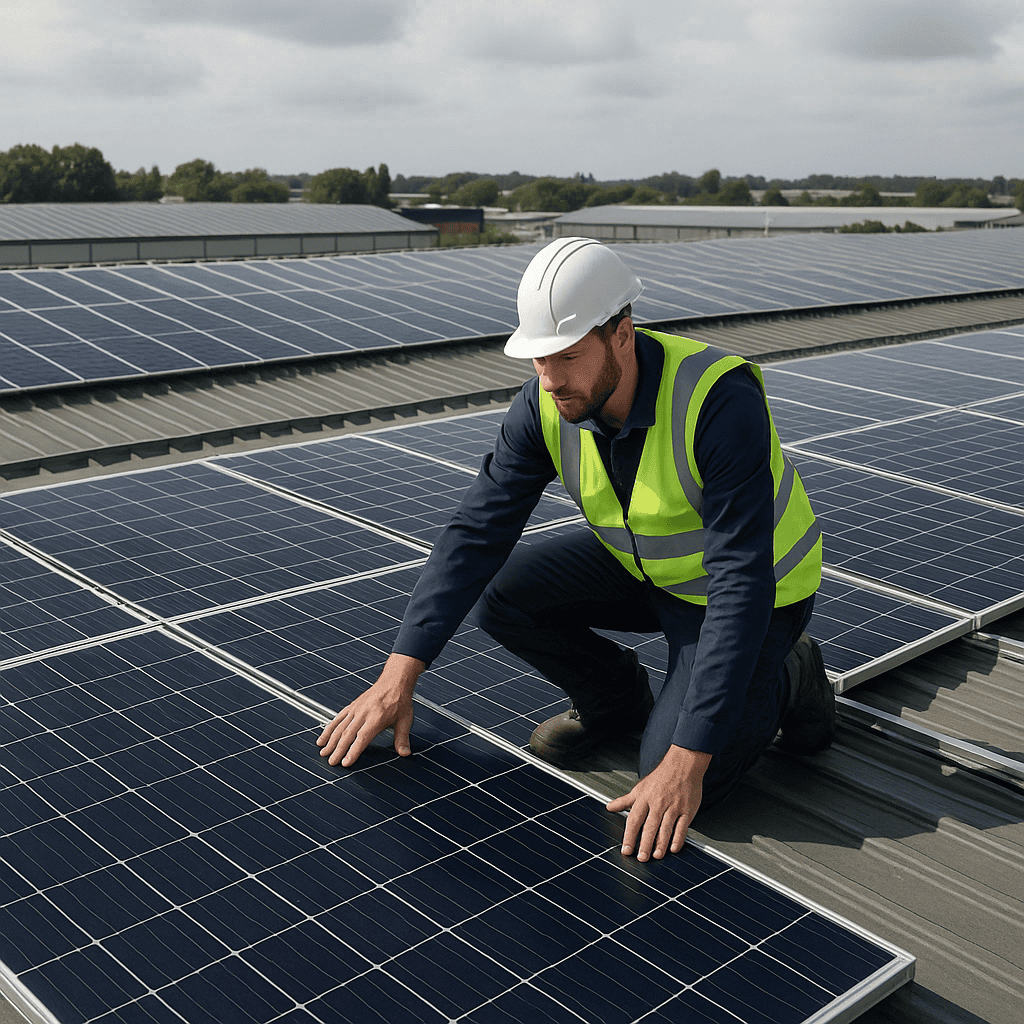
The Installation Journey
The process of installing industrial solar panels begins with a thorough assessment of the site. This involves evaluating the current energy consumption, available space, and structural integrity of the buildings. Next, a customized design is created to maximize efficiency and energy production, taking into account the specific needs and constraints of the facility.
Once the design is finalized, the installation phase commences. This step involves setting up the solar panels, inverters, and necessary wiring, ensuring all components are securely mounted and properly connected. Skilled technicians work meticulously to ensure compliance with safety standards and local regulations.
After installation, the system undergoes rigorous testing to verify its performance and reliability. Ongoing maintenance is essential to keep the system operating at peak efficiency, including regular inspections and cleaning. This comprehensive process ensures that industrial solar installations provide a sustainable and cost-effective energy solution for commercial applications.
Solar Growth
Industrial solar installations have grown by over 400% in the last decade, promoting sustainable energy solutions.
Top 5 Questions About Industrial Solar Installations
What are the benefits of installing industrial solar panels for businesses?
Installing industrial solar panels can significantly reduce energy costs, enhance sustainability, and improve corporate image. Additionally, they provide energy independence, protect against rising electricity prices, and may qualify businesses for government incentives, contributing to long-term financial savings.
How do industrial solar installations reduce energy costs for commercial enterprises?
Industrial solar installations lower energy costs by harnessing renewable sunlight to generate electricity, reducing reliance on grid power. This leads to significant savings on energy bills, stabilises long-term energy expenses, and can enhance sustainability credentials for commercial enterprises.
What factors should be considered when choosing commercial solar panels for industrial applications?
Consider factors such as energy needs, roof space, panel efficiency, durability, warranty, and installation costs. It's also important to assess the potential for government incentives and the long-term return on investment to ensure optimal performance and savings.
What is the average return on investment for industrial solar panel installations?
The average return on investment for industrial solar panel installations typically ranges from 5 to 15 years, depending on factors such as energy costs, system size, and available incentives. Long-term savings on energy bills can significantly enhance overall profitability.
How can businesses maximize efficiency with their commercial solar panel systems?
Businesses can maximise efficiency by conducting regular maintenance, optimising panel placement for sunlight exposure, integrating energy storage solutions, and monitoring performance data to identify and address any issues promptly. This ensures optimal energy production and cost savings over time.