
Steps to Navigate Planning Permission for Commercial Solar
Understanding planning permission for commercial solar installations begins with researching local regulations and guidelines. It’s essential to familiarize yourself with the specific requirements set by your local council, as planning policies can vary significantly across different regions in the UK. Start by visiting your council’s website or contacting their planning department to obtain relevant information about any restrictions or conditions related to solar panel installations on commercial properties.
Once you have a solid grasp of the local regulations, the next step is to assess your property’s suitability for solar energy. This includes evaluating roof space, shading, and the structural integrity of your building. Engaging with a professional solar developer can provide valuable insights and help you navigate the planning process more efficiently. They can assist in preparing the necessary documentation and applications, ensuring that you comply with all legal requirements while maximizing the potential of your solar installation.
Unlocking the Benefits of Planning Permission for Commercial Solar
Understanding planning permission for commercial solar installations can significantly enhance your project’s success and return on investment. Discover key benefits that align with your strategic goals.
Streamlined Project Approval
Securing planning permission ensures a smoother approval process, reducing delays and keeping your project on schedule.
Maximized Financial Incentives
Proper planning permission can help you qualify for financial incentives, enhancing the economic viability of your solar project.
Enhanced Property Value
Commercial properties with approved solar installations can see an increase in value, attracting potential buyers or tenants.
Improved Compliance and Risk Management
Ensuring compliance with local regulations minimizes legal risks and potential fines, safeguarding your investment.
Strengthened Environmental Credentials
Achieving planning permission underscores your commitment to sustainability, boosting your corporate image and stakeholder confidence.
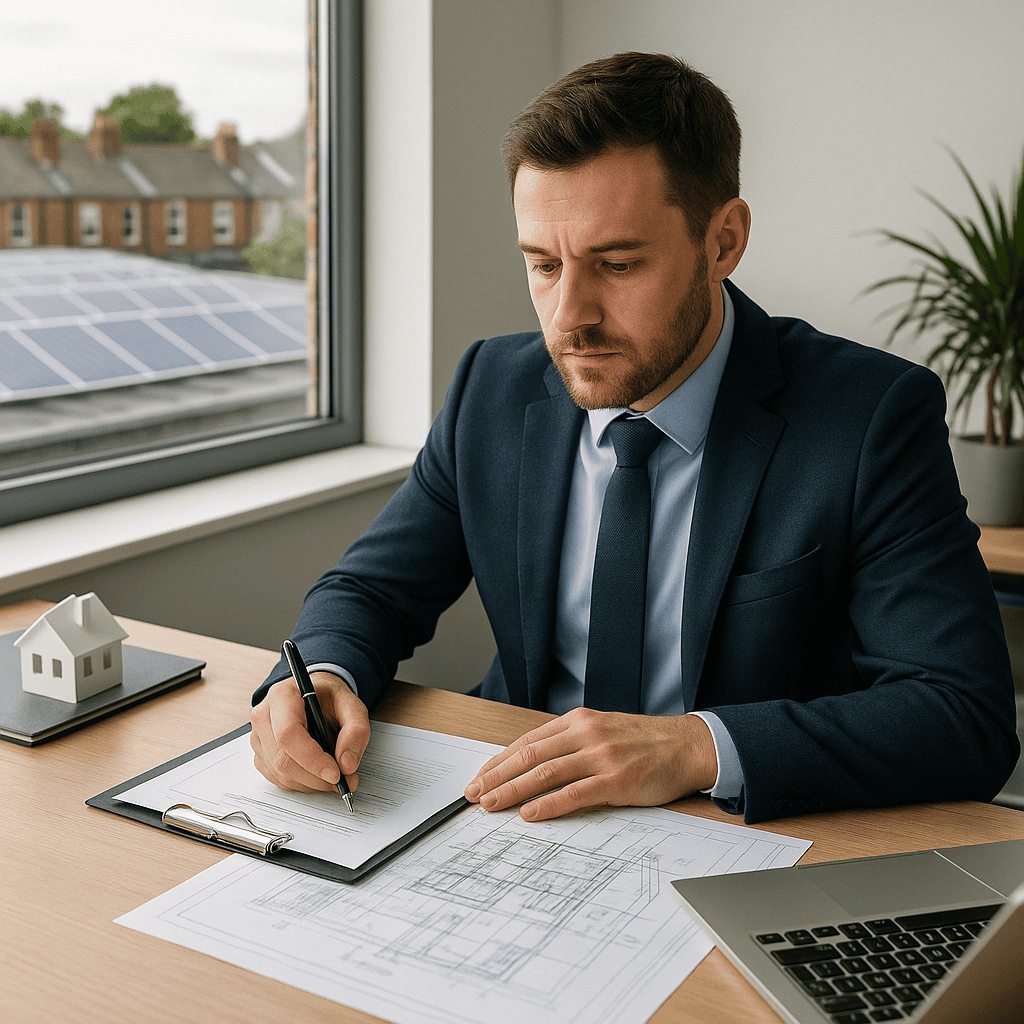
Navigating the Planning Process
The planning process for commercial solar installations begins with assessing the site’s suitability. This involves evaluating factors such as solar exposure, land use, and potential environmental impacts. Once the site is deemed appropriate, the next step is preparing and submitting a detailed planning application to the local authorities, which includes technical specifications and project plans.
After submission, the application is reviewed by the planning committee, who will consider public and environmental interests. This phase might involve consultation with stakeholders and local residents to gather feedback and address any concerns raised. It’s crucial to ensure all documentation is thorough to facilitate a smooth review process.
Finally, if the application gains approval, the project can proceed to the installation phase. In some cases, conditions may be attached to the approval, requiring adherence to specific guidelines. Regular communication with the local planning office can help navigate any additional requirements or adjustments needed during this phase.
Solar Growth
By 2050, solar power could supply 27% of the world’s electricity, dramatically reducing carbon emissions globally.
Top 5 Questions About Commercial Solar Planning Permission
What planning permissions are required for installing commercial solar panels?
Installing commercial solar panels typically requires planning permission if the installation exceeds certain size thresholds or affects the building's appearance. It's essential to consult local planning authorities to determine specific requirements based on your location and project details.
How long does the planning permission process take for commercial solar projects?
The planning permission process for commercial solar projects typically takes between 8 to 13 weeks, depending on the complexity of the application and local authority procedures. Factors such as public consultations may also influence the timeline.
Are there specific regulations for commercial solar installations in urban areas?
Yes, commercial solar installations in urban areas must comply with local planning regulations, which may include restrictions on height, visual impact, and heritage considerations. It's essential to consult your local planning authority for specific guidelines and requirements.
What documentation is needed to apply for planning permission for commercial solar?
To apply for planning permission for commercial solar installations, you typically need a completed application form, site plans, elevation drawings, a design and access statement, and any relevant environmental assessments, depending on the project's scale and location.
Can I install commercial solar panels without planning permission in certain circumstances?
In certain circumstances, such as if the installation meets specific criteria and is classified as permitted development, you may not require planning permission for commercial solar panels. However, it's essential to consult local regulations to confirm eligibility.