
How can businesses optimize savings with battery storage under time of use tariffs?
In today’s dynamic energy market, businesses are increasingly looking for ways to reduce their operational costs. One effective strategy is leveraging battery storage systems under time of use (TOU) tariffs. TOU tariffs charge different rates for electricity depending on the time of day, encouraging businesses to shift their energy usage to off-peak periods when rates are lower.
By integrating battery storage, businesses can store electricity during these off-peak times and utilise it during peak periods, thus minimising energy expenses. This strategy not only optimises savings but also enhances energy efficiency and sustainability, providing a competitive edge in an ever-evolving market.
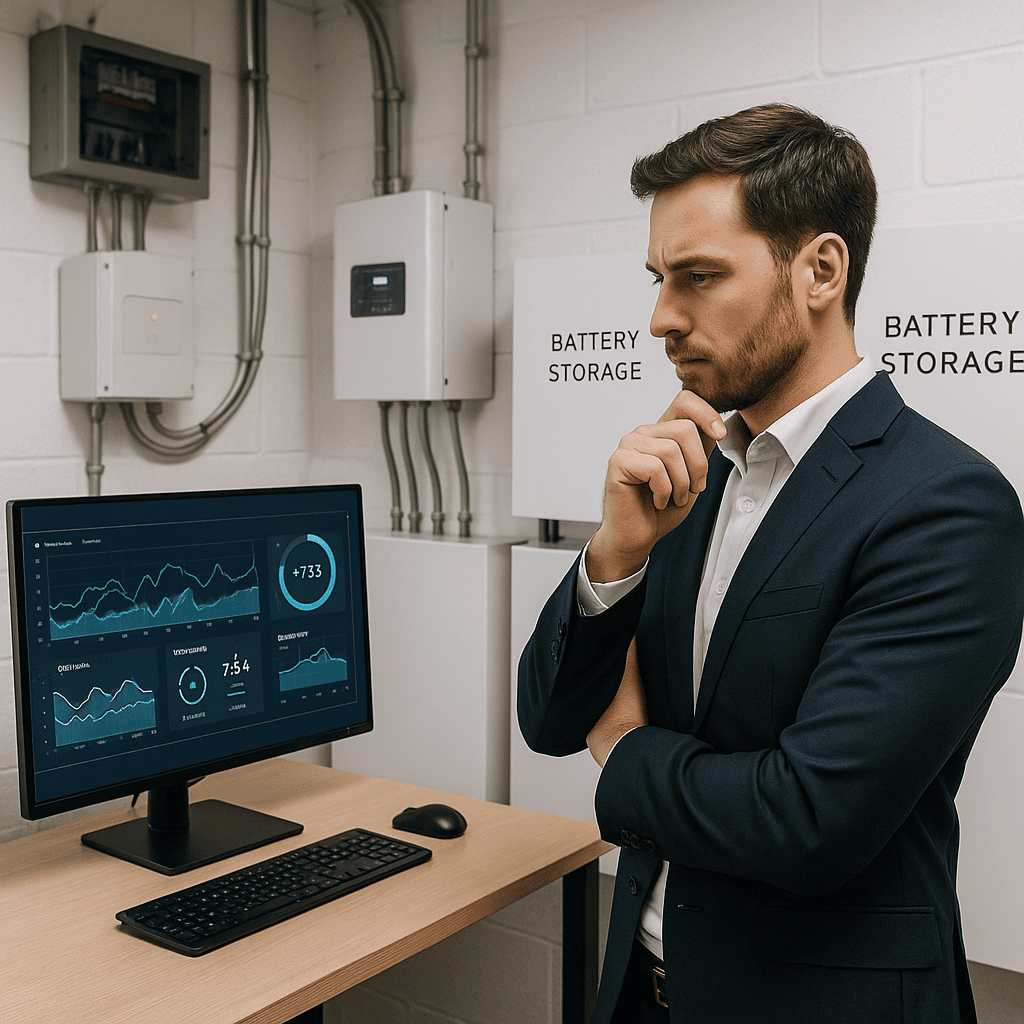
To make the most of battery storage under TOU tariffs, businesses should first conduct a thorough analysis of their energy consumption patterns. Understanding when peak usage occurs allows for strategic planning of battery charging and discharging cycles. This ensures that stored energy is utilised precisely when it is most cost-effective.
Additionally, investing in smart energy management systems can further enhance savings. These systems automatically optimise the charging and discharging of batteries based on real-time data and predictive analytics. This automation ensures that businesses always benefit from the lowest possible energy costs without manual intervention.
Lastly, businesses should regularly review their energy strategy and stay informed about changes in tariff structures or technology advancements. By remaining agile and adaptable, businesses can continue to optimise their energy savings, ultimately contributing to a more sustainable and financially sound operation.