
What factors should businesses consider when evaluating solar technology options?
When evaluating solar technology options, businesses need to consider a variety of factors to ensure they make a decision that aligns with their energy needs and financial goals. Solar technology can be a substantial investment, so understanding the different components and their benefits is crucial. The choice of technology can impact the efficiency, cost-effectiveness, and sustainability of your energy solution.
Key factors include the type of solar panels, their efficiency, and the overall system cost. The geographical location of your business also plays a vital role, as it affects the amount of sunlight your solar panels can capture. Additionally, businesses should consider the potential for future expansion and whether the chosen technology can accommodate growth.
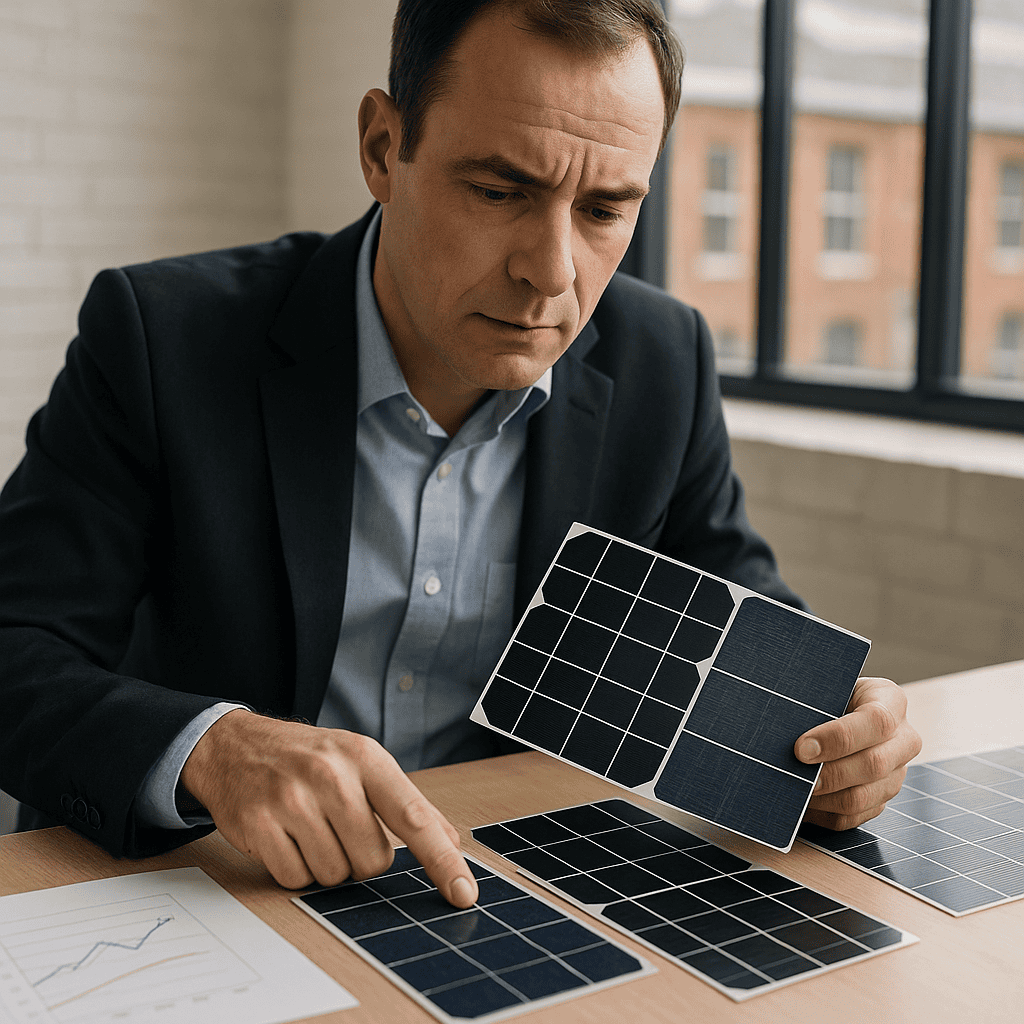
Firstly, businesses should assess the type of solar panels available, such as monocrystalline, polycrystalline, or thin-film. Each type has distinct characteristics in terms of efficiency and cost. Monocrystalline panels, for example, are typically more efficient but may come at a higher price. Evaluating these options in the context of your energy needs and budget is essential.
Secondly, system efficiency and performance are paramount. This includes not only the efficiency of the panels themselves but also the efficiency of the inverters and battery storage systems, if applicable. High-efficiency systems can yield more energy per square metre, which is especially beneficial for businesses with limited roof space.
Lastly, consider the total cost of ownership, which encompasses installation, maintenance, and potential savings on energy bills. It is also worthwhile to explore available incentives or subsidies, as these can significantly reduce upfront costs. By thoroughly evaluating these factors, businesses can make informed decisions that ensure a successful transition to solar energy.