
How do installation costs for solar panels on flat roofs compare to pitched roofs?
When considering solar panel installations, the type of roof can significantly influence the overall cost. Flat roofs typically require different mounting systems compared to pitched roofs, which can affect both the complexity and the expense of the installation process. Understanding these differences can help in making an informed decision about solar energy investments.
Flat roof installations often involve additional materials, such as ballasted mounting systems, which are designed to secure the panels without penetrating the roof surface. Conversely, pitched roofs generally use simpler mounting systems that attach directly to the roof structure. This difference in approach can lead to variations in installation costs between the two types of roofs.
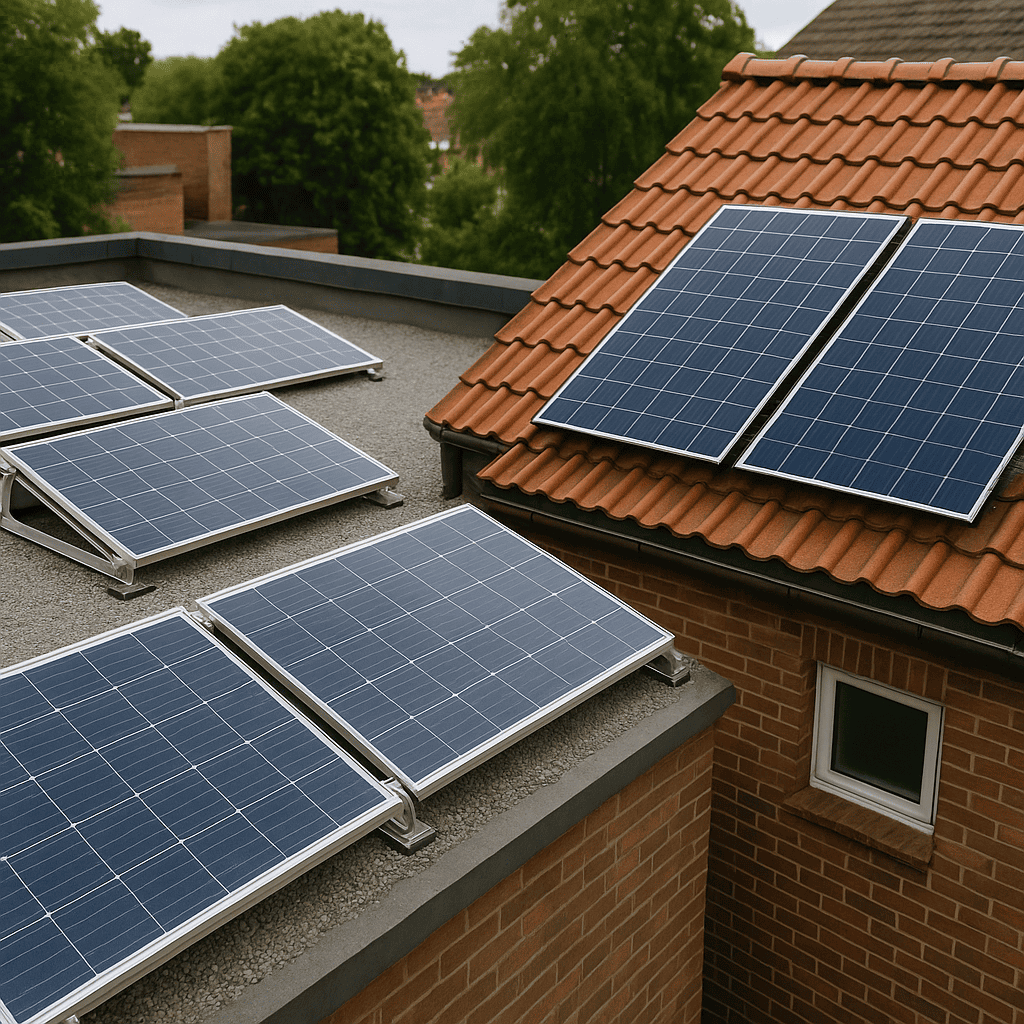
The primary factor affecting the cost of installing solar panels on flat roofs is the need for specialised mounting systems. These systems are designed to ensure stability and proper orientation of the panels, which can add to the overall expense. Additionally, the installation process may require more labour, as the panels must be carefully positioned to maximise sunlight exposure and avoid shading.
In contrast, pitched roofs typically allow for a more straightforward installation process. The angle of the roof naturally aids in capturing sunlight, reducing the need for complex mounting systems. This can lead to lower labour costs and fewer materials required, making pitched roof installations generally less expensive than those on flat roofs.
It’s essential to consider these cost differences in conjunction with other factors, such as the potential energy savings and the suitability of your roof for solar panels. By weighing the initial investment against long-term benefits, you can determine the most cost-effective solution for harnessing solar energy.
