
How does Octopus Agile pricing compare to traditional energy tariffs for solar households?
For households with solar panels, understanding how energy tariffs impact savings is crucial. One option that stands out is a variable pricing model based on real-time market conditions. Unlike traditional fixed-rate tariffs that charge the same rate regardless of the time of day, this dynamic pricing can offer significant benefits. By aligning energy consumption with periods of lower demand, solar households can optimise their savings.
Traditional energy tariffs typically offer predictability and stability, but they may not always provide the best financial advantage for solar households. The appeal of a pricing model that fluctuates in response to market conditions lies in its potential for cost efficiency. Households can take advantage of lower rates during off-peak times, maximising the financial returns from their solar investments.
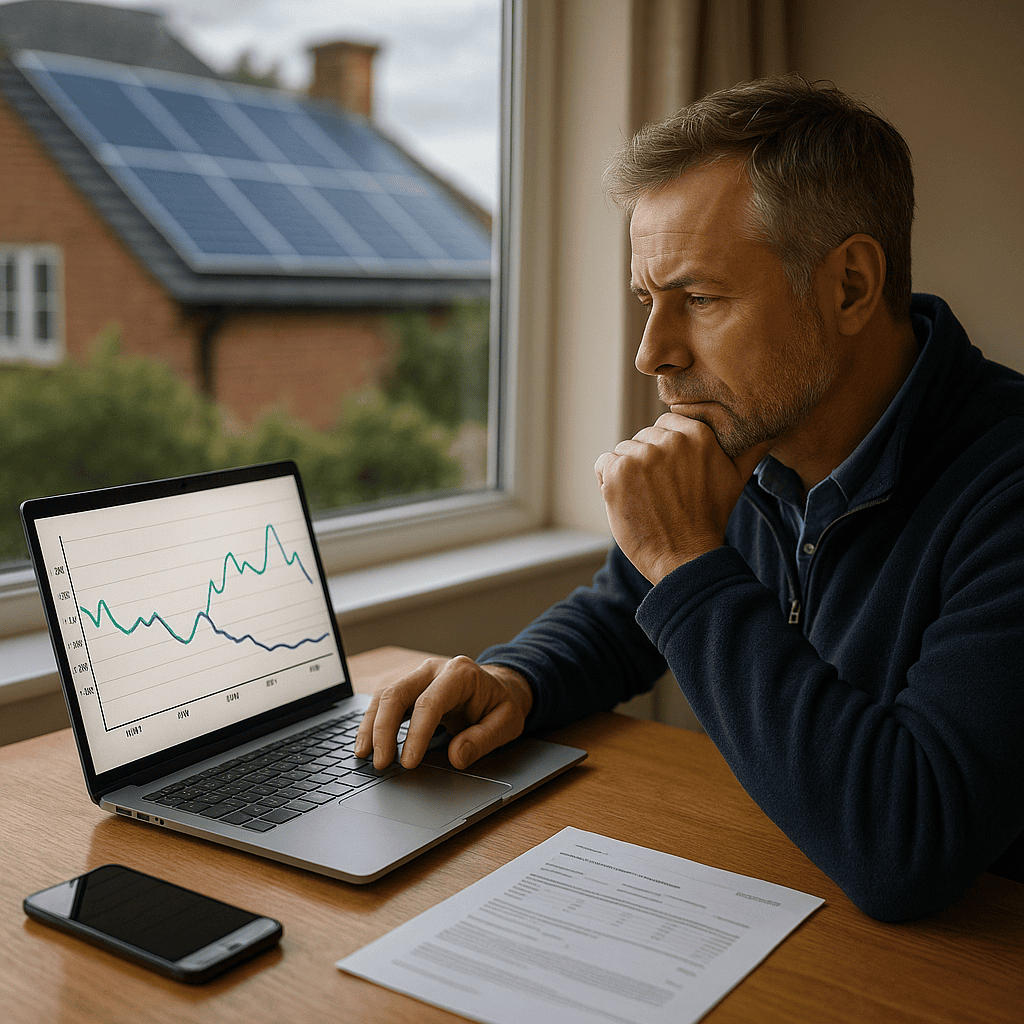
The primary advantage of a dynamic pricing model is its flexibility. For solar households, this means the ability to adjust energy usage to coincide with times when electricity is cheaper, thus reducing overall costs. This approach can be particularly beneficial when solar panels are not generating electricity, such as during the night or on cloudy days.
In contrast, traditional energy tariffs offer a fixed rate that remains constant. While this can simplify budgeting and provide certainty, it does not allow households to capitalise on periods of low demand when prices are reduced. This inflexibility can result in higher energy bills, particularly when solar generation is low.
Solar households considering their options should weigh the potential for savings against the need for predictability. A variable pricing model may require more active management of energy consumption patterns but can lead to significant cost savings. By understanding and adapting to market fluctuations, solar households can make informed decisions that benefit both their finances and energy efficiency.