What are the key differences between string inverters and microinverters in solar systems?
When considering the installation of a solar system, understanding the differences between string inverters and microinverters is crucial for making an informed decision. Both types of inverters play a significant role in converting solar energy into usable electricity, yet they function differently and offer distinct advantages. Choosing the right inverter can impact the efficiency, reliability, and overall performance of your solar system.
String inverters are traditionally more common and work by connecting multiple solar panels in series, feeding the collected energy into a single inverter. Microinverters, on the other hand, are installed on each individual solar panel, allowing for independent operation. This fundamental difference influences various aspects of system performance and maintenance, making it essential to evaluate which option best suits your specific needs and conditions.
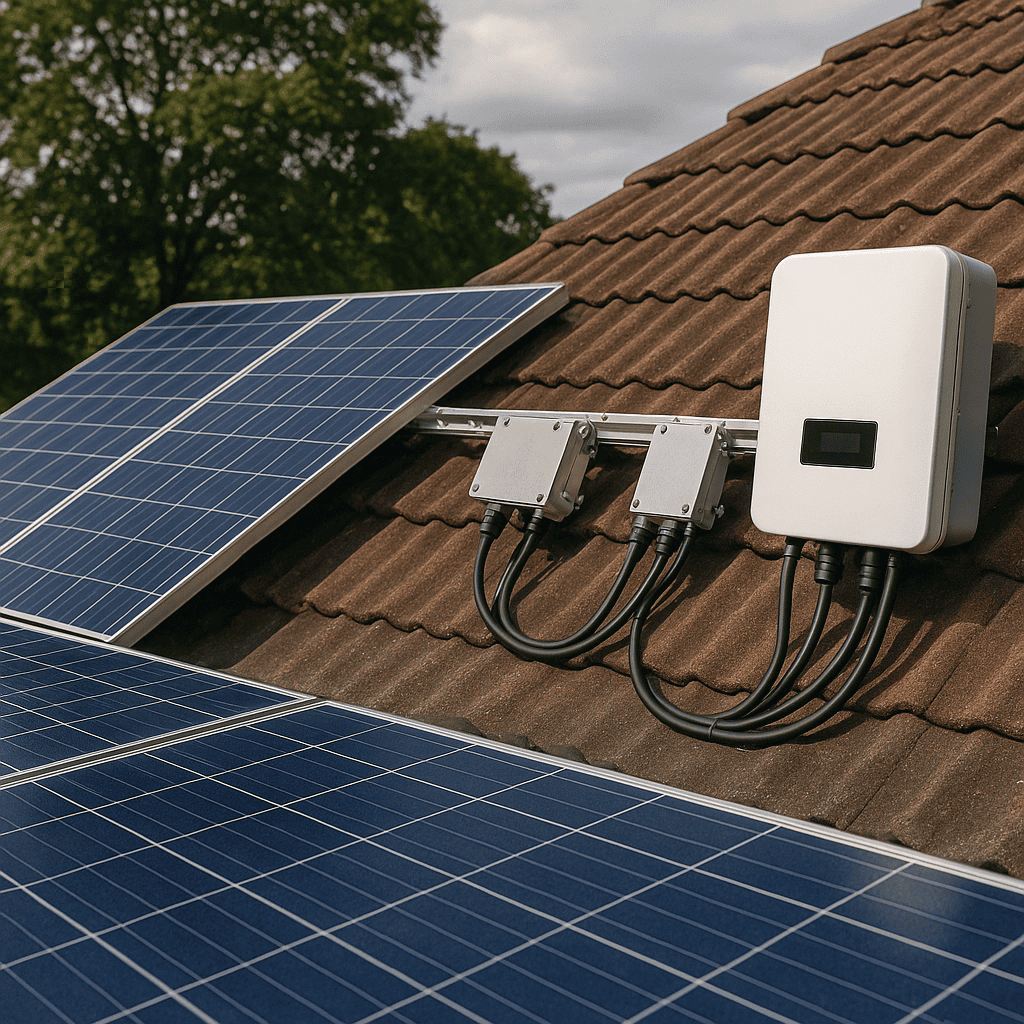
One of the primary distinctions between string inverters and microinverters lies in their performance under shading conditions. String inverters can experience reduced efficiency if even one panel in the series is shaded or underperforming, as the entire string’s output is affected. In contrast, microinverters optimise the output of each panel individually, ensuring that shading on one panel does not impact the performance of others, thus maximising energy harvest.
Installation and scalability are also key factors to consider. String inverters generally offer a more straightforward installation process, often resulting in lower initial costs. However, microinverters provide greater flexibility in system design and expansion. Because each panel operates independently, adding more panels to a microinverter system is typically simpler and does not require reconfiguring the entire array.
Finally, system monitoring and maintenance differ between the two inverter types. Microinverters enable detailed monitoring of each panel’s performance, allowing for quicker identification and resolution of issues. This level of monitoring can be advantageous for maintaining optimal system performance over time. In contrast, string inverters offer system-wide monitoring, which may suffice for smaller or less complex installations. Ultimately, the choice between string inverters and microinverters should be guided by the specific needs and constraints of your solar project.