What are the different types of solar inverters and how do they work?
Solar inverters are crucial components in any solar energy system, responsible for converting the direct current (DC) electricity generated by solar panels into alternating current (AC) electricity, which is used by most household appliances and the national grid. Understanding the different types of solar inverters can help optimise the efficiency and functionality of a solar power setup.
There are three main types of solar inverters: string inverters, microinverters, and power optimisers. Each type has unique characteristics and benefits, making them suitable for various installation scenarios and energy needs. By delving into their functionalities, you can make informed decisions about which inverter best suits your specific solar energy requirements.
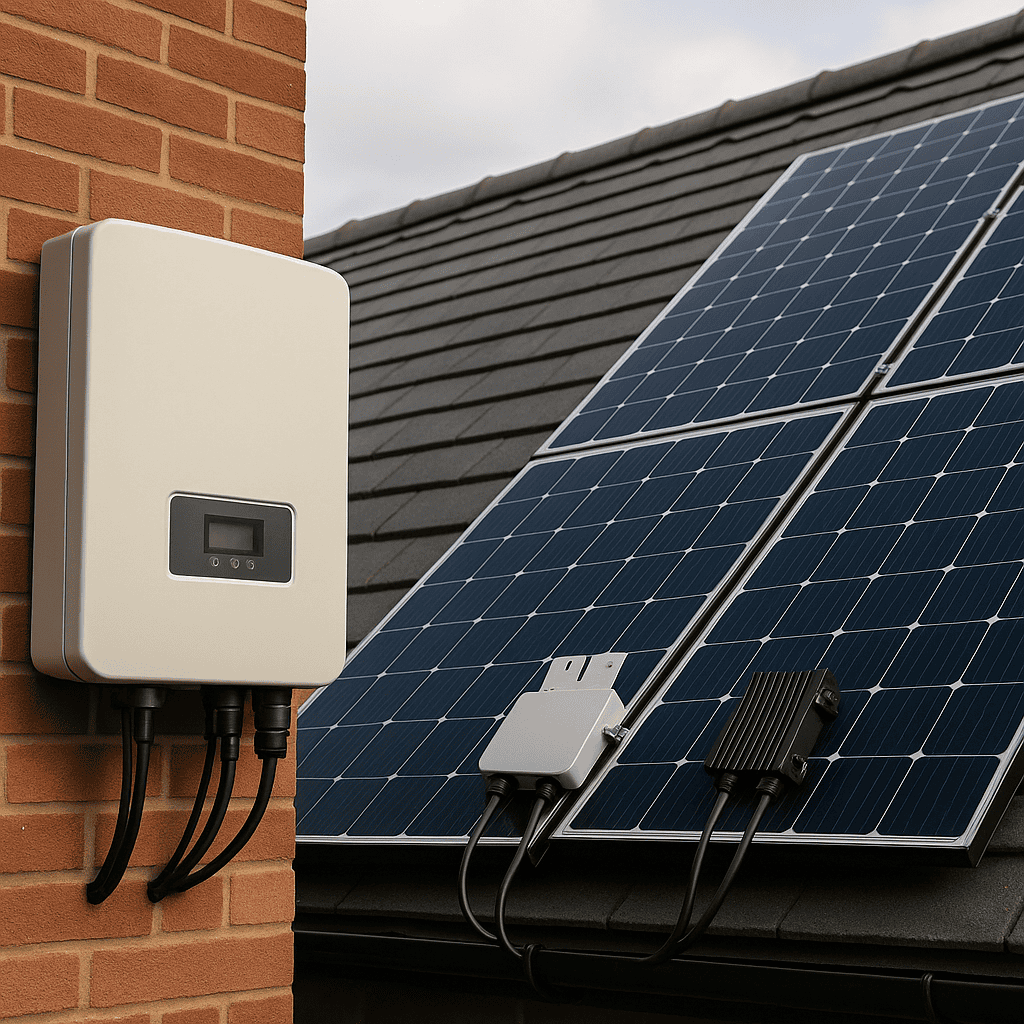
String inverters are the most commonly used type in residential and commercial solar installations. They are named for their ability to connect a series, or “string,” of solar panels. These inverters are cost-effective and efficient for installations where panels receive consistent sunlight without shading issues, as they convert all the power from the string of panels into AC electricity.
Microinverters, on the other hand, are installed directly on each solar panel. This setup allows each panel to operate independently, ensuring maximum energy production even if some panels are shaded or dirty. Microinverters are ideal for installations with complex roof designs or partial shading, as they optimise the output of each individual panel.
Power optimisers are another option that combines the benefits of both string inverters and microinverters. They are attached to each solar panel, optimising the DC power before sending it to a central inverter for conversion to AC. This system provides enhanced performance monitoring and is suitable for installations with varying panel orientations or shading.