
What factors affect solar energy production in winter conditions?
Solar energy production can indeed be affected by winter conditions, but it is not as diminished as one might assume. While shorter days and lower sun angles are common during this season, solar panels can still generate electricity efficiently. In fact, cooler temperatures can improve the efficiency of photovoltaic (PV) cells, allowing them to perform better than in the high heat of summer.
Winter weather conditions, such as snow and cloud cover, can impact solar energy production, but these effects are often less significant than expected. Snow can reflect sunlight, enhancing the amount of light available to the panels, while modern PV systems are designed to capture diffused light on overcast days. Thus, understanding the various factors at play can help in optimising solar energy output during the colder months.
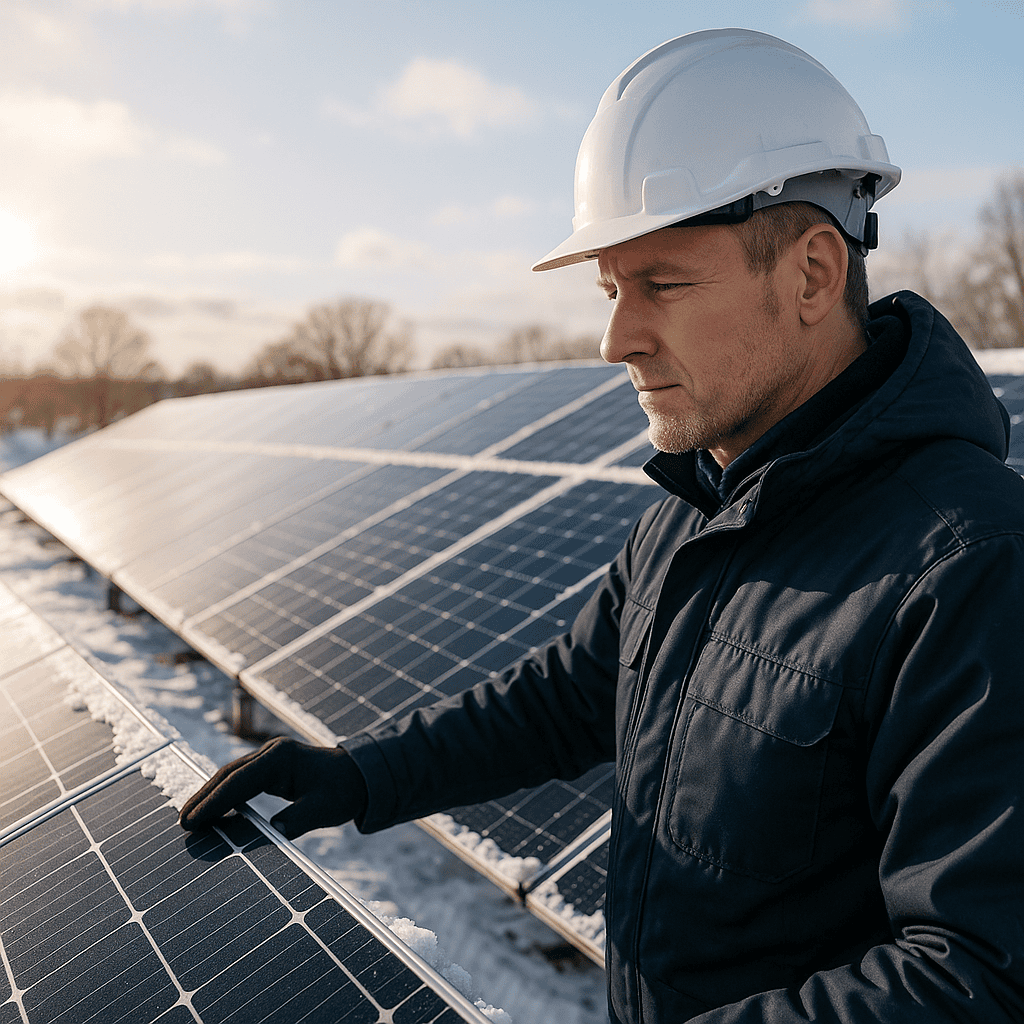
The angle of the sun during winter plays a significant role in solar energy production. The lower angle means that sunlight travels through more of the Earth’s atmosphere, potentially reducing the intensity of solar radiation reaching the panels. To counteract this, adjusting the tilt of solar panels to capture the maximum amount of sunlight can be beneficial during the winter months.
Weather conditions, such as cloud cover and snow, also influence solar performance. Clouds can diffuse sunlight, but solar panels are adept at capturing this scattered light, ensuring some level of energy production even on cloudy days. Snow accumulation on panels can temporarily block sunlight; however, panels are typically installed at an angle that encourages snow to slide off, and the dark surface of the panels can help melt snow quickly.
Finally, the efficiency of solar cells is another crucial factor. Cold temperatures can enhance the efficiency of PV cells, as they perform better in cooler conditions compared to the heat of summer. This increased efficiency can partly offset the reduced sunlight hours and angles during winter, ensuring that solar energy systems continue to provide a valuable source of renewable energy throughout the year.
