
What role does temperature play in solar panel efficiency?
Temperature plays a crucial role in determining the efficiency of solar panels. While solar panels are designed to harness sunlight and convert it into electricity, the efficiency of this process can be significantly affected by the surrounding temperature. As temperatures rise, the efficiency of solar panels tends to decrease, which can impact the overall energy output.
This inverse relationship between temperature and efficiency is due to the way semiconductor materials in solar cells respond to heat. When temperatures increase, these materials can become less effective at conducting electricity, leading to a reduction in the panel’s performance. Understanding this relationship is essential for optimising solar energy systems, particularly in regions with high ambient temperatures.
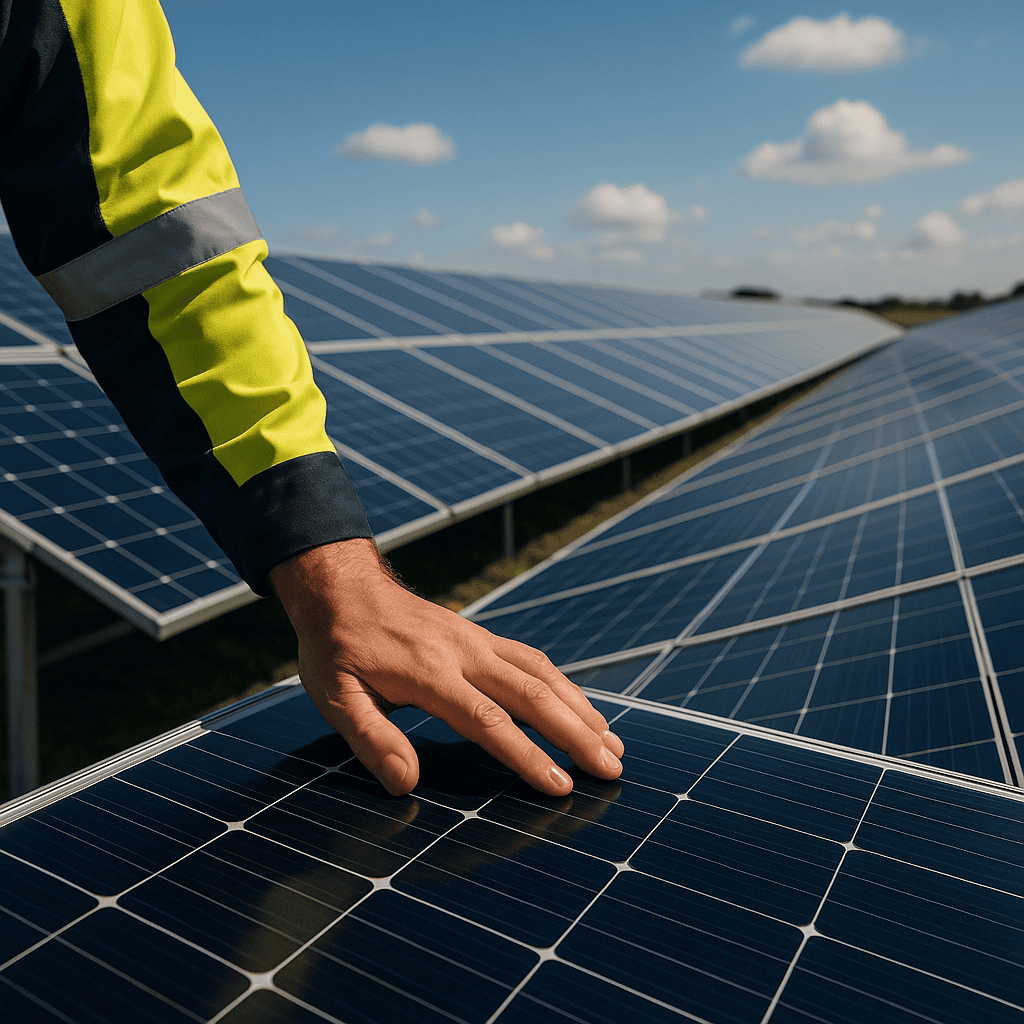
To delve deeper, the efficiency of a solar panel is often measured under standard test conditions, which assume a cell temperature of 25°C. However, in real-world scenarios, solar panels can reach much higher temperatures, especially in sunny climates. As the temperature of the solar cell rises above 25°C, its efficiency typically decreases by about 0.5% per degree Celsius. This means that on particularly hot days, the energy output from solar panels may be notably lower than expected.
Moreover, the type of solar panel can also influence how temperature affects efficiency. For instance, monocrystalline panels generally have a lower temperature coefficient compared to polycrystalline panels, meaning they are slightly less affected by temperature changes. This makes monocrystalline panels a preferable choice in hotter climates where maintaining efficiency is crucial.
To mitigate the effects of temperature on solar panel efficiency, several strategies can be employed. Installing panels with adequate airflow underneath can help dissipate heat, while using materials with better thermal conductivity can also be beneficial. Furthermore, positioning panels at an optimal angle and ensuring they are not exposed to excessive heat from nearby surfaces can help maintain their efficiency. Understanding and addressing these factors can ensure that solar energy systems perform optimally, even in challenging temperature conditions.