
How do monocrystalline, polycrystalline, and thin-film solar panels compare in terms of efficiency and cost?
When considering solar panels for your energy needs, understanding the differences between monocrystalline, polycrystalline, and thin-film options is crucial. Each type has its unique characteristics that influence both efficiency and cost, making them suitable for different applications and budgets. By comparing these solar panel types, you can make an informed decision that aligns with your energy goals and financial considerations.
Monocrystalline panels are renowned for their high efficiency and long lifespan, but they come at a premium price. Polycrystalline panels offer a balance between efficiency and cost, making them a popular choice for residential installations. Meanwhile, thin-film panels are less efficient but are often cheaper and more versatile, suitable for certain commercial applications or areas with space constraints.
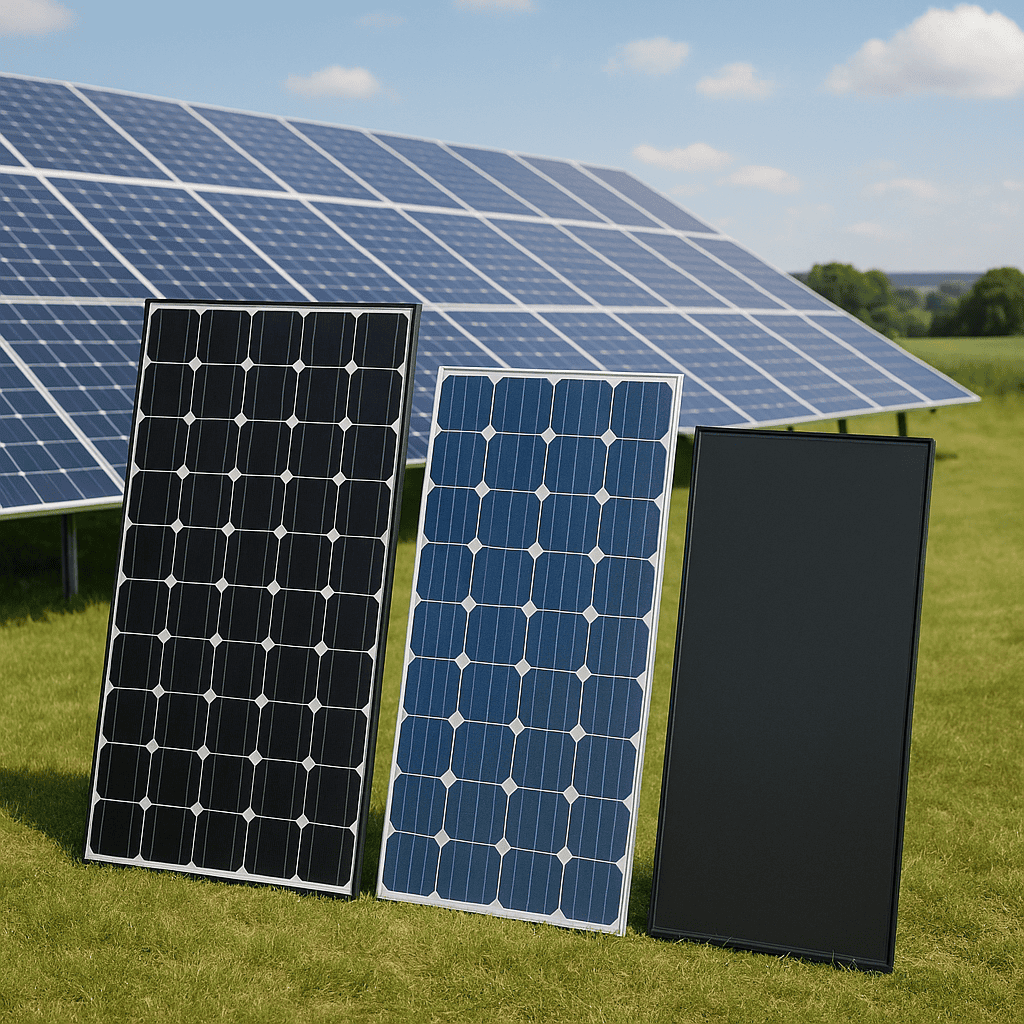
Monocrystalline solar panels are typically the most efficient, converting more sunlight into electricity compared to other types. This high efficiency is due to the use of pure silicon crystals, which also contribute to their durability and longevity. However, these advantages come with a higher cost, making them an investment more suited to those prioritising performance and space efficiency.
Polycrystalline panels, on the other hand, are made from multiple silicon crystals, which results in slightly lower efficiency rates. Nevertheless, they are more affordable than monocrystalline panels, offering a practical solution for those seeking a balance between cost and efficiency. Their popularity in residential areas is due to their reasonable performance and lower initial investment.
Thin-film solar panels are the least efficient of the three but offer unique benefits. They are lightweight and flexible, which allows for installation in a variety of settings, including unconventional surfaces. Their lower efficiency is offset by a reduced cost, making them a viable option for projects where budget constraints and flexibility are more critical than maximum efficiency.