
How does IV curve testing contribute to the overall maintenance strategy for solar installations?
IV curve testing plays a pivotal role in the maintenance strategy of solar installations by providing detailed insights into the performance of photovoltaic (PV) systems. This diagnostic tool measures the current and voltage characteristics of solar panels, offering a clear picture of their condition. By identifying issues such as shading, degradation, or electrical faults, IV curve testing aids in maintaining optimal efficiency and extending the lifespan of solar systems.
Incorporating IV curve testing into regular maintenance routines enables proactive problem-solving, ensuring that small issues are addressed before they escalate into major faults. This not only enhances the reliability of solar installations but also maximises energy yield, thus contributing positively to the overall sustainability and cost-effectiveness of solar energy solutions.
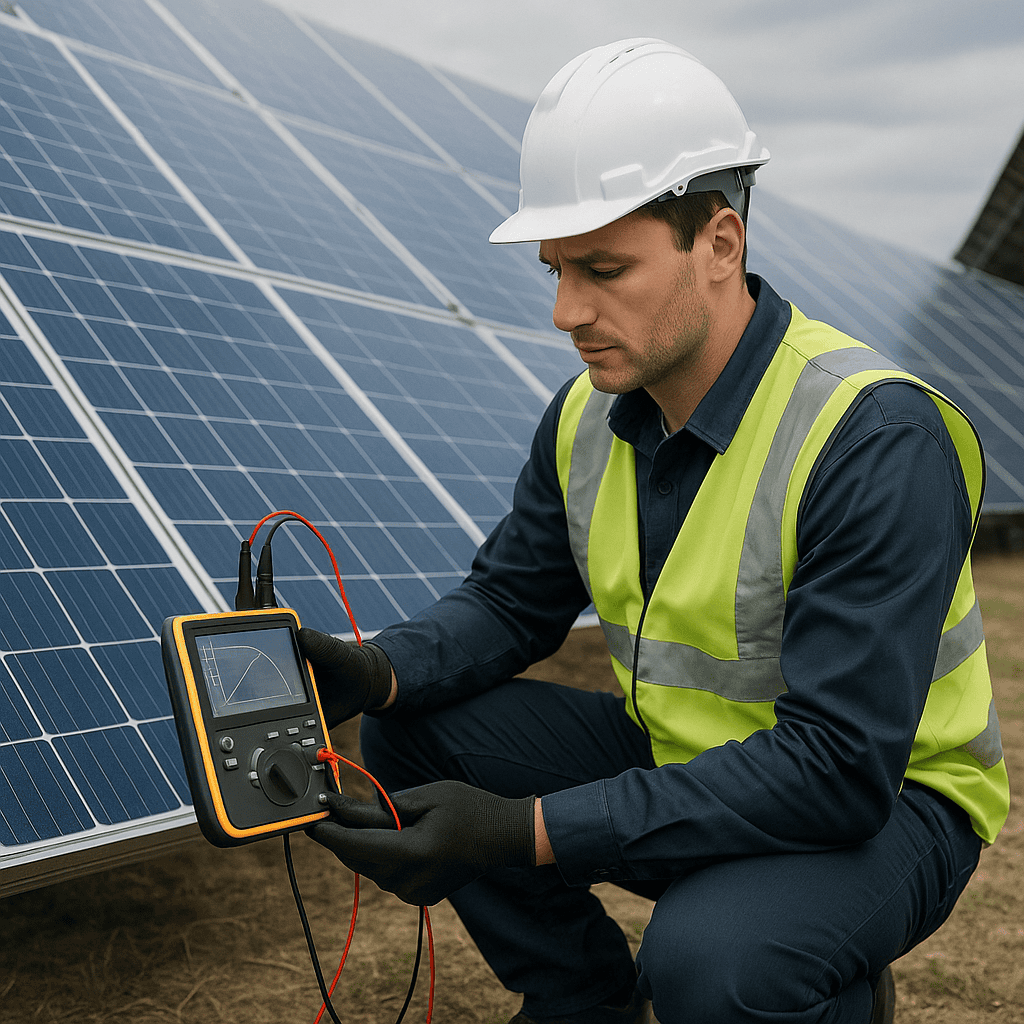
IV curve testing is crucial for detecting performance anomalies in solar panels, such as potential-induced degradation or microcracks, which might not be visible during a standard visual inspection. By pinpointing these issues early, maintenance teams can implement timely corrective measures, preventing energy losses and costly repairs. This proactive approach ensures that solar installations operate at peak efficiency, delivering the expected energy output.
Furthermore, IV curve testing supports predictive maintenance strategies. By regularly analysing IV curves, technicians can identify trends and predict future failures, allowing for scheduled maintenance rather than unexpected downtime. This foresight is invaluable in planning maintenance activities around optimal operational periods, thereby minimising disruption and maximising productivity.
Finally, the data obtained from IV curve testing can be instrumental in validating warranty claims with manufacturers. In cases where panels underperform or fail prematurely, the detailed performance metrics provided by IV curve testing serve as evidence, facilitating smoother negotiations and potential replacements, thereby safeguarding the investment in solar technology.