
What is IV curve testing and why is it important for solar panel performance?
IV curve testing, or current-voltage curve testing, is a crucial method used to evaluate the performance of solar panels. By measuring the electrical output of a solar panel under specific conditions, this test provides valuable insight into the panel’s efficiency and overall health. It is essential for identifying any discrepancies or potential issues that may affect the panel’s performance over time.
The importance of IV curve testing lies in its ability to ensure that solar panels are operating at their optimal capacity. By conducting this test, one can detect faults such as shading effects, cell damage, or connectivity issues that may otherwise go unnoticed. This proactive approach helps in maintaining the longevity and efficiency of solar installations.
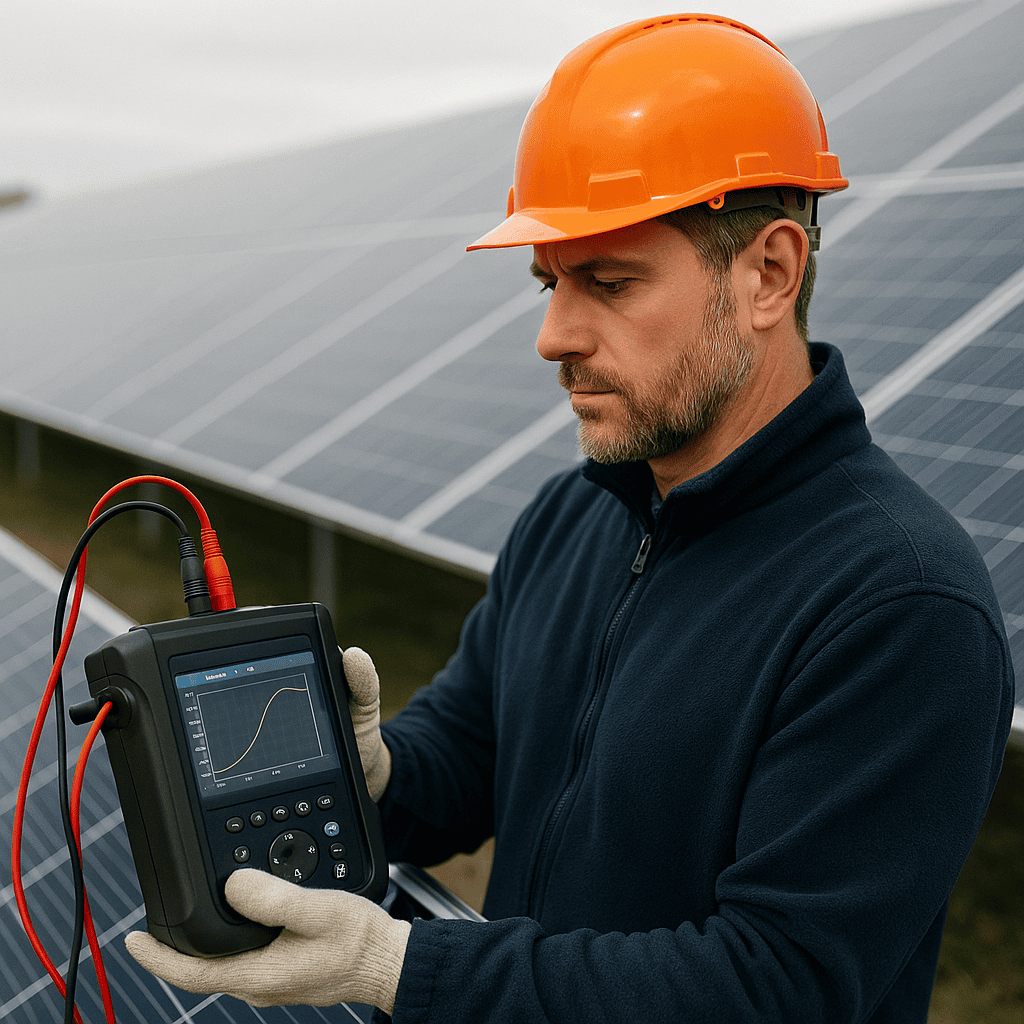
IV curve testing is fundamental in assessing the health of solar panels by plotting the current against the voltage to form a characteristic curve. This curve helps in identifying the maximum power point (MPP), which indicates the highest efficiency at which the panel can operate. Determining the MPP is vital for optimising the energy output of solar systems.
Furthermore, regular IV curve testing can detect potential issues early, allowing for timely maintenance and repair. This preventive measure not only prolongs the lifespan of solar panels but also ensures consistent energy production, which is especially important for large-scale solar farms and residential systems alike.
Ultimately, IV curve testing is a reliable diagnostic tool that supports the sustainable operation of solar panels. By ensuring that each panel is performing as expected, it contributes to the overall efficiency and reliability of solar energy systems, thereby playing a critical role in the transition to renewable energy sources.