
What is the difference between photovoltaic and solar thermal technologies?
In the realm of solar energy, two prominent technologies often come under discussion: photovoltaic (PV) and solar thermal. Both harness the sun’s power, yet they operate in distinctly different ways and serve varying purposes. Understanding the fundamental differences between these technologies is crucial for making informed decisions about their applications and benefits.
Photovoltaic technology involves the conversion of sunlight directly into electricity using solar panels composed of semiconductor materials. In contrast, solar thermal technology captures and utilises the sun’s heat to produce energy, often for heating water or generating electricity through steam turbines. These technologies, while both integral to advancing renewable energy, cater to different energy needs and efficiencies.
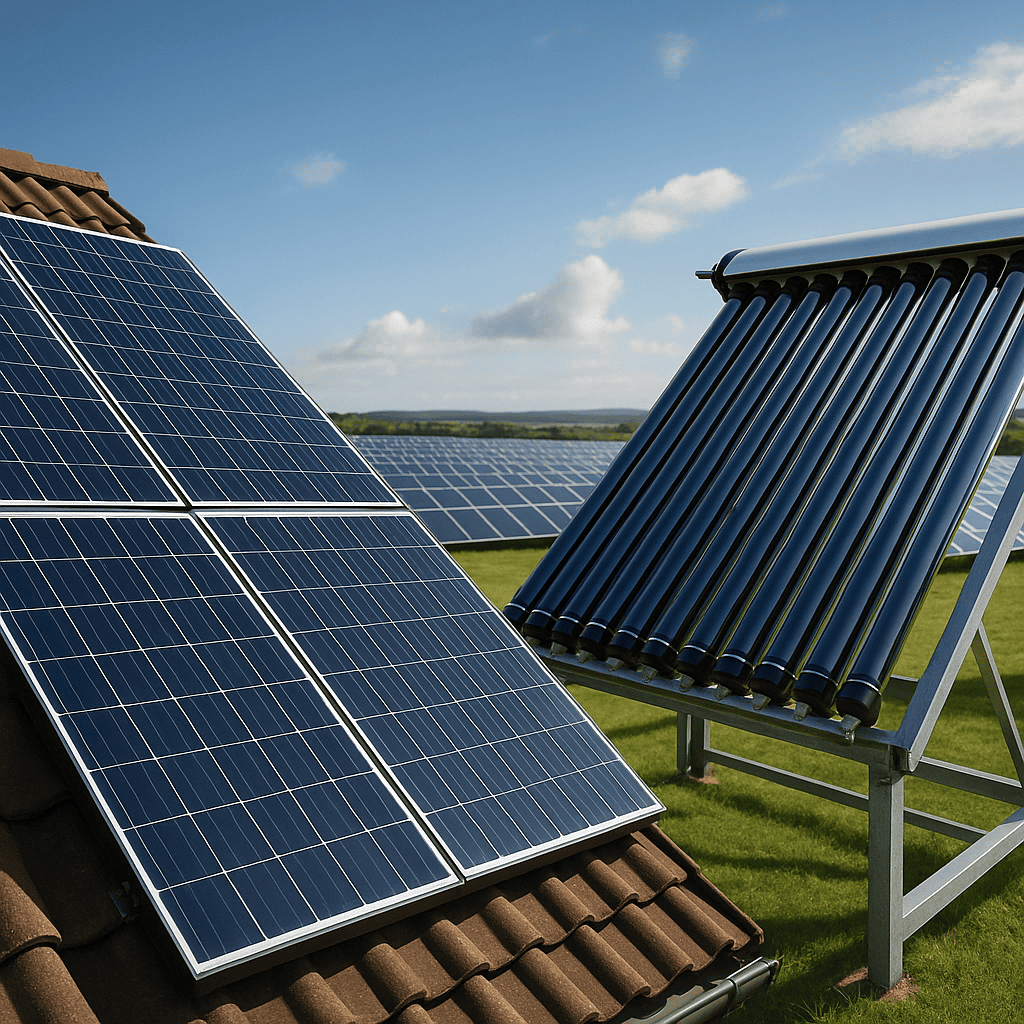
Photovoltaic systems are widely recognised for their versatility and ease of integration into various environments, from residential rooftops to large-scale solar farms. They operate by converting sunlight directly into electrical current through the photovoltaic effect, which occurs when sunlight excites electrons in a semiconductor material like silicon. This electricity can be used immediately, stored in batteries, or fed into the grid.
On the other hand, solar thermal technology focuses on capturing and utilising the sun’s heat. This is typically achieved through solar collectors or mirrors that concentrate sunlight to heat a fluid, which can then be used to generate steam and drive a turbine for electricity production. Solar thermal systems are particularly effective for large-scale applications, such as industrial processes or district heating.
While both technologies aim to reduce reliance on fossil fuels and decrease carbon emissions, they are chosen based on specific energy requirements and geographic conditions. Photovoltaic systems are ideal for locations with consistent sunlight where electricity needs are predominant. In contrast, solar thermal systems are often preferred in environments where their heat generation capabilities can be maximised.