
What steps should I take if my solar inverter is malfunctioning?
Experiencing a malfunction in your solar inverter can be concerning, but addressing the issue promptly can ensure the continued efficiency of your solar power system. The inverter is a crucial component that converts the DC electricity generated by your solar panels into AC electricity for household use. Understanding the steps to take when your inverter is not functioning correctly can help maintain your system’s performance and extend its lifespan.
Begin by assessing the situation carefully. Check for any visible signs of damage or error messages on the inverter display. It’s important to approach the issue systematically, as many common problems can be resolved with simple troubleshooting steps. If the issue persists, you may need to consult the inverter’s manual or seek professional assistance to prevent further complications.
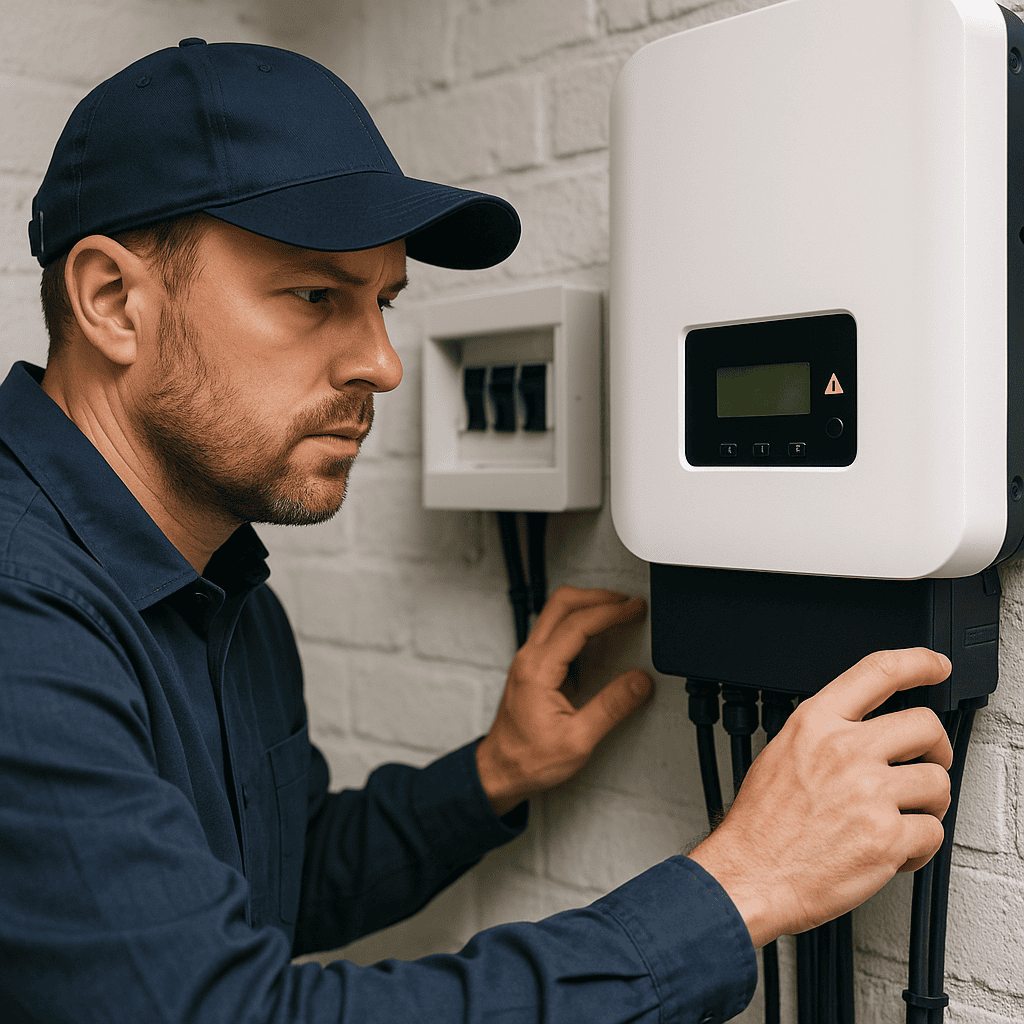
First, verify that your solar inverter is receiving power. Check the circuit breakers and fuses to ensure they are in the correct position and have not tripped. Sometimes, a simple reset of the inverter can resolve minor glitches. If the inverter display shows an error code, consult the manual for guidance on interpreting and addressing the specific issue.
Next, inspect the connections and wiring to ensure they are secure and free from damage. Loose or corroded connections can lead to performance issues. If you are comfortable doing so, carefully clean and tighten any connections that appear problematic. However, always prioritise safety and avoid handling any electrical components if you are unsure.
If these initial steps do not resolve the problem, it may be necessary to contact a professional technician. An expert can conduct a thorough examination and perform more complex repairs if needed. In some cases, replacing the inverter might be the most cost-effective solution, particularly if it is outdated or frequently malfunctioning.