
How does solar for underfloor heating work in residential settings?
Solar-powered underfloor heating combines the efficiency of solar energy with the comfort of radiant floor heating. In residential settings, this system harnesses sunlight through solar panels, converting it into electricity or heat to warm water circulating beneath the floors. This method provides consistent and energy-efficient heating, reducing reliance on traditional energy sources.
By integrating solar energy with underfloor heating, homeowners can enjoy a sustainable and cost-effective solution for maintaining comfortable indoor temperatures. The system not only minimises energy bills but also reduces the household’s carbon footprint, contributing to a greener environment.
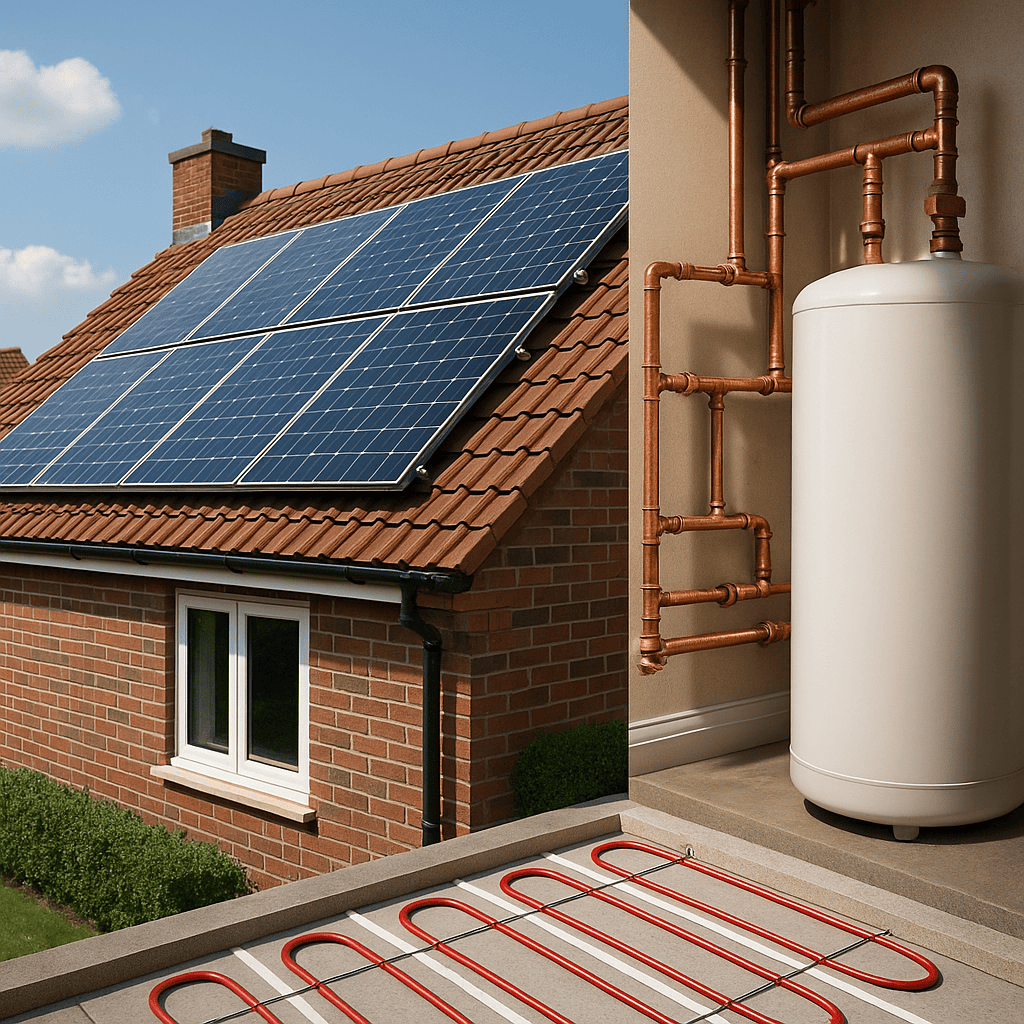
The process begins with solar panels, typically installed on the roof, capturing sunlight and converting it into usable energy. Depending on the system, this energy can either directly power electric underfloor heating systems or heat water in solar thermal systems. Solar thermal systems use a collector to heat water, which then circulates through a series of pipes beneath the floor, providing even and gentle warmth.
For homes with electric underfloor heating, photovoltaic (PV) panels generate electricity that powers the heating elements installed under the flooring. This setup ensures that the energy required for heating is sourced sustainably, maximising the use of renewable energy.
Overall, the integration of solar power with underfloor heating systems offers an innovative and eco-friendly solution for residential heating. Not only does it enhance comfort by providing consistent warmth, but it also significantly reduces energy consumption and costs, making it a desirable option for environmentally conscious homeowners.