
How does shade from nearby trees or buildings impact solar panel efficiency?
When considering solar panel installations, the influence of shade from nearby trees or buildings is a crucial factor. Shade can significantly reduce the efficiency of solar panels, as it limits the amount of sunlight reaching the panels, ultimately impacting their energy output. Regardless of the type of roof, any obstruction that casts a shadow on solar panels can lead to decreased performance.
Understanding how shade affects solar panels is essential for anyone looking to optimise their energy production. By recognising potential sources of shade and their impact, you can make informed decisions about panel placement and maximise your investment in solar energy.
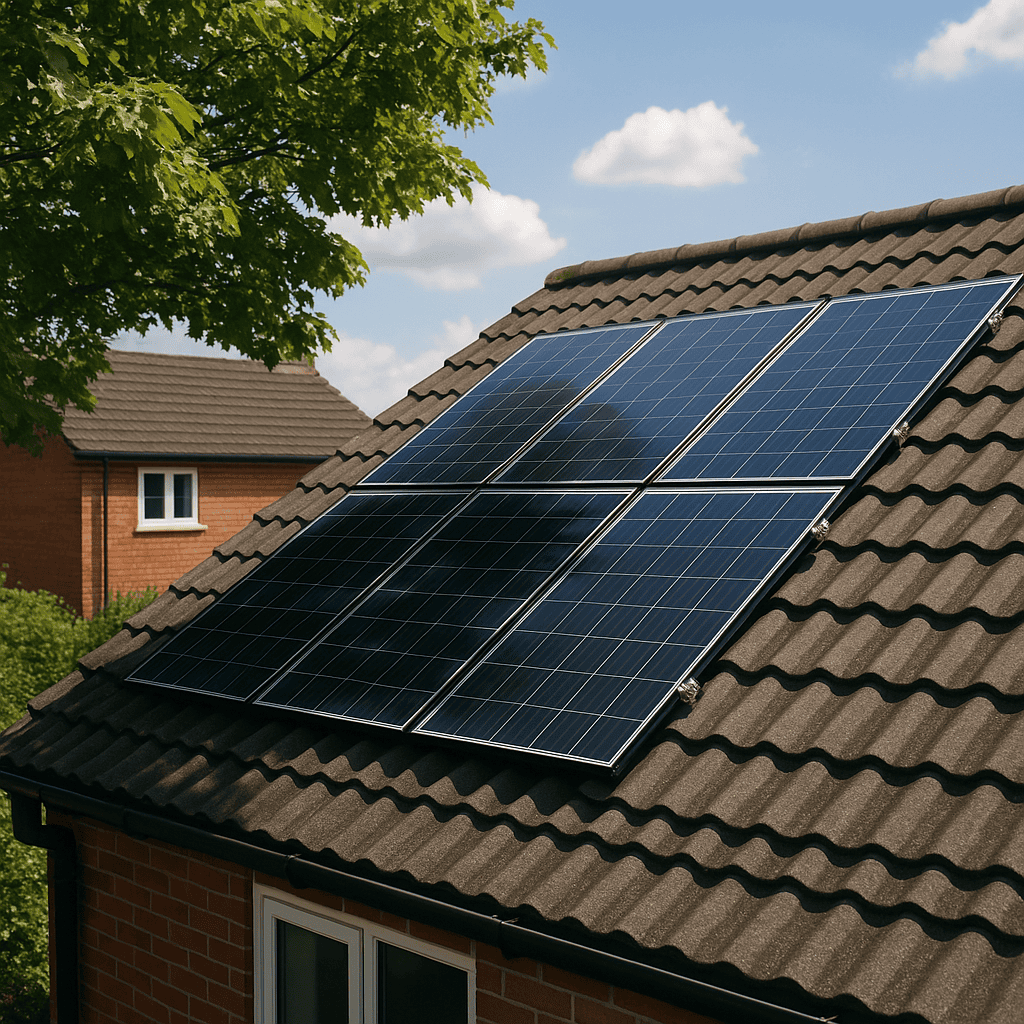
Shade from trees and buildings reduces the amount of sunlight that solar panels receive, which in turn diminishes their ability to generate electricity. Even partial shading can have a disproportionate effect, as most solar panels are connected in series, meaning that shade on even a small part of one panel can affect the entire array’s output. This is particularly true for traditional solar panel systems without optimisers or microinverters.
The impact of shade can vary depending on the type of roof and the positioning of the solar panels. Flat roofs, for example, may experience more uniform shading, while pitched roofs can have different sections exposed to varying levels of shade throughout the day. Therefore, it is essential to consider the orientation and angle of the roof when planning your solar panel installation.
To mitigate the effects of shading, it is advisable to conduct a thorough site assessment prior to installation. This can involve trimming or removing nearby trees, or choosing locations for solar panels that are less susceptible to shading from buildings. Additionally, modern technologies like microinverters or power optimisers can help minimise the impact of shade, ensuring that each panel operates independently and maintains optimal efficiency.