
How does drainage and water pooling impact solar panel performance on flat roofs?
Flat roofs, while offering a viable space for solar panel installations, can present unique challenges, particularly concerning drainage and water pooling. Proper drainage is essential for maintaining optimal solar panel efficiency. Without it, water can accumulate, leading to potential issues that may affect the performance of the panels.
Water pooling on a flat roof can obstruct sunlight, decreasing the energy output of solar panels. Additionally, stagnant water can contribute to debris build-up and potential damage, which might compromise the structural integrity of both the roof and the solar installation. Addressing these drainage challenges is crucial for ensuring maximum efficiency and longevity of solar panels on flat roofs.
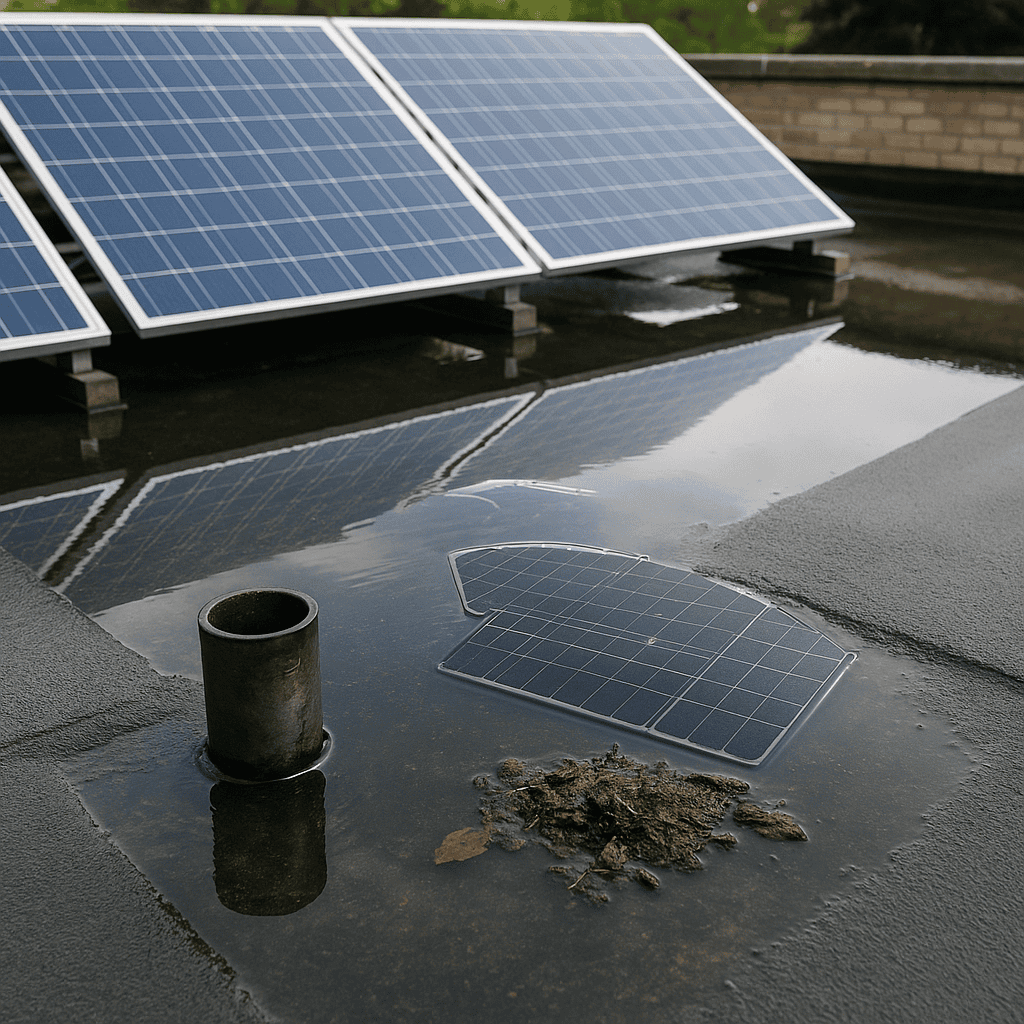
Firstly, effective drainage systems are crucial in preventing water pooling, which can lead to decreased solar panel efficiency. When water accumulates, it can cast shadows over the panels, significantly reducing their exposure to sunlight and thus their energy production. Ensuring that water drains properly can mitigate these issues and maintain optimal performance levels.
Secondly, stagnant water can lead to the accumulation of debris, which may obstruct sunlight and further reduce energy efficiency. Debris build-up can also lead to corrosion or damage to the solar panels and roof materials, potentially resulting in costly repairs. Regular maintenance and cleaning are therefore essential to prevent these issues and maintain the system’s efficiency.
Lastly, water pooling can stress the roof structure, which might cause leaks or structural damage over time. This can impact the durability and effectiveness of both the roof and the solar panel system. Implementing a robust drainage plan and conducting regular inspections can help identify and address potential problems early, ensuring the long-term success of solar panel installations on flat roofs.