
What is the process for accessing roofs during solar panel installation?
When considering the installation of solar panels, understanding the process for accessing roofs is crucial. Roof access involves several steps to ensure both safety and efficiency during installation. This is an essential part of the overall installation process, as it ensures that the panels can be securely and effectively placed on your roof.
Accessing a roof typically involves the use of scaffolding or ladders, guided by stringent safety protocols. These measures are designed to protect both the installation team and your property. By following a structured approach, installers can ensure that the solar panels are installed correctly, maximising their efficiency and longevity.
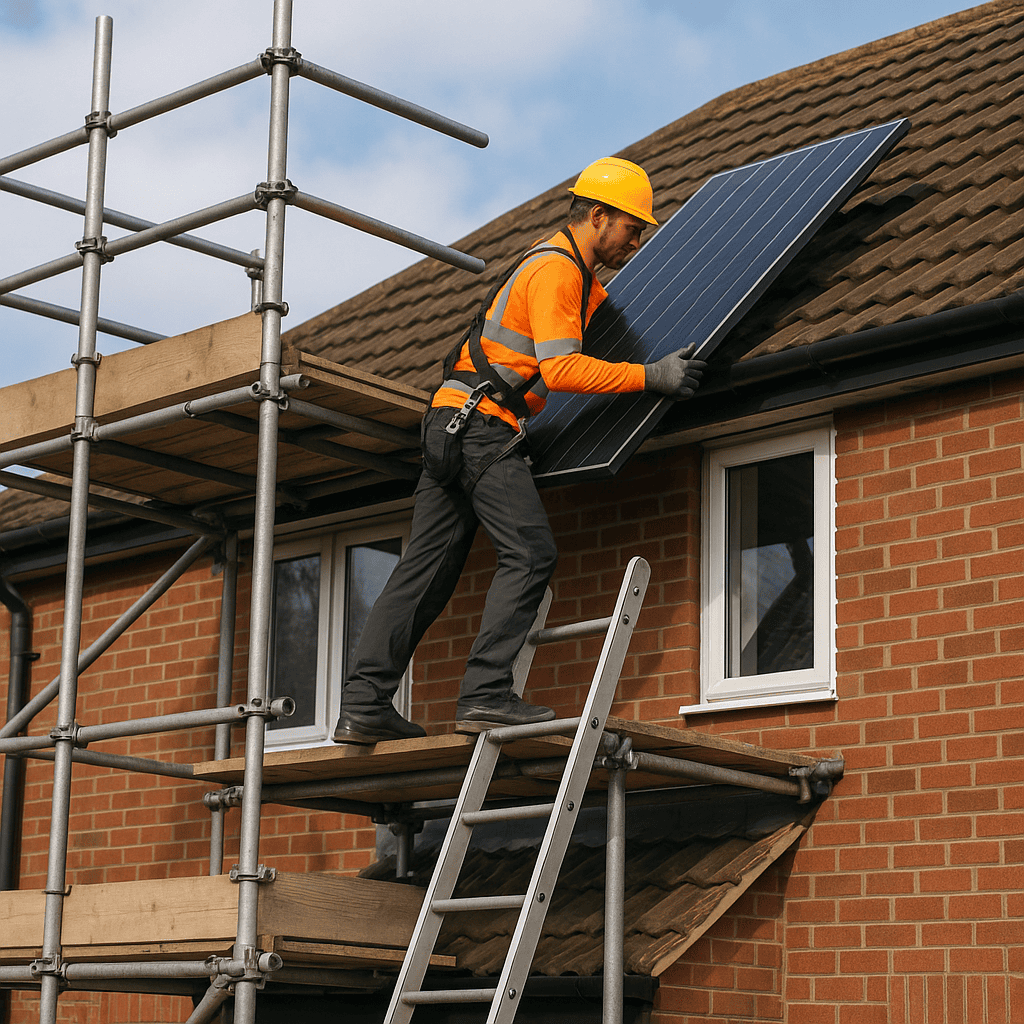
The initial step in accessing a roof for solar panel installation is the erection of scaffolding. Scaffolding provides a stable platform for workers to safely reach the roof, allowing them to transport the necessary equipment and materials. This structure is carefully assembled around the building, ensuring it is securely anchored and compliant with safety standards.
Once scaffolding is in place, the installation team can use ladders or scaffolding towers to reach the desired area of the roof. Safety harnesses and other personal protective equipment are utilised to minimise any risk of falls or accidents. These precautions are particularly important given the heights involved and the need to carry heavy solar panels.
Throughout the installation process, constant communication and adherence to safety protocols are maintained. This ensures that the work is completed efficiently and safely, allowing the solar panels to be fitted securely. By following these steps, installers can successfully access roofs and carry out the installation with minimal disruption to the property owner.