
How does the solar design process ensure optimal energy production for my home?
The solar design process plays a crucial role in ensuring optimal energy production for your home by meticulously assessing and tailoring solutions to meet your specific needs. By addressing factors such as roof orientation, shading, and local climate, this process ensures that the solar system is not only efficient but also maximises the potential energy output.
From the initial survey to the final design, each step is carefully crafted to deliver the best possible results. This comprehensive approach guarantees that your home benefits from a solar system that is both cost-effective and environmentally friendly, ultimately leading to significant energy savings and a reduced carbon footprint.
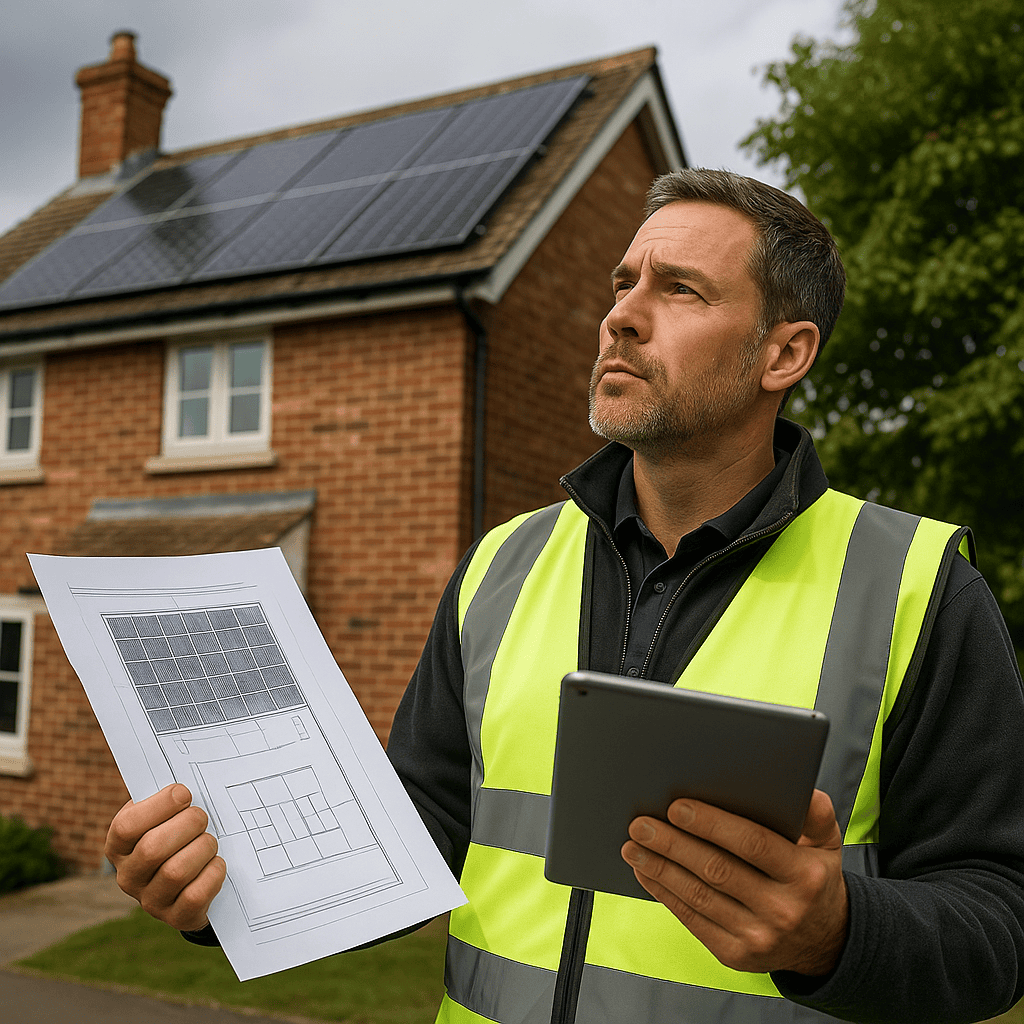
The process begins with a detailed solar survey, which involves evaluating your property’s unique characteristics. This includes analysing roof angles, shading from nearby trees or structures, and geographical location. Such an assessment ensures that the solar panels will be positioned for maximum exposure to sunlight, thereby optimising energy production.
Following the survey, a bespoke solar design is created. This design takes into account the specific energy needs of your household, ensuring that the system is tailored to provide sufficient power throughout the year. By considering both current and future energy demands, the design ensures long-term efficiency and sustainability.
Finally, the solar design process involves selecting the most suitable technology and equipment to meet your needs. This includes choosing high-quality panels and inverters that offer the best performance and durability. By using top-tier components, the system is not only reliable but also capable of delivering optimal energy production, ensuring you get the most out of your investment.