
How can homeowners calculate the payback period for their solar investment?
Calculating the payback period for a solar investment is an essential step for homeowners considering the switch to renewable energy. This period represents the time it takes for the savings generated by the solar system to equal the initial investment cost. Understanding this timeframe can help homeowners make informed decisions about the financial viability of installing solar panels.
To determine the payback period, homeowners need to consider several factors, including the total cost of the solar installation, any available incentives or rebates, and the expected reduction in electricity bills. By analysing these elements, one can estimate how long it will take for the investment to pay for itself through savings.
Firstly, calculate the total cost of your solar installation. This includes the price of the solar panels, inverters, installation fees, and any maintenance costs. Subtract any rebates or incentives you may receive, as these can significantly reduce the initial expenditure.
Next, estimate your annual savings on electricity bills. To do this, compare your current electricity bill with the anticipated bill after installing solar panels. Keep in mind that savings will depend on factors such as energy consumption, local electricity rates, and the efficiency of your solar system.
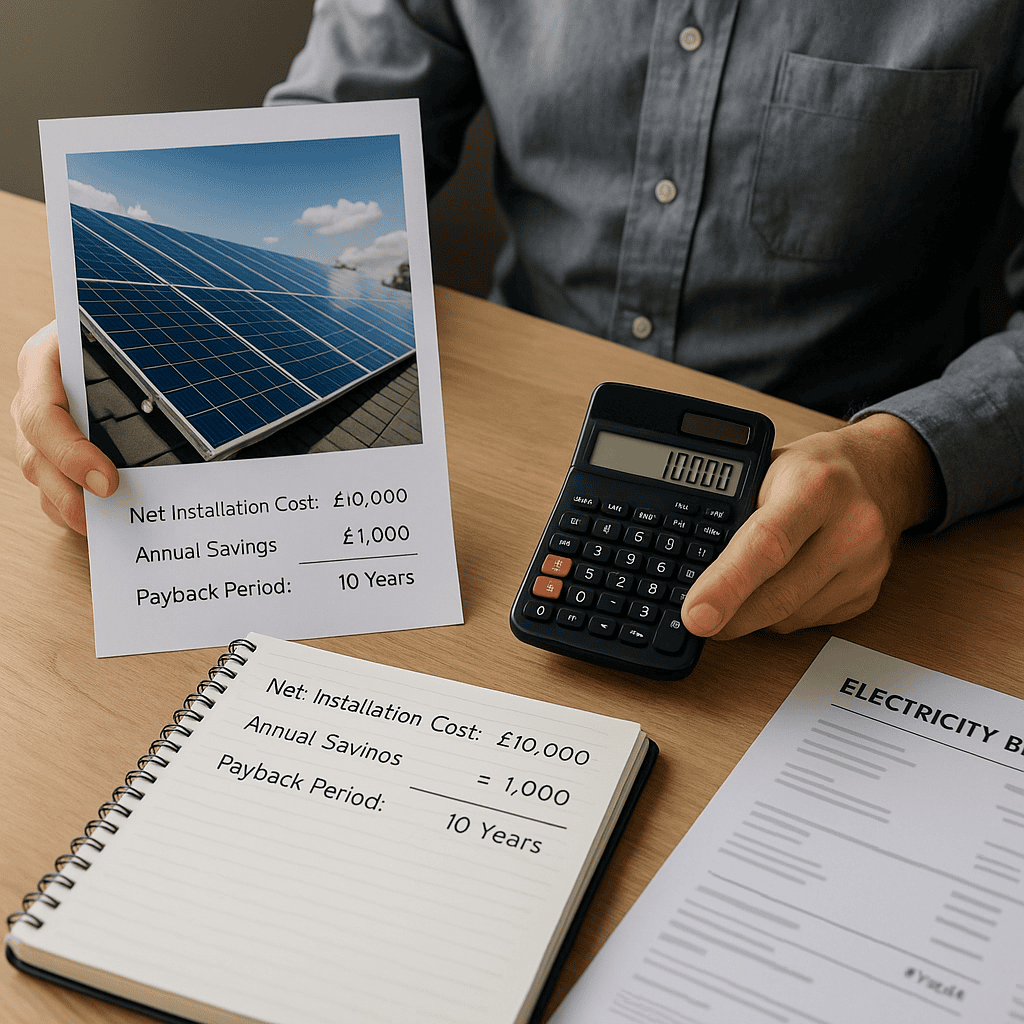
Finally, divide the net installation cost by the annual savings to determine the payback period. For example, if the net cost is £10,000 and your annual savings are £1,000, the payback period would be 10 years. By understanding this timeframe, you can assess the long-term benefits and make an informed decision about investing in solar energy.