
What are the typical outcomes of a site survey for business solar projects?
A site survey is an essential step in planning a business solar project, offering a detailed assessment of your location’s potential for solar energy generation. The typical outcomes of such a survey include an understanding of the site’s solar exposure, structural considerations, and potential obstacles, all of which are crucial for designing an efficient solar system.
By evaluating these factors, a site survey helps ensure that your solar installation is not only feasible but also optimised for maximum energy production. This preliminary analysis lays the groundwork for a well-planned solar project that meets your business’s energy needs and sustainability goals.
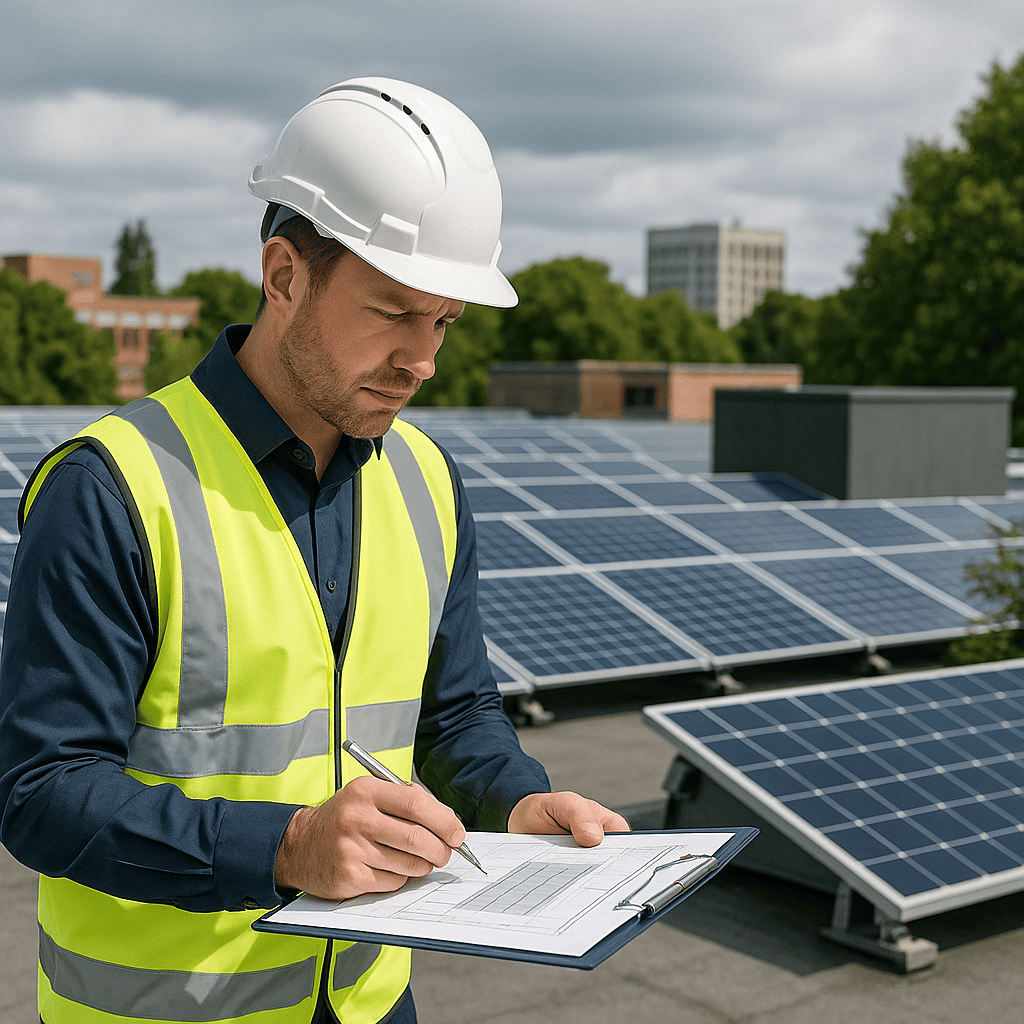
One of the primary outcomes of a site survey is the assessment of solar exposure and shading analysis. This involves evaluating how much sunlight different areas of your site receive throughout the year, allowing for the optimal placement of solar panels. Identifying any potential shading from nearby structures or trees is crucial, as it can significantly impact the efficiency of your solar system.
Another critical outcome is the evaluation of the site’s structural integrity. The survey will assess whether existing structures can support the weight and wind load of the solar panels. This ensures that the installation is safe and compliant with local building regulations, avoiding any potential structural issues down the line.
Finally, a site survey provides a detailed report that includes recommendations for system size and design, as well as an estimated return on investment. This information helps businesses make informed decisions about proceeding with their solar project, ensuring they achieve both financial and environmental benefits.