
What tax relief options are available for commercial solar installations?
Investing in commercial solar installations can significantly reduce energy costs and contribute to a greener environment. However, the initial investment can be substantial, which is why understanding the available tax relief options is crucial for businesses. By utilising these incentives, companies can offset part of the installation costs and improve their return on investment.
In the UK, several tax relief options are available for businesses investing in solar energy. These incentives are designed to encourage the adoption of renewable energy sources and support the transition to a low-carbon economy. By taking advantage of these tax reliefs, businesses can make their solar projects more financially viable.
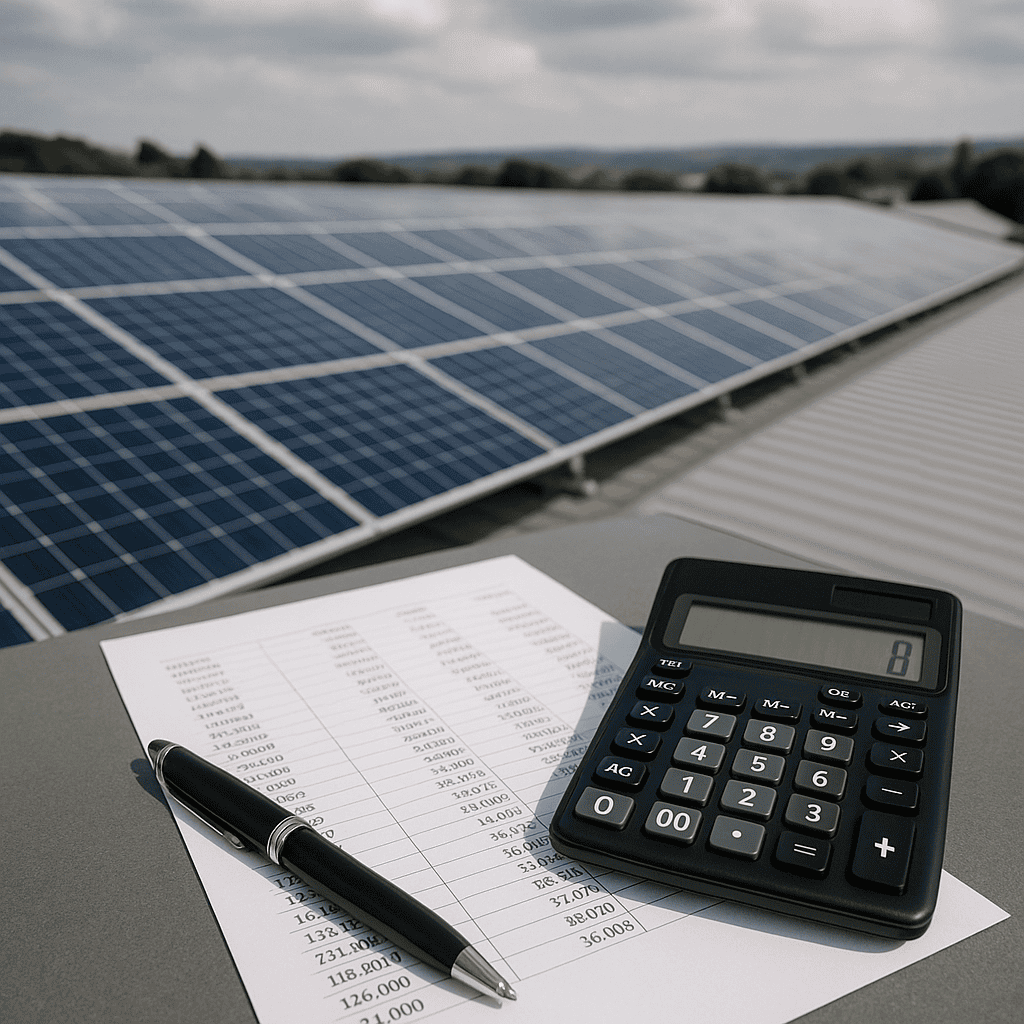
One of the primary tax relief options available for commercial solar installations is the Annual Investment Allowance (AIA). The AIA allows businesses to deduct the full value of qualifying plant and machinery, including solar panels, from their profits before tax. This can provide a significant upfront reduction in taxable income, making solar investments more appealing.
In addition to the AIA, companies may benefit from the Enhanced Capital Allowance (ECA) scheme. The ECA provides a 100% first-year allowance for investments in energy-saving equipment, including certain solar technologies. This scheme enables businesses to write off the entire cost of qualifying equipment against their taxable profits in the year of purchase.
Furthermore, businesses can explore the possibility of claiming the Feed-in Tariff (FiT) scheme, which, although closed to new applicants, still benefits existing installations. Those eligible under this scheme receive payments for generating their own renewable electricity, further enhancing the financial benefits of solar investments.