How Solar Panels Reduce Energy Costs
Solar panels offer a sustainable solution for businesses looking to cut energy expenses. By harnessing sunlight, they provide a cost-effective way to generate electricity and lower utility bills.
Understanding the Financial Benefits
Investing in solar panels can significantly reduce monthly energy costs, allowing businesses to allocate funds to other critical areas.
Impact of String and Microinverters on Savings
Both string and microinverters enhance energy production efficiency, contributing to lower energy bills and maximising return on investment for solar systems.
Long-Term Financial Stability
Utilising solar technology with the right inverter type can lead to stable energy costs, protecting businesses from fluctuating energy prices in the market.
Navigating the Inverter Selection Process
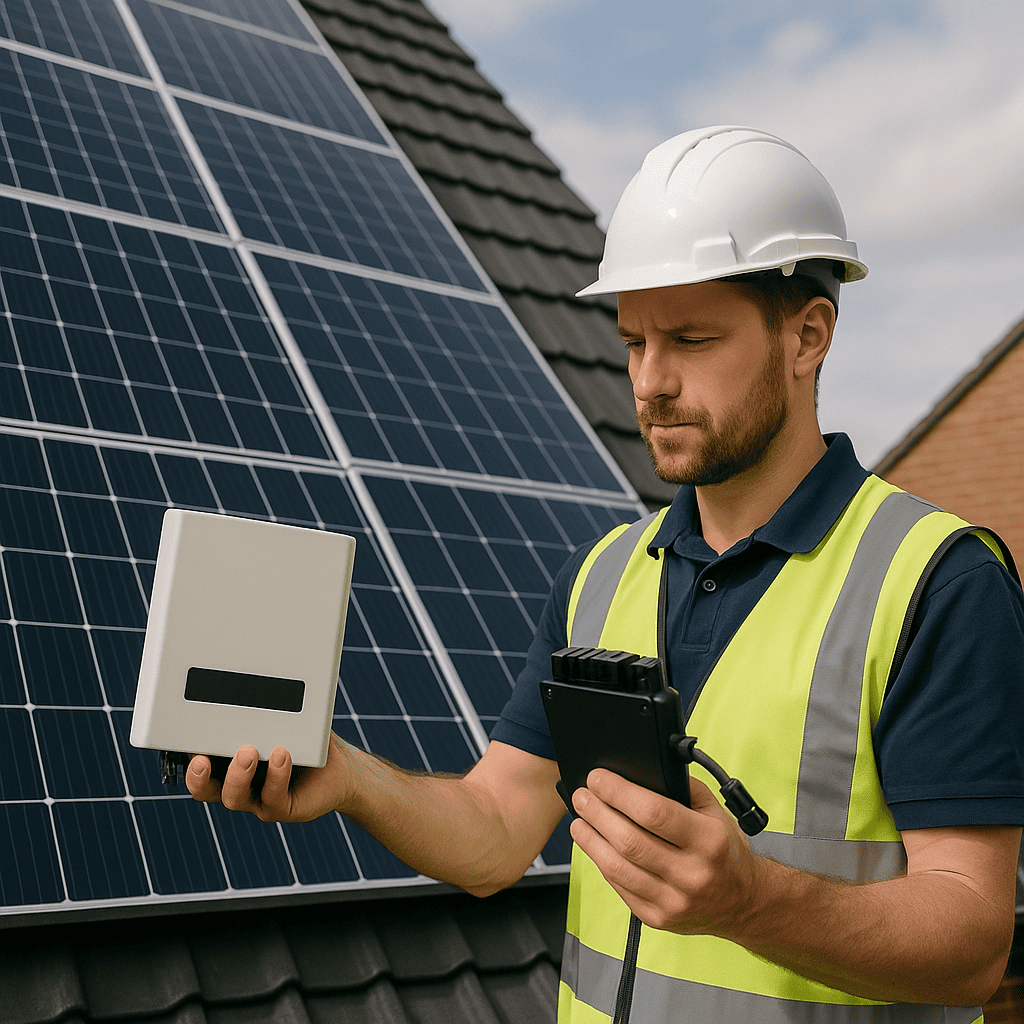
When deciding between string and microinverters for your solar energy system, it is crucial to understand the specific requirements and benefits each option offers. Our process begins with a comprehensive and free site assessment, where our experts evaluate your property’s solar potential. This assessment includes analyzing roof orientation, shading, and space, which helps in determining whether string or microinverters would be more effective for your setup.
Following the assessment, we proceed with a bespoke design tailored to your energy needs. String inverters, typically more cost-effective and efficient for uniform solar panel installations, are often recommended for larger, unobstructed roof spaces. In contrast, microinverters are ideal for installations where panels may experience partial shading or varying orientations, as they optimize each panel individually, ensuring maximum energy harvest.
Once the design is finalized, our certified installation team ensures the system is installed to the highest safety and quality standards. Our commitment to ongoing maintenance and customer support means you can enjoy peace of mind, knowing your solar PV system is optimized for long-term performance and savings.
Inverter Innovation
Microinverters optimize solar panel output individually, enhancing energy efficiency even in shaded or varied conditions.
Getting Started with Inverters for Your Solar System
To begin understanding which inverter system best suits your solar installation, start by researching the two primary types: string inverters and microinverters. String inverters are typically more cost-effective and easier to install, making them a popular choice for residential solar setups. However, they may be less efficient in situations where shading or panel orientation is a concern. Conversely, microinverters offer individual panel optimization, enhancing energy production, particularly in diverse installation environments.
Next, assess your specific needs by considering factors like your roof layout, shading conditions, and overall energy consumption. Engaging with a reputable renewable energy company can provide valuable insights tailored to your home or business. They can conduct a free site assessment and design a bespoke solar solution that maximizes efficiency and savings. Understanding these options will empower you to make informed decisions as you explore solar energy solutions.
Top 3 things about Inverters and Electrical
Understanding the differences between string inverters and microinverters can significantly impact the efficiency and performance of solar energy systems.
String Inverters Overview
String inverters connect multiple solar panels in series, converting DC to AC power collectively, which can be cost-effective but may reduce efficiency in shaded conditions.
Microinverters Overview
Microinverters are installed on each solar panel individually, optimising performance by allowing each panel to operate independently, thus enhancing energy production in varying conditions.
Efficiency and Performance Comparison
Microinverters generally provide better performance in partial shading and differing panel orientations, while string inverters are simpler and often less expensive to install.
Top 5 Questions About String and Microinverters
What are the key differences between string inverters and microinverters in solar systems?
String inverters connect multiple solar panels in series, optimising performance for uniform conditions, while microinverters are installed on each panel, allowing for independent operation. This means microinverters can enhance efficiency in shaded or unevenly lit environments.
How do string inverters and microinverters compare in terms of cost and efficiency?
String inverters are generally more cost-effective upfront but may be less efficient in shaded conditions compared to microinverters, which optimise performance on a panel-by-panel basis. Overall efficiency can vary based on installation specifics and environmental factors.
Which type of inverter is better for residential solar installations: string or microinverters?
String inverters are generally more cost-effective and simpler to install, making them suitable for most residential setups. However, microinverters offer better performance in shaded areas and allow for individual panel monitoring, which can be advantageous in certain situations.
What are the advantages of using microinverters over string inverters for solar energy?
Microinverters offer enhanced energy production by optimising each solar panel's output individually, improving performance in shaded conditions. They also provide greater system reliability, easier monitoring, and increased flexibility for future expansions compared to traditional string inverters.
How do shading issues affect the performance of string inverters compared to microinverters?
Shading significantly impacts string inverters, as the performance of the entire string is reduced by the lowest-performing panel. In contrast, microinverters operate independently, allowing shaded panels to function without affecting the output of others, enhancing overall efficiency.